

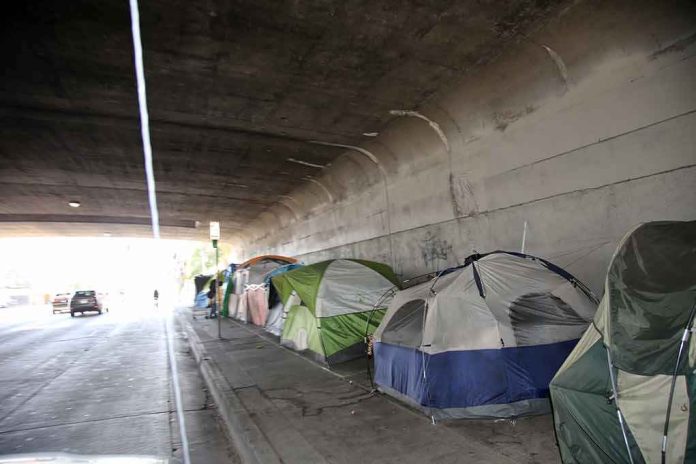
When crews chased a column of smoke off Carpinteria Avenue, they didn’t find a brush fire; they opened into a concealed, fully involved underground structure tucked beside a popular bike path—an improvised encampment burning beneath dense creekside vegetation—and put it out before it spread. Containment, removal, and orderly restoration followed. The stakes are straightforward: subterranean encampments multiply fire risk in places built to carry people, not flames, and the playbook that kept this incident small is exactly what protects communities and unhoused residents alike.
At a Glance
- Firefighters located and extinguished a blaze in a hidden subterranean encampment off the Carpinteria Creek bike path.
- The fire was contained where it started; it did not extend to surrounding vegetation or nearby structures.
- No injuries were reported, and city teams coordinated immediate cleanup and removal of the underground structure.
- Backfilling and site restoration were initiated through Public Works with Fire Marshal and Code Compliance involvement.
What Happened Along the Carpinteria Creek Bike Path
Responding to a late-night smoke investigation near the 5400–5500 blocks of Carpinteria Avenue, firefighters moved through heavy vegetation and spotted an orange glow along the Carpinteria Creek bike path. On approach they found a fully involved, hidden subterranean structure—confirmed on scene as a homeless encampment—and knocked the fire down. According to officials on scene, flames never extended into adjacent brush or nearby buildings, and crews completed suppression without injuries. In the days that followed, city officials confirmed the underground structure and debris were removed, with the remaining work limited to backfilling the depression and restoring the site under Public Works oversight in coordination with the Fire Marshal and Code Compliance.
The operational sequence is important. First, locate the source in dense, riparian vegetation; second, prevent extension into fuels that would force a multi-agency wildland response; third, transition quickly to abatement and restoration. Each step reduces risk and the chance that a small incident becomes a neighborhood emergency. Here, that chain held.
Why Underground Encampments Escalate Fire Risk
Subterranean or semi-subterranean makeshift spaces complicate firefighting. Concealment delays detection; confined geometry concentrates heat and toxic smoke; ad hoc electrical, heating, or cooking setups amplify ignition hazards. Even a small contents fire in an enclosed space can produce a high heat-release rate, and when that space sits under vegetation along a recreational corridor, the probability of third-party exposure rises. The result is more dangerous entry for firefighters, higher risk of rapid extension into brush, and a steeper abatement curve once the fire is out.
California’s urban edges are already primed for fast-moving fires. While this incident never crossed into wildland fuels, it occurred in a corridor typical of the state’s wildland–urban interface pattern, where recreational paths and creekbeds abut combustible vegetation and built assets. In such environments, a modest incipient fire can tax responders if it escapes initial containment; preventing spread at the source is the decisive variable, and that is exactly what occurred here.
How Agencies Coordinate After a Contained Encampment Fire
Encampment-fire response typically has two phases: emergency operations and municipal abatement. On-scene, incident command establishes access, ventilation if warranted, and suppression tactics appropriate to a confined structure fire. Once the hazard is neutralized, jurisdiction shifts toward code compliance and public works: remove dangerous debris, secure the site, and restore grade to eliminate voids or rekindle risks. In Carpinteria, officials said Public Works, Code Compliance, and the Fire Marshal convened after suppression to manage removal and plan restoration, including backfilling and any required environmental or permitting steps.
That handoff matters because it closes the loop. Fire suppression without abatement invites recurrence; abatement without restoration leaves hazards—a tripping void, unstable soil, or concealed smoldering materials. Coordinated closure, documented and inspected, prevents a revolving door of calls to the same location.
The Broader Pattern: Small Fires, Outsized Consequences
Most encampment fires are geographically small yet operationally significant. They load dispatch queues, risk injury in confined or obstructed spaces, and can threaten corridors that carry people daily. In large California cities, encampment-related incidents have risen sharply, reflecting both growth in unsheltered populations and the prevalence of combustible setups in improvised living spaces. Los Angeles Fire Department data show thousands of incidents per year flagged as homeless- or encampment-related, underscoring the systemwide burden on responders and neighborhoods.
Data quality—and what “encampment-related” means—varies by agency. Investigative work in San Diego found that reports often recorded an encampment connection without pinning down ignition cause, a reminder that labels can outpace forensic certainty in high-volume environments where many fires go under-investigated by necessity. The Carpinteria case does not turn on causation; responders found an underground encampment actively burning, contained it, and transitioned the site to abatement. But the statewide context clarifies why a disciplined, repeatable playbook is crucial.
Practical Lessons for Prevention and Policy
Three lessons travel well from this incident. First, visibility and access on recreational corridors matter. Vegetation management that preserves sight lines to likely encampment sites can accelerate detection without turning a greenway into a firebreak; the goal is earlier 911 calls and safer approach paths, not denuded habitat. Second, cross-department muscle memory reduces friction. Pre-scripted notifications to Public Works, Code Compliance, and the Fire Marshal ensure that restoration follows suppression without bureaucratic drift—precisely the sequence described here. Third, targeted outreach upstream of incidents can reduce ignition sources: distributing safer heating and cooking alternatives where feasible, and enforcing against dangerous electrical tapping when encountered, both documented contributors in urban encampment fire loads.
None of these measures resolves homelessness, which is a housing and services challenge before it is a fire problem. But they narrow the aperture through which a risky situation becomes a public-safety emergency, protecting housed and unhoused residents and the infrastructure both rely on.
Why This One Stayed Small—and Why That’s the Point
The Carpinteria Creek bike path fire is notable for what did not happen. It did not light the creekbank; it did not jump to nearby structures; it did not send people to the hospital. Those outcomes reflect craft and coordination more than luck: rapid size-up in obstructed terrain, decisive attack on an enclosed fire, and immediate transition to cleanup and site restoration. Officials have indicated that removal is complete and that backfilling and restorative work are underway through the city’s established channels. For communities threading recreational amenities through combustible landscapes, this is the model—quiet competence that ends a dangerous situation where it starts.
Sources:
noozhawk.com, library.municode.com, carpinteriaca.gov