

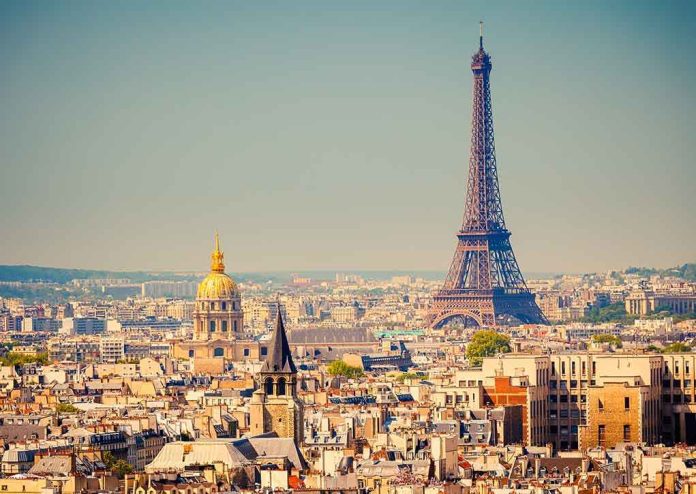
When a head of the Catholic Church fills the spine of Paris with worshipers, the headline number is less important than the unmistakable signal: in a nation often described as secular, a papal Mass that commands the Champs-Élysées and Place de la Concorde still mobilizes a vast public and a formidable logistical machine.
At a Glance
- Pope Leo XIV celebrated a public Mass at Place de la Concorde, with overflow along the Champs-Élysées.
- Registrations neared 600,000; day-of estimates from the Vatican and major outlets clustered around 700,000.
- Authorities and organizers planned for high six-figure attendance, deploying thousands of volunteers and extensive security.
- The event fits a long history: papal crowd figures are large, symbolically freighted, and inherently hard to count precisely.
What Happened: A Mass that Reclaimed the Heart of Paris
The core facts are straightforward and well-documented. As part of his apostolic journey to France, Pope Leo XIV presided over an open-air Holy Mass at Place de la Concorde on a Saturday afternoon, with pilgrims extending up the Champs-Élysées. The Vatican’s official program listed the liturgy on the schedule, and French and international outlets reported a turnout in the high six figures. Registrations organized by the Archdiocese approached 600,000 ahead of the event’s start, a threshold that led local organizers to close sign-ups and arrange additional overflow areas. Final same-day estimates from the Vatican and multiple news organizations converged around roughly 700,000 in attendance, with some reports citing a comparable range.
For France, the setting matters. Place de la Concorde, a site layered with revolutionary and national memory, became an altar under the open sky. The route of the popemobile and the sheer linear expanse of the Champs-Élysées created a natural amphitheater, allowing hundreds of thousands to see, hear, and participate. It was, by any sensible measure, the largest public event of the Pope’s tour and a focal point for national and international coverage.
How Events of This Scale Are Made to Work
Turnout on this order is not merely devotional energy; it is operations. Planning begins with capacity scenarios—entry points, screening, medical posts, communion distribution, egress routes, and transport interlocks—scaled for six-figure densities. Paris authorities signaled expectations around the 600,000 mark, and organizers mobilized thousands of trained volunteers for crowd guidance and liturgical functions. On the ground, this translates into zoned viewing sectors, reserved lanes for emergency access, and redundancy in sound and video relays to keep the assembly cohesive despite the size and geography.
The altar placement at Concorde and the avenue’s axial design lent themselves to modular crowd management: contiguous blocks of manageable density, each with stewards and wayfinding, all feeding into a central liturgical focal point. The Church has refined this template over decades—from World Youth Days to city-center visits—because predictable flows and known bottlenecks lower safety risk. Paris applied the same discipline, scaling infrastructure to the upper band of expected attendance.
Why Crowd Numbers Differ—and What Actually Matters
Large, non-ticketed gatherings resist precise enumeration. Analysts typically rely on aerial imagery, segmentation of space into zones of comparable density, and surface-area calculations calibrated to realistic person-per-square-meter figures; even then, the result is a band, not a single truth. Registrations capture intent, not final presence. Post-event estimates often blend organizer inputs and police assessments with aerial or media observations, which explains why credible outlets can land a few hundred thousand apart without anyone acting in bad faith.
The pattern recurs in papal events worldwide. Institutions have incentives to emphasize symbolic scale; independent observers caution against treating any round number as definitive. The right conclusion, here as elsewhere, is to treat the Paris Mass as a very large gathering within a plausible range anchored by advance registrations and day-of visuals—hundreds of thousands certainly, roughly 700,000 by the Vatican’s count—rather than litigating precision beyond what the methods can reliably support.
The Paris Context: Secular Republic, Public Religion
France’s self-understanding as a secular republic has never precluded visible religious life in shared civic spaces; it has required choreography. The state ensures order and neutrality; the Church supplies liturgy and pastoral purpose; both depend on professionalized logistics when crowds surge into the high six figures. In that sense, the Mass at Concorde did double duty: a sacramental celebration and a civic demonstration of France’s capacity to host peaceful religious assembly at monumental scale. The visible age diversity—families, young pilgrims, clergy, and the curious—signals something organizers referenced in the run-up: a reservoir of interest that extends beyond weekly practice and into cultural belonging.
Papal visits have long functioned as accelerants for that phenomenon: they galvanize the already committed, draw in the intermittently observant, and invite onlookers whose first contact is aesthetic or historical rather than confessional. The result is a layered crowd with varied motivations converging on a single rite. Paris, with its global media footprint and emblematic architecture, amplifies that effect.
Liturgical Substance and Message
What the Pope says at such a Mass is not incidental; it is the core. The Paris homily threaded classic themes—human longing, the offer of living water, the witness of French saints—into a pastoral call aimed at families, youth, and new Christians. In Roman Catholic logic, the sacrament embeds the speech; the Eucharist enacts unity, and the blessing disperses it through the city when the assembly departs. That grammar explains why attendance figures matter to the Church: they are not just a media metric but a proxy for exposure to a message and participation in a rite. In this way, the scale in Paris reinforced the visit’s spiritual objectives.
For a secular audience, the takeaway is simpler and still consequential: ideas endure not only by argument but by ritual presence in public space. Paris offered an object lesson—meaning is claimed, and reclaimed, by gathering.
Pope Leo XIV told his congregation at an open-air Mass in Paris on Saturday that “none of us is merely a number or an entry in a register but a unique and irreplaceable person” in the eyes of God.https://t.co/ZafMUFzESz
— Catholic World Report (@cworldreport) September 26, 2026
Looking Ahead: Measuring Influence Beyond the Headcount
The temptation is to treat the final number as judgment on the Church’s condition in France. It is not. Attendance at a single high-profile liturgy is a lagging indicator of mobilization capacity and cultural resonance, not a census of belief or practice. The more durable questions are institutional: Will dioceses convert momentary visibility into parish vitality and catechesis? Will civic authorities and church organizers refine crowd-management playbooks with better imagery, density modeling, and on-site sensors to tighten future estimates and improve safety margins? Those are measurable outcomes, and they are where events like Paris typically leave their longest trace.
As for the figure itself, the evidentiary center holds: registrations in the neighborhood of 600,000, day-of estimates clustering near 700,000, and a procession-filled axis from Concorde up the Champs-Élysées. In the ledger of modern papal visits, Paris 2026 belongs among the major gatherings—substantial in size, meticulously staged, and thick with symbolism at the heart of a secular republic. That is the fact pattern that matters, and it will read the same a year from now.
Sources:
humanevents.com, apnews.com, thetablet.co.uk, vatican.va, france24.com, connexionfrance.com, dioceseparis.fr, afp.com, fullfact.org, newsinfo.inquirer.net, ijnet.org, pbs.org