

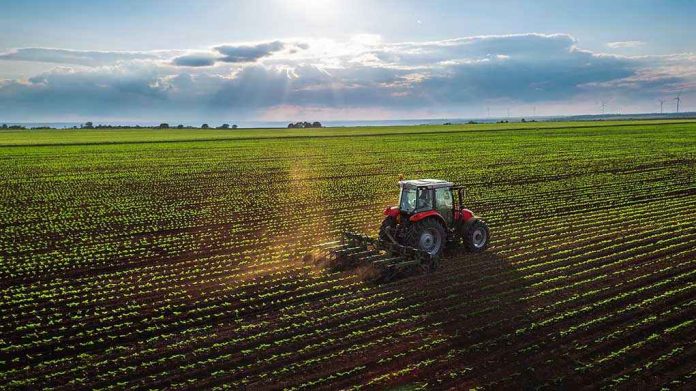
American farmers face a crushing crisis as the Iran war drives fertilizer costs up 77 percent while choking off critical supplies through the Strait of Hormuz, threatening food security far more than gas prices threaten wallets.
Story Snapshot
- Fertilizer prices surged 77 percent from December 2025 to March 2026, forcing farmers to pay 68 percent more than budgeted during critical spring planting season
- The Strait of Hormuz closure blocked fertilizer shipments from the Persian Gulf, which supplies one-third of global urea exports and 25 percent of ammonia trade
- One-quarter of American farmers had not purchased fertilizer when the conflict shut down the supply corridor, leaving them vulnerable to inflated prices
- Food price increases will hit grocery stores six to twelve months after planting disruptions, with American Farm Bureau warning relief is needed immediately
Hidden Crisis Threatens Food Supply Chain
The Iran conflict exposes a vulnerability that went unnoticed: America’s food security depends on fertilizer shipments passing through a war zone barely two dozen miles wide. The Strait of Hormuz, now effectively shuttered since Operation Epic Fury launched in December 2025, blocks not just oil tankers but ships carrying urea and ammonia that American farmers desperately need. Qatar’s state fertilizer company, the world’s largest urea supplier, shut down its plant when gas supplies were cut off. Saudi Arabia and other Gulf producers saw exports stall completely. This chokepoint represents systemic risk hiding in plain sight.
Farmers Crushed by Timing and Economics
The conflict struck at the cruelest possible moment for American agriculture. Approximately 25 percent of farmers had not purchased fertilizer when the Strait closed during spring planting season, when the largest volumes typically move into the country. These farmers now face costs 68 percent higher than budgeted. In concrete terms, they must trade 126 bushels of corn for the same ton of urea that previously cost 75 bushels. In New York, fertilizer prices climbed from $400 to $580 per ton. Diesel for farm equipment surged from $3.87 to $5.62 per gallon, compounding production and transportation costs.
Natural Gas Shortage Drives Fertilizer Crisis
The Haber-Bosch process, developed over a century ago, converts natural gas into ammonia and urea, the primary synthetic nitrogen fertilizer feeding approximately 8 billion people worldwide. About 80 percent of nitrogen fertilizer production costs come from natural gas, making it not merely an energy commodity but a critical agricultural input. The Persian Gulf supplies roughly one-third of globally traded urea exports and approximately 25 percent of ammonia trade. When the conflict cut off gas supplies, it disrupted the entire production chain. China, the other major global fertilizer exporter, restricted outbound shipments to protect domestic supply, further tightening markets.
Delayed Food Price Shock Coming
Agriculture Secretary Brooke Rollins acknowledged the crisis, and the American Farm Bureau wrote to President Trump calling for relief. Amanda Powers of the New York Farm Bureau warned consumers directly: “You will definitely see an impact at the grocery store if we don’t get this resolved soon.” Food price consequences will arrive on grocery shelves six to twelve months after planting disruptions, not immediately. Commodity markets are already pricing in reduced crop yields globally. While food inflation will be visible later in 2026, it will hit harder internationally than domestically because America has domestic natural gas feeding fertilizer producers at globally competitive prices.
Constitutional and Economic Concerns
This crisis underscores fundamental problems with foreign entanglements that threaten American prosperity and self-sufficiency. The administration’s involvement in Middle East conflicts directly contradicts promises to keep America out of new wars. Conservative supporters who value limited government and American sovereignty rightly question why domestic farmers and consumers bear costs from overseas regime change operations. The global food system’s dependence on shipments through a single vulnerable corridor represents government failure to protect critical infrastructure and supply chains. America possesses domestic natural gas resources and fertilizer production capacity, yet federal policies failed to insulate agriculture from foreign supply disruptions, demonstrating the consequences of globalist dependencies over national resilience.
Sources:
The Real Threat From The Iran War Hits Farmers, Not Fuel Pumps – Zero Hedge
Iran conflict sends shockwaves driving up costs for travel, farming – KFOX TV
The Iran Conflict and Global Food Security – Purdue University