

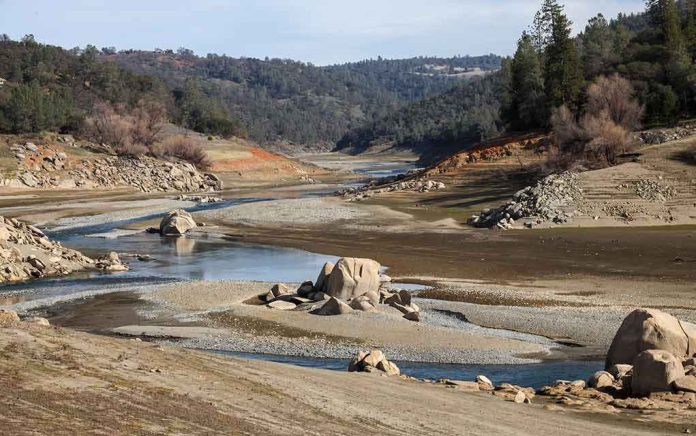
Colorado’s fish die-offs are not isolated mishaps; they are the visible edge of a water system under chronic thermal and hydrologic stress, where low flows, warm water, and depleted oxygen turn ordinary habitat into a mortality trap.
Intro Header
- Drought does not kill fish by itself in some abstract sense; it does so by shrinking refuges, warming water, and lowering dissolved oxygen until fish can no longer persist.
- Colorado Parks and Wildlife has repeatedly treated these events as operational emergencies, using closures and fish salvages when rivers and reservoirs cross biological thresholds.
- The recent die-offs near Boyd Lake and in northwestern Colorado fit a larger western pattern in which drought creates the conditions for mass mortality, while local geography and management determine the specific trigger.
- The real story is not whether fish are dying; it is why these events are becoming more common, more visible, and more consequential for native species and fisheries alike.
What Actually Happened in Colorado
Colorado’s latest fish die-offs unfolded in more than one place, but the mechanism was consistent: water levels fell, temperatures climbed, and fish were trapped in conditions they could not survive. At Boyd Lake, thousands of fish died in an inlet after low water levels left only intermittent pockets of water, and the event coincided with temperatures reaching 100 degrees. In Steamboat Springs, Colorado Parks and Wildlife reported more than 300 dead mountain whitefish in the Elk River and said the die-off was attributed to severe drought conditions; the agency noted a water temperature of 83 degrees and described the fish as especially vulnerable to heat and low dissolved oxygen.
That is the core pattern behind the headlines. Colorado Parks and Wildlife has also warned anglers away from a 100-mile stretch of the Colorado River between Kremmling and Rifle because the water was too low and too warm, and fish were dying there as well. In other words, these are not random losses scattered across the state; they are the expected biological consequence of a drought-stressed river network that is losing both volume and resilience.
Why Low Water Becomes Dead Water
The biology is straightforward, and brutal. Cold-water fish such as trout and mountain whitefish depend on enough moving water to keep temperatures within a survivable range and to maintain dissolved oxygen, the oxygen available in water for fish respiration. As streamflow drops, water warms more quickly, oxygen levels decline, and fish lose the thermal refuges that normally let them ride out hot afternoons. Colorado Water Trust summarizes the mechanism plainly: drought fragments habitat, warm water holds less oxygen, and physiological stress rises as both food and space become scarce.
That same mechanism shows up across Colorado’s recent reporting. In the Animas River, low drought flows left water too warm to protect fish, with temperatures rising above 70 degrees in the afternoons, while ash and sediment from wildfire runoff further degraded conditions. In the Colorado River corridor, state biologists have described low flows and hotter temperatures as stressful and deadly, and have said emergency closures are sometimes necessary when river temperatures rise above the threshold that signals biological danger. The precise trigger can vary, but the stressor stack is the same: too little water, too much heat, and too little oxygen.
The Bigger Western Pattern Behind Colorado’s Fish Kills
Colorado’s fish mortality events should be read as part of a broader western hydrologic crisis, not as one-off curiosities. National reporting on the Colorado River Basin has repeatedly described a system in which meager supplies and high demand leave very little water for fish, including endangered and threatened species. That broad scarcity matters because it turns summer heat into a force multiplier; when flows are thin, temperatures rise faster, pools shrink, and fish become easier targets for disease, angling stress, and habitat fragmentation.
The point is not that drought is the only possible cause. It is that drought is the baseline condition that makes many other harms lethal. A wildfire ash pulse can suffocate fish when low water cannot dilute it. A reservoir drawdown can strand fish in isolated pockets. Restoration work can produce a fish kill when a stretch of river is dewatered. The common denominator is that drought reduces the system’s margin for error, so local events that would once have been recoverable become mass mortality events instead.
Thousands of dead fish line the edge of Boyd Lake in Northern #Colorado.
The fish were sent to the state park from a nearby privately owned lake. But Boyd is running low due to drought and water usage…essentially trapping the fish in mud, killing them.@CBSNewsColorado pic.twitter.com/CSkAjc6Uhu
— Dillon Thomas (@DillonMThomas) August 4, 2026
How Colorado Has Learned to Manage the Crisis
Colorado’s response shows how institutionalized this problem has become. Instead of treating fish kills as freak accidents, wildlife managers now routinely use closures, salvages, and public advisories when water conditions cross danger thresholds. State biologists have said voluntary or emergency closures are common in drought years, especially when river temperatures exceed 71 degrees or flows fall to half of the daily average. That is not bureaucratic theater; it is triage. Once water reaches those thresholds, fish stop feeding normally, become more vulnerable to disease and angling pressure, and can die in large numbers if conditions do not improve.
Boyd Lake illustrates the practical side of that triage. Colorado Parks and Wildlife crews worked to rescue fish after thousands died or were stranded along the shoreline following the draining of a nearby privately owned lake, and the agency later traced the die-off to the connected lake system rather than to Boyd Lake itself. That distinction matters because it shows how fragile these interconnected waters have become: a drawdown, diversion, or drainage upstream can cascade into a visible fish kill downstream when drought has already stripped away the buffering capacity of the system.
What This Means for Colorado’s Fisheries
The long-term significance goes beyond episodic images of dead fish. Repeated drought stress reshapes fish communities, favoring species that tolerate warm, degraded habitat and disadvantaging native cold-water fish that cannot simply move somewhere else. It also compresses the entire management problem into narrower windows of survival. When summer heat arrives earlier and flows stay low longer, agencies have less time to react, more water bodies cross closure thresholds, and the cost of intervention rises.
That is why Colorado’s fish die-offs are best understood as a climate-and-water-management signal, not just an ecological tragedy. They reveal where the system has become too thin to absorb stress, and they show how quickly a river or lake can shift from fish habitat to fish trap. The immediate cause may be heat, ash, a reservoir drain, or a dewatered reach, but the underlying condition is drought making all of it worse.
Sources:
youtube.com, coloradoan.com, coloradosun.com, denver7.com, cbsnews.com, coloradowatertrust.org, cpr.org, aspentimes.com, nationalgeographic.com, motherjones.com