

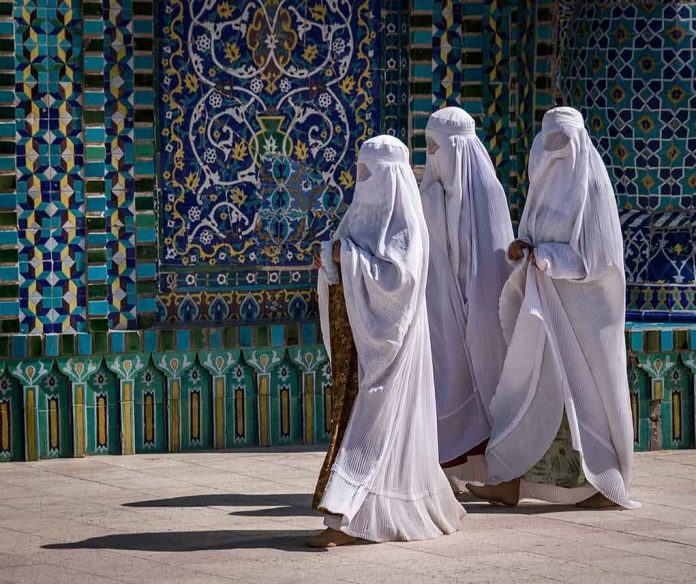
What looks like a culture-war flashpoint is, on the evidence, a venue-governance story: St John’s Church, Hyde Park has become a recurring London Fashion Week site, and the “Modest Fashion Week London” booking that drew criticism sits within a broader pattern of secular fashion events regularly held in that nave.
At a Glance
- St John’s Hyde Park has repeatedly hosted fashion shows; “Modest Fashion Week London” was one of several runway-style events on its calendar.
- Listings identify the 12 September 2026 program by name and place it at the church; additional fashion events followed in the same venue that month.
- The shows were framed by promoters as cultural and inclusive, not as religious services, which aligns with typical church space hire.
- Church of England guidance permits outside use of buildings with conditions; the record here shows venue use but no ecclesial sponsorship.
What actually happened: a church that rents space hosted a modest-fashion runway
The concrete facts are straightforward. Public listings show St John’s Church, Hyde Park serving as a London Fashion Week–adjacent venue across multiple dates, including a named event, “Modest Fashion Week London,” scheduled for 12 September 2026 in the church space. Additional runway programs appear on 20 and 23 September, likewise at St John’s, described in promoters’ language as fashion, art, and cultural showcases rather than worship. These entries corroborate the core point under dispute: the church was used for a fashion show themed around modest attire, packaged to a wider fashion-week audience and not advertised as a religious service.
Criticism focused on the symbolism, not the logistics. A prominent social-media post characterized the day as “parades of hijab- and niqab-wearing women” and framed the booking as another embarrassment for the Church of England. That description tracks with the event’s modest-fashion branding, but it leaps from the sight of conservative dress to an assertion of ecclesial endorsement. The public record available here supports the former claim (the nature and location of the event) and not the latter (that the Church of England organized or sponsored it).
How this fits the venue’s pattern: fashion in a sacred interior
St John’s Hyde Park has positioned itself, in practice if not in glossy brochures, as a London fashion host. Over the past several seasons, promoters have booked the church for multicultural runway nights, designer showcases, and student-debut programs; their copy leans heavily on inclusion, visibility, and the visual power of historic architecture. Accounts of events at St John’s present the nave as a “stunning” runway setting, marrying classical space with contemporary design and treating the venue as a public-facing cultural platform within the fashion calendar.
This pattern is neither unique to St John’s nor new to London. Fashion producers and critics have long noted the draw of ecclesial architecture for catwalks: the axial procession, the vertical drama, the chiaroscuro of stone and stained glass—all create a runway with gravitas. Secular organizers secure these spaces precisely because the building itself confers aesthetic charge and social cachet; the event, however, remains a hired booking, not a liturgical act. That underlying logic is well-recognized in coverage of churches as occasional fashion venues.
What the record shows—and does not show—about church endorsement
Two questions commonly collapse into one in public debate: did it happen in a church, and did the church as an institution endorse it? The first is answered by the event listings. The second, by the available evidence, is not. St John’s advertises its space for hire; that makes it plausible, even likely, that these fashion-week bookings were ordinary rentals rather than parish-led productions. None of the sources surfaced here includes a diocesan statement, parish sermon, or official theological rationale hitching Christian witness to modest-fashion branding; they also include no disavowal. The trail is administrative, not doctrinal.
That distinction matters because the Church of England has longstanding frameworks for third-party use of sacred buildings. National “good practice” guidance addresses invitations to use church space; diocesan notes reinforce the need for approvals, conditions, and the preservation of a building’s sacred character. These frameworks exist precisely to separate hospitality and income-generating hire from confessional endorsement, and to manage reputational risk while keeping churches viable and open to community use.
Why “modest fashion” becomes a proxy fight
Modest-fashion branding carries its own semiotics. In contemporary London, it often signals design that accommodates religious or cultural preferences—including Muslim, Jewish, and Christian forms of dress—without being reducible to a worship service. Promoters emphasize inclusion, family-friendly segments, and global designer rosters. In the record here, organizer-facing pages celebrate cultural diversity and creative innovation, and explicitly pitch these events as community-accessible showcases, not religious rites. For critics, the imagery of hijab and niqab on a church runway reads as capitulation; for promoters, it reads as hospitality and visibility in a public fashion setting.
Neither reading, by itself, answers the policy question: what is appropriate in a consecrated space between Sunday liturgies? Church law and diocesan practice default to oversight, conditions, and a line that distinguishes between acceptable community uses and activities that would compromise worship or scandalize the faithful. That line is negotiated case by case. In many places it has long permitted concerts, lectures, and, yes, fashion shows; it typically prohibits activities that degrade the altar or trivialize sacred symbols. The events at St John’s, as described, were ordinary runway programs with modest attire as a theme—contested in optics, but not shown here to have violated stated conditions.
The real governance test: process, conditions, and communication
When conflict flares, it is less often about a single garment than about process failure or silence. Three governance questions decide whether a booking is defensible. First, approval: who signed off, and under what authority? Second, conditions: were there clear terms about staging, music, imagery, and treatment of liturgical furnishings? Third, communication: did the parish explain how hire does not equal endorsement, and why the event fit their policy? The sources in hand confirm the bookings but do not disclose these particulars; absent them, public perception fills the void, and outrage drives the narrative faster than policy can catch up.
Fashion promoters, for their part, frame these shows as human-centered and inclusive. One cited season at St John’s emphasized uplifting underrepresented voices and placed inclusion and visibility at the center of its ethos. That language is legible in the fashion world and to many London audiences; it does not, on its own, address ecclesial sensitivities about sacred space. The bridge between the two is a robust hire policy, consistently applied and publicly articulated, with vetoes where needed and explanations when allowed.
What to watch next: precedent hardens with repetition
Precedent matters in church administration and public perception alike. Repeated fashion-week bookings establish St John’s as a known runway site; over time, that normalizes the practice and makes objections feel reactive rather than principled. If parishes intend to continue hosting such events, they should codify criteria, publish them, and brief organizers early—especially around staging near altars, camera angles that avoid sacramental focus, and signage that clarifies the nature of the hire. The alternative is to retreat from third-party use altogether, with the corresponding hit to community engagement and venue income. Most churches, balancing mission and maintenance, will choose the managed-middle path.
Sources:
humanevents.com, eventslist.co.uk, happeningnext.com, theguardian.com, jamaica-gleaner.com, ukmalayalee.com, premierchristian.news, fulcrum-anglican.org.uk, anglicanism.org