

Claims that it is “not possible” for Black or Jewish Americans to vote for Democrats misunderstand both history and mechanism: these coalitions have aligned with Democrats for a century-scale mix of policy, identity, and party realignment — not habit — even as pockets of slippage and frustration emerge on the margins.
At a Glance
- Black and Jewish partisan alignments formed through concrete policy histories and party realignment, not mere voting “habit.”
- Across decades, Jewish Americans and Black Americans have backed Democrats at rates well above the national average, rooted in issue priorities and group identity.
- Influencers can shape discourse, but their direct vote-moving power is usually modest relative to party identity and issues.
- Recent fissures exist — especially among subgroups and younger voters — but they reflect evolving issue trade-offs, not impossibility or inevitability.
What the historical record actually shows about Black and Jewish voting
When you examine long-run voting data rather than a single cycle’s rhetoric, a clear pattern emerges: Jewish Americans and Black Americans have generally favored Democratic candidates by wide margins since the mid-20th century. That alignment did not appear out of thin air. It grew out of the New Deal coalition, civil-rights legislation, and a durable sense that the Democratic Party’s policy offerings and cultural posture better matched these communities’ priorities on civil rights, religious and ethnic pluralism, and social-welfare protections. Scholarly syntheses find Jewish support for Democrats regularly outpaces the national average by 20-plus points across modern elections, reflecting a stable identity-party link built over generations.
Black Americans’ partisan identification underwent a decisive shift during the party realignments of the 1930s through the 1960s — advancing with Franklin Roosevelt’s economic program and then hardening around Democratic sponsorship of civil-rights legislation. By the late 1960s, survey series such as the American National Election Studies recorded Black Democratic identification around 80 percent, a level that persisted for decades, with presidential vote shares often above four-fifths in the modern era. These are not the signatures of “habit” alone; they reflect sustained congruence between party stance and group interests, cemented by social networks, churches and synagogues, civic organizations, and enduring assessments of which party listens and delivers.
Why “it’s not possible” is the wrong frame
“Not possible” is a category error. Voting is a choice among imperfect alternatives, not a logic puzzle with a single answer. Individuals weigh competing priorities — economic opportunity, civil rights, abortion, guns, Israel policy, immigration, courts, and social climate — and choose the least-bad bundle. For many Jewish Americans, the Democratic bundle has long been closer to their broader liberal commitments even as debates over Israel create cross-pressures inside the coalition. For many Black Americans, Democrats have been the more reliable partner on voting rights, anti-discrimination, health care, and criminal-justice reform, even as concerns about crime, inflation, or school quality pull some voters rightward. The presence of cross-pressures does not negate rationality; it demonstrates it.
None of this implies stasis. Political science is clear that partisan identity is sticky but not immutable. Recent research has flagged softening at the margins among younger Black voters and specific subgroups; such changes matter in close races, even if they do not erase the overall Democratic tilt. Among Jewish Americans, debates around Israel and campus climate have intensified scrutiny of Democratic messaging and coalition management — again, a live intra-party negotiation that can reweight priorities without nullifying the long-built identity-partisan bond.
The Hasan Piker subplot: visibility versus influence
Part of the contemporary conversation treats left-leaning influencer Hasan Piker as evidence that Democrats are being pulled far left in ways that should alienate Black and Jewish voters. That argument overreads visibility as vote-moving power. Piker’s audience is large online, but available snapshots suggest his name recognition across Democrats is uneven; one survey summary reported that a majority of Democratic and Democratic-leaning voters had never heard of him, and among those who had, views were mixed — with just over half of Democrats in one write-up saying party leaders should explicitly oppose him, while a substantial minority saw him as helpful against MAGA or agreed with him.
More to the point, the best evidence on influencers shows their measurable effect on vote choice is real but usually modest and highly contingent — strongest through agenda-setting and mobilization rather than durable persuasion. In one peer‑reviewed study of political influencers, only about six percent of respondents said influencer content helped determine their vote, underscoring that party identity and issue positions still dominate most electoral decisions. That aligns with decades of research: influencers shape the conversation; parties and policies shape the coalitions.
Mechanism: how group partisanship endures — and shifts at the edges
Durable partisan alignments persist through reinforcement loops. Identity and memory matter: stories of who stood where on lynching, fair housing, school integration, and the Voting Rights Act transmit through families, congregations, and civic groups. Policy delivery matters: Medicaid expansions, civil-rights enforcement, and judicial appointments communicate whose priorities a party advances. Social sorting matters: neighborhoods, unions, and professional networks create information environments where one party’s frames feel like common sense. When shifts occur, they typically start at the edges — younger cohorts, new migrants within the community, or issue entrepreneurs who press a salient concern (crime, inflation, foreign policy) until it pierces the filter of identity. That is why small erosions can coexist with overwhelming baseline loyalty — both can be true.
The implication is straightforward. If Democrats want to maintain their standing with Black and Jewish voters, they must continue to deliver on the core bundle that built the coalition while addressing the cross‑pressures candidly — antisemitism concerns on the left, crime and affordability frustrations in cities, campus climate, K‑12 outcomes, and visible competence in governance. If Republicans hope to make durable inroads, they must move beyond episodic symbolism toward credible policy guarantees that directly answer those communities’ top priorities — equal access to the ballot, civil-rights enforcement, and security for religious and ethnic minorities — while showing continuity across national and local candidates. Empty rhetoric will not dislodge century-scale alignments; only tangible, repeated performance can.
Where genuine disagreement lives now
There is legitimate debate, particularly within the Democratic coalition, about whether a vocal progressive subset alienates persuadable Black and Jewish voters. That debate has surfaced in condemnations of inflammatory rhetoric and in campaigns recalibrating their distance from activist influencers. But the available evidence suggests two things can be true simultaneously: online controversies can be electorally inconvenient, and yet the modal voter still anchors on party identity and concrete issues rather than on a single streamer’s feed. Overstating any one figure’s sway confuses a media storyline with an electoral determinant.
The sharper disagreement is not about possibility but about trade-offs. Younger Black voters juggling cost-of-living pain and skepticism toward institutions may discount legacy loyalties more than their parents do. Some Jewish voters, prioritizing Israel policy and communal security, will tolerate fewer ambiguities in party messaging. These pressures can trim margins. They do not convert rational choice into impossibility.
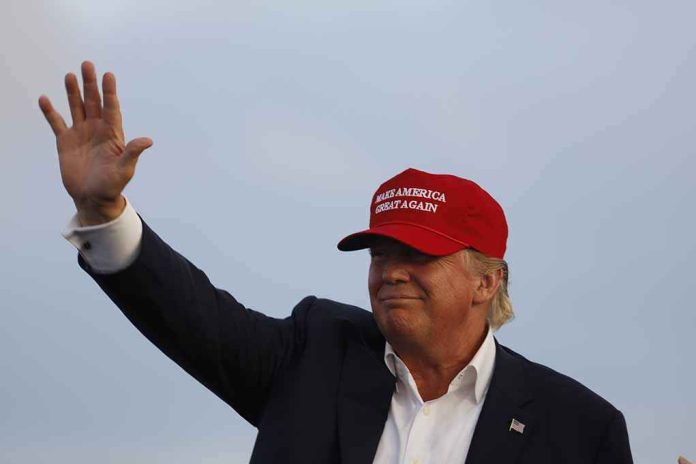
President Trump called left-wing streamer Hasan Piker a "terrible liability" for Democrats when asked to share his take on the popular pundit.
"He's got a power over some of these Democrats, and he'll be voting that way," Trump said Friday as he took questions from the Oval… pic.twitter.com/M6BINJDzfS
— CBS News (@CBSNews) September 18, 2026
Bottom line
Black and Jewish Americans have voted Democratic in large numbers for reasons rooted in history, identity, and policy congruence. Suggesting it is “not possible” for them to do so misreads both the data and how coalition politics works. The better question — for both parties — is how to earn and re‑earn trust as issues evolve. On that score, durable delivery still beats declarative certainty every time.
Sources:
youtube.com, lasvegassun.com, twincities.com, politico.com, thehill.com, thedailybeast.com, foxnews.com, dailysignal.com