

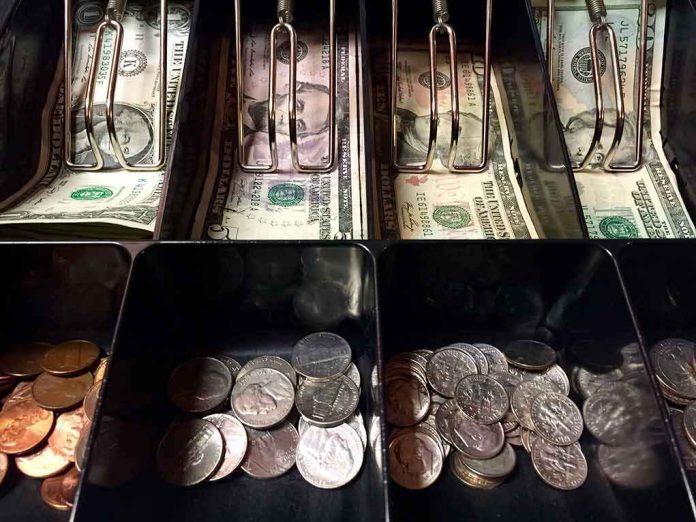
A thief walked out with $25,300 in one-dollar bills after using a fired manager’s alarm code, raising hard questions about insider access and basic security at cash-heavy businesses.
Story Snapshot
- Owner says the suspect used a former manager’s alarm code during the break-in.
- More than $25,000 in one-dollar bills was taken from the club’s safe.
- Staff reportedly have unique safe access codes tied to their names.
- Police have not released forensic findings, leaving key facts unconfirmed.
What The Owner Says Happened
Club owner Dino Palmiotto reported that a suspect jumped a fence, forced entry, and then used the alarm code of a manager who had been fired weeks earlier. He put the loss at $25,300, almost all in one-dollar bills, which suggests the thief went straight for a known cash stash. Palmiotto called it an inside job and asked the public for help identifying the suspect. Police have not publicly verified his claims about the code or the exact loss total yet.
Palmiotto and people close to the club also said each worker with safe access has a unique code tied to their name. That set-up, if accurate, would make the use of a specific code strong evidence of insider knowledge. The claim fits how many modern systems log access, which can flag who used which code and when. Still, only police and the alarm vendor can confirm what the logs show and whether any codes were shared or left active.
Where The Facts Stand And What Is Unclear
The public record supports three points: there was a break-in, a large loss in one-dollar bills, and the owner’s belief it was an inside job. The key proof point is the alarm or safe code logs. Those logs could show which code armed or disarmed the system and when. Authorities have not released that data. Without it, the “inside job” claim remains an allegation, not a confirmed fact. The investigation’s next steps likely include log analysis and interviews.
Claims about code use can be tricky. In some cases, former employees keep active codes after termination. In others, current staff share codes to speed tasks, which weakens accountability. Businesses can also struggle to rotate codes fast when turnover is high. Any of these gaps could explain how a code tied to a name was used by someone else. Until police confirm chain-of-custody for the code, strong suspicion remains short of proof.
Why This Case Resonates Beyond One Club
Cash-heavy workplaces, like adult entertainment venues, face a steady risk of internal theft and fraud. Industry and risk guides urge unique credentials, fast deactivation on termination, and surprise audits to cut that risk. They also warn against public accusations before evidence is airtight, to avoid legal blowback and bad leads. Solid controls and careful, documented investigations protect both owners and workers while building trust when crises hit.
The broader pattern shows that some “inside job” claims do pan out. One past strip club case in Rhode Island led to an employee arrest for a similar theft in one-dollar bills. That does not prove this San Diego theft was internal. It does show why investigators check access logs, shift records, camera angles, and phone contacts. Those steps help separate an informed suspicion from verified facts and can prevent finger-pointing that misses the real culprit.
What To Watch Next
Watch for police confirmation on four items: the exact dollar loss, the specific code used, whether that code was active after the firing, and any link between the suspect and current or former staff. A clear timeline from alarm data and surveillance footage will be key. If logs confirm a fired manager’s code was used after termination, that will push the case toward an internal link. If not, weak offboarding may be the root cause.
Thief steals over $25K in one dollar bills at Kearny Mesa strip club https://t.co/8eMRJoQUur
— CBS 8 San Diego (@CBS8) July 1, 2026
For small businesses, this is a warning. Deactivate codes the same day someone leaves. Use individual codes, never shared ones. Rotate codes often, and audit access logs weekly. Lock cash down with dual control, so two people must be present to open a safe. These steps cost little compared with a $25,000 loss. They also protect honest workers by proving who did what, when, with clear, machine-stamped records.
Sources:
nypost.com, exposesd.com, exoticdancer.com, scribd.com, pubmed.ncbi.nlm.nih.gov