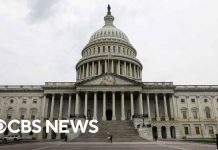
The real scandal after The Washington Post’s mass layoffs isn’t a “Trump lie” at all—it’s how fast online narratives can outrun verifiable facts.
Quick Take
- No credible source in the provided research confirms a Washington Post story “just days after layoffs” that “lies about the Trump administration.”
- Roughly 300 newsroom employees—about a third of the staff—were cut on Feb. 4, 2026, with immediate lockouts disrupting ongoing coverage.
- Cuts reportedly hit sports, books, podcasts, and key international and local desks, including overseas bureaus.
- Union leaders and some journalists framed the reductions as ideological; management framed them as a financial and strategy reset.
No Verified “WaPo Lied About Trump” Story Appears in the Record
Searchable reporting in the provided research centers on the Feb. 4, 2026 layoffs themselves, not on a specific Washington Post article allegedly “returning to lying” about the Trump administration. Multiple outlets documented the staff reductions, the internal announcement, and the blowback—but none cited a post-layoff WaPo news story about Trump that was shown to be false. With limited data beyond Feb. 5 coverage, the most responsible conclusion is that the “lying” claim remains unsubstantiated here.
That distinction matters for readers who want accountability rather than hearsay. Conservative voters have watched legacy outlets push narratives with loaded framing for years, so distrust is understandable. But the research provided does not document a specific WaPo report, quote, headline, or correction proving deception about the Trump administration in the immediate post-layoff window. What it does document—clearly—is a deep institutional crisis that reshapes what the paper can cover.
How the Layoffs Happened—and Why Staff Said It Felt Like a Gutting
Reports described an all-hands Zoom webinar at about 8:30 a.m. Eastern on Feb. 4, with employees then receiving individual email notices. Unlike some previous rounds, laid-off workers were locked out quickly, which created immediate disruption for ongoing beats and stories. Coverage also described major sections being scaled back or eliminated, including sports, books, podcasts, and parts of the Metro operation serving the D.C., Maryland, and Virginia region.
International reporting capacity was also a flashpoint. The research describes bureau closures or reduced presence in major world hotspots, with Jerusalem, Kyiv, and Cairo mentioned as examples. For readers who rely on real reporting rather than curated activism, shrinking foreign coverage means fewer on-the-ground facts—precisely when the public is often asked to support expensive foreign policy commitments. Even critics of legacy media can recognize that cutting firsthand reporting tends to increase reliance on recycled narratives.
The Money Problem Behind the Turmoil—and the Strategy Shift on Top
The reporting included estimates that The Washington Post lost about $100 million in 2024, part of a longer downward trend since 2023. Prior to the February 2026 cuts, the organization had reportedly offered voluntary buyouts to long-tenured staff and reversed at least one major coverage decision related to the Winter Olympics. Management messaging emphasized refocusing on “distinctive” journalism and prioritizing topics that capture attention, such as politics and the economy.
Owner Jeff Bezos’ previously stated preference for opinions grounded in “personal liberties” and “free markets” also appeared in the background coverage, adding fuel to internal suspicion about direction and editorial identity. From a conservative perspective, that emphasis sounds closer to traditional American principles than the ideological activism many readers associate with big-city newsrooms. Still, the research does not prove the layoffs were designed to change coverage of Trump; it mainly documents cost and strategy pressures.
Union and Political Blowback Shows the Paper’s Credibility Fight Isn’t Over
The Washington Post Guild and allied groups protested the cuts, including a Feb. 5 rally outside the D.C. headquarters. Union messaging warned that a hollowed-out newsroom would damage credibility and reduce accountability reporting. Some affected journalists and former leaders criticized top management decisions, and Democrats in Congress publicly attacked Bezos over priorities, linking business choices to broader political arguments about democracy and media power.
Just Days After Mass Layoffs, WaPo Returns to Lying About the Trump Admin
https://t.co/MPQ0D0PVRW— Townhall Updates (@TownhallUpdates) February 7, 2026
For conservative readers, the key takeaway is less about partisan blame and more about incentives. A legacy outlet under financial strain can become more dependent on outrage cycles, identity-based framing, and attention-grabbing conflict—because those tactics are cheap and viral. Yet the specific allegation that WaPo “returned to lying about the Trump admin” is not supported by the citations provided. If a concrete WaPo article is identified, it should be evaluated on the exact claims, sourcing, and corrections.
Sources:
The Washington Post, legendary American daily, is shaken by mass layoffs
Washington Post layoffs: Jeff Bezos faces backlash as newsroom shrinks
Laid-off Washington Post staff rally outside D.C. headquarters after massive cuts