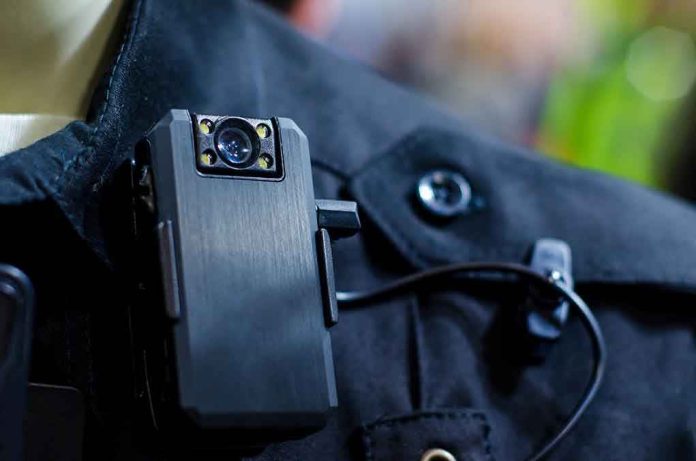
A school district officer’s alleged inaction during the Uvalde shooting raises questions about accountability in law enforcement.
Story Highlights
- Two UCISD officers face charges for their delayed response to the Uvalde shooting.
- The incident reignites debates on police accountability and school safety protocols.
- Critics argue the officers’ actions violated established active shooter training.
- The aftermath prompts changes in Texas school safety legislation.
Delayed Response Under Scrutiny
On May 24, 2022, Salvador Ramos entered Robb Elementary School in Uvalde, Texas, resulting in the tragic deaths of 19 students and two teachers. The incident lasted 77 minutes until Border Patrol agents intervened and neutralized Ramos. Criticism has mounted over the delayed response by local law enforcement, particularly focusing on Uvalde CISD Police Chief Pete Arredondo and Officer Ruben Gonzales, who were among the first on the scene but failed to act immediately.
The delay in response has been attributed to a misclassification of the situation as a containment rather than an active shooter scenario. This decision contradicted established protocols, which prioritize immediate engagement in such situations. The repercussions of this delay have been severe, leading to charges of child endangerment against Gonzales and ongoing legal challenges for Arredondo.
Legal Challenges and Public Outcry
As of January 2026, both Gonzales and Arredondo face charges for their inaction during the critical moments of the Uvalde shooting. This legal development marks a significant step towards holding law enforcement accountable for failures during mass shooting incidents. The charges have been met with mixed reactions, with some defending the officers’ actions as a result of systemic failures within the department.
Gonzales’ attorney, Nico LaHood, argues that the narrative unfairly targets district officers while overlooking broader failures. The case highlights the ongoing challenges in balancing individual accountability with systemic reform. The Department of Justice’s 2024 report criticized the overall response, emphasizing the need for clearer command structures and immediate action protocols in future incidents.
Policy Changes and Future Implications
The aftermath of the Uvalde shooting has prompted significant policy shifts, particularly in Texas. The state has implemented stricter school safety laws, including mandatory active shooter training for all school police departments. This legislative response aims to prevent similar tragedies by ensuring that officers are better prepared to respond swiftly and decisively.
The Uvalde community continues to grapple with the emotional and social impacts of the tragedy. Families affected by the shooting have received settlements, yet the scars of the event linger, fueling national debates on gun control and police reform. As the trial for Gonzales proceeds, the case will likely serve as a precedent for evaluating law enforcement’s role in school safety and crisis response.
Sources:
Timeline: How the shooting at a Texas elementary school unfolded