As Washington refocuses on real threats, Argentina’s new F-16 fighter jets raise urgent questions about who is shaping security in our own backyard.
Story Snapshot
- Argentina has received its first six U.S.-made F-16s from Denmark, restoring its supersonic fighter capability after decades.
- The delivery highlights how previous globalist policies let others shape regional security while America battled woke agendas at home.
- Trump’s renewed focus on strong borders and peace through strength contrasts sharply with years of unfocused foreign policy.
- Conservatives are watching closely to ensure U.S. power is used to protect, not dilute, American sovereignty and taxpayers.
Argentina’s First F-16s Mark a Strategic Turning Point
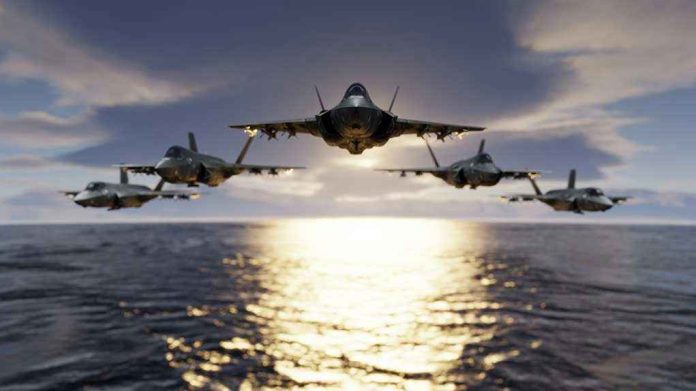
Following their journey from Denmark’s Skrydstrup Air Base, the first six F-16 fighters have arrived in Argentina, restoring a supersonic combat capability the country has lacked for decades. This is not just a technical upgrade; it shifts the balance of air power in South America and signals that outside players are investing heavily in the region’s future. For American conservatives, the key question is whether this development ultimately strengthens or sidelines U.S. influence.
The F-16 is a proven American-designed workhorse, central to Western air power for generations, and now it will anchor Argentina’s modernization effort. While the airframes are coming from Denmark, the platform itself reflects decades of U.S. engineering, logistics, and doctrine. That means whoever supplies training, parts, and weapons will hold long-term leverage. If handled wisely, this can bolster a network of aligned democracies. If neglected, it could open doors for rival powers to step into the vacuum.
Lessons from Years of Globalism and Distracted Leadership
For years under left-leaning, globalist thinking in Washington, America poured resources into endless bureaucracy, climate crusades, and identity politics while adversaries methodically expanded their military reach. That mindset left little strategic attention for what was happening across Latin America, from growing Chinese investment to military deals that often flew under the radar. The quiet return of supersonic capability to Argentina is a reminder that the map is always moving, whether Washington is paying attention or not.
Conservatives who endured soaring inflation, open-border chaos, and ideological social experiments at home remember how little serious debate there was about safeguarding the Western Hemisphere. Instead of strengthening energy independence and regional deterrence, policymakers obsessed over international summits and symbolic accords. A modernized Argentine Air Force, flying advanced fighters, shows what can happen when the United States either leads with clear purpose or allows others to frame the agenda and reap long-term strategic benefits.
Trump’s America First Contrast on Security and Sovereignty
Under President Trump’s renewed America First agenda, there is a stark contrast with years of drift. The current administration has demanded that allies carry more of the defense burden while keeping U.S. interests at the center. That approach matters when countries like Argentina upgrade their arsenals, because it can ensure that any cooperation reinforces U.S. security, border control, and economic strength, instead of becoming another open-ended subsidy paid for by American taxpayers already squeezed by past overspending.
Trump’s team has emphasized tightening the border, cracking down on cartels, and reining in international giveaways that encouraged illegal immigration and drained U.S. communities. In that context, a better-equipped Argentina could either become a partner in regional stability or, if mismanaged, another platform for the same globalist crowd that cheered weak borders and soft-on-crime policies. The decisive factor will be whether Washington links any support to concrete expectations on migration, security cooperation, and resistance to hostile foreign influence.
What This Means for U.S. Taxpayers and Conservative Priorities
American taxpayers who watched Washington spend trillions while their own grocery and energy bills soared are right to ask who pays and who benefits from major defense deals abroad. If U.S.-designed platforms like the F-16 are used to knit together a coalition that defends shared values, fights narco-trafficking, and keeps adversarial regimes out of the hemisphere, conservatives can see a clear return in security and stability. If not, it risks becoming one more elite project detached from Main Street concerns.
For now, Argentina’s first six F-16s are a reminder that air power and geopolitics never stand still. As Trump works to restore strong borders, constitutional protections, and economic sanity at home, developments like this underscore why a clear-eyed, America First foreign policy matters. Patriots will be watching to ensure that U.S. technology and influence are used to defend national sovereignty, not to prop up the same globalist, big-government mindset they decisively rejected.
Sources:
Argentina Receives its First Six F-16s