

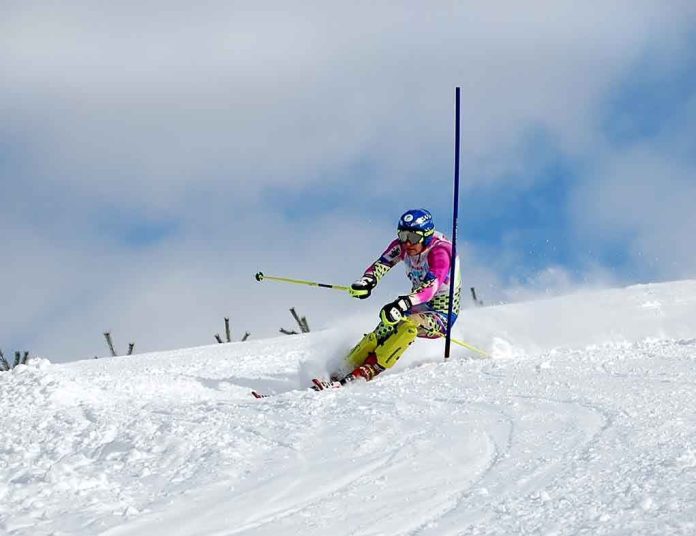
At 41, Lindsey Vonn just reminded the world that grit, discipline, and personal responsibility still beat trendy excuses and lowered expectations.
Story Snapshot
- Lindsey Vonn, 41, scored her first World Cup downhill victory since 2018, shocking critics who wrote her off years ago.
- Her win in St. Moritz marks her 83rd World Cup victory and makes her the oldest skier ever to win a World Cup race.
- Vonn’s comeback highlights the power of hard work, strong coaching, and American excellence over victimhood culture.
- Her performance positions her as a serious contender for the 2026 Milano Cortina Olympic Games.
A 41-Year-Old Champion Defies the Age of Lowered Expectations
On the steep, unforgiving slopes of St. Moritz, Lindsey Vonn delivered a message that cuts against today’s culture of lowered standards: results still matter. The 41-year-old American star captured her first World Cup downhill win since 2018, stopping the clock at 1:29.63 in the opening women’s downhill of the 2025–26 season. This was not a sentimental farewell run; it was a dominant, precision-driven performance from an athlete who refused to accept that age or past injuries would define her future.
Vonn’s victory comes more than seven years after her last downhill win, a drought that would have convinced many athletes to stay retired. Instead, she attacked the Corviglia course with the same fearlessness that made her a household name a decade ago. In an era when elite sports headlines often revolve around activism and branding, her run was refreshingly old-school: no theatrics, no excuses, just a clean, aggressive descent that put her back on top of the podium where performance is the only currency.
From Retirement to Redemption: The Blueprint of a Comeback
Vonn formally retired in 2019 after years of devastating crashes and surgeries, shifting into business, media work, and a life away from the World Cup grind. Yet the competitor never disappeared. By 2025, after years of rebuilding her body and rethinking her approach, she quietly charted a path back. Her first major signal came on March 23, 2025, when she finished third in a super-G at Sun Valley, proving her speed had not faded and setting up something bigger on the horizon.
That Sun Valley podium was more than nostalgia; it was a field test of a new system. Vonn surrounded herself with a focused support team, brought in former Norwegian great Aksel Lund Svindal as coach, and leaned on advanced training and equipment work instead of hype. She later credited “equipment” and “physical training” as central to the turnaround, underscoring a philosophy conservatives recognize: when you control what you can and put in the work, you give yourself a real shot at success instead of blaming the system.
Discipline, Merit, and the Fight Against a Youth-Only Sports Mindset
Alpine downhill is brutally demanding, with racers often exceeding 100 kilometers per hour on ice-slick surfaces where one mistake can end a season or career. Conventional wisdom says only athletes in their twenties or early thirties can withstand the physical punishment. Vonn just shattered that assumption. By becoming the oldest skier ever to win a World Cup race, she challenged the sports industry’s obsession with youth and proved that experience, discipline, and perseverance still have a place in a results-first environment.
Her St. Moritz win also landed in a World Cup field stacked with younger rivals. Just one day after her victory, 22-year-old German skier Emma Aicher won the second downhill on the same slope, with Vonn taking second and Italy’s Sofia Goggia in third. That back-to-back podium stretch underscored a healthy, merit-based competition: no quotas, no special carve-outs, simply the fastest time wins. For many conservative readers, this is what sport should represent—earned success, clear rules, and respect for those who perform, regardless of age or narrative.
National Pride, Olympic Stakes, and What Comes Next
For American fans who watched U.S. prestige erode under globalist, apology-driven leadership, Vonn’s surge is a welcome reminder of what American excellence still looks like on the world stage. Her 83rd World Cup win boosts the profile of U.S. Ski & Snowboard and injects real energy into the run-up to the 2026 Milano Cortina Olympics. Officials now describe her as a serious medal contender, a remarkable shift for someone previously viewed as a retired legend rather than an active threat to win again.
The economic ripple effects are real as well. High-profile victories from a name like Vonn help drive sponsorships, television interest, and tourism to venues like St. Moritz, while inspiring young American athletes to chase big goals without expecting shortcuts. Her comeback stands in stark contrast to the culture of grievance and entitlement that has seeped into much of modern sports coverage. Instead of demanding that the world bend to her circumstances, she bent her circumstances through preparation, sacrifice, and resolve.
Sources:
Lindsey Vonn wins downhill in St. Moritz to continue remarkable comeback
Back to the future: Aicher spoils Vonn’s party in second St. Moritz downhill