

U.S. intelligence now says much of Iran’s leadership is spending “weeks inside highly fortified bunkers,” speaking so slowly and cautiously that even war and peace are filtered through tunnels, couriers, and family intermediaries.
Story Snapshot
- Reports say Iran’s top leaders, including Ali Khamenei, relocated to fortified underground sites in Tehran linked by tunnels after fearing a potential American strike.[1]
- Some outlets describe a family member managing day-to-day access to the leader, raising questions about who really runs the office.[1]
- Iranian officials deny the “hidden in a bunker” label, but admit remote meetings and secure channels are now the norm.
- The core dispute: are these reasonable wartime precautions, or signs of a regime so isolated that its decision-making risks dangerous miscalculation?
The fortified maze under Tehran’s surface
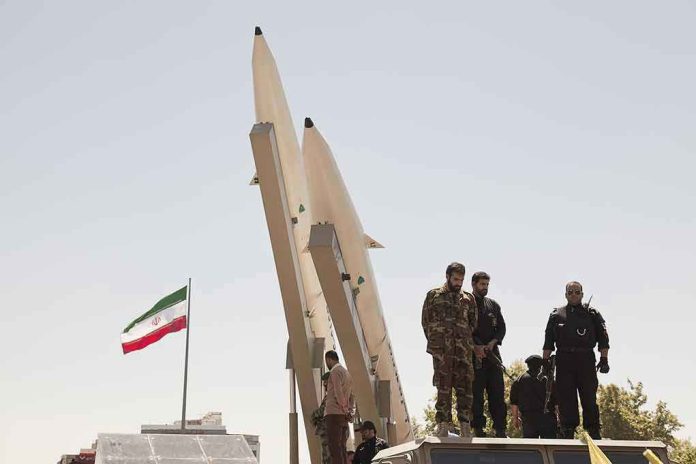
Multiple regional and Western outlets describe Ali Khamenei being moved from his usual public orbit into a heavily fortified underground site in Tehran, a complex reportedly connected by tunnels and designed to withstand modern strikes.[1] Iran International’s reporting, echoed by Ynet, says senior military and security officials concluded there was a “heightened risk of a possible American strike,” pushing the leadership into hardened facilities.[1] This is not a rumor about a safe room; it is a picture of a parallel capital dug into the rock.
Fox News and others add that one such bunker complex formed part of Iran’s broader underground military infrastructure, suggesting these are not improvised basements but planned command sites built for crisis.[2] The pattern matches what we know about other authoritarian systems under pressure: when they feel targeted, they go downward, not outward. Tunnels, compartmented rooms, and multiple blast doors become the new corridors of power, and the psychological shift can be as important as the structural one.
Who is really speaking for the Supreme Leader?
Inside this underground world, several reports point to a striking detail: a family member, Masoud Khamenei, allegedly running day-to-day management of the Office of the Supreme Leader and serving as the main communication channel with executive bodies.[1] That kind of gatekeeper power rarely shows up in official org charts, but it matters enormously. Whoever controls access to the leader controls what information gets in, which requests get delayed, and which decisions never see daylight.
The problem is that this claim, while repeated, rests on thin documentary ground.[1] No state decree, no formal appointment record, no corroborated biography has surfaced that clearly defines Masoud Khamenei’s legal authority. From a common-sense conservative perspective, that opacity is a red flag. When a regime that already concentrates power in one unelected figure allows anonymous relatives to act as conduits behind blast doors, accountability shrinks even further, and factional manipulation becomes easier.
Remote rule: adaptation or creeping paralysis?
The Media Line cites Iran’s Consul General in Mumbai, Saeid Reza Mosayeb Motlagh, who insists Khamenei is not “hidden in a bunker or a shelter,” while openly acknowledging that the leader now conducts meetings remotely using video conferencing and other means. That admission undercuts Tehran’s more dismissive spin. Even if the term “bunker” is disputed, the reality is clear: physical separation and secure channels now mediate the highest-level decisions in Iran.[1]
Where the story becomes less solid is the dramatic leap to “painfully slow” courier chains and near-paralyzed command. The sources referenced in public reporting describe relocation, security fears, and remote meetings, but they do not offer hard data proving systematic decision delays.[1] No leaked internal memo, timestamp study, or authenticated cable shows a measurable lag from crisis to instruction. That does not mean delays are not happening; it means the strongest versions of the claim rest on inference and secondhand commentary rather than verifiable records.
Media echo chambers and the bunker narrative
The entire bunker story lives in a familiar modern pattern: one opposition-linked or politically motivated outlet breaks a vivid claim, then a cluster of secondary outlets repeat it, trimming nuance while amplifying drama.[1] Iran International’s reporting appears again in Ynet, i24News, and others, each layering on adjectives, metaphors, and speculative commentary. Some YouTube commentators go further still, adding unverified claims about coups, medical crises, and regime collapse, which drift far beyond the underlying evidence.
🚨 Iran leadership in bunkers, communication painfully slow.
Delayed communication risks miscalculation, immediately spiking oil and shipping insurance.
🧵👇━━━━━━━━━━━━━━━━━━━━━━━━━━━━━━
**THE ACTION & REALITY**Iran is fortifying command centers…
— Bitcoin-TA (@TaBitcoin) May 26, 2026
For readers who care about facts more than fantasy, that echo effect should trigger caution. When every outlet quotes the same anonymous sources, the chorus can sound like consensus even when it is just the same voice bouncing off the walls. At the same time, official denials from Tehran are not neutral either. Iranian representatives frame the story to project strength, insisting everything functions normally while admitting that leadership now lives and governs through secure, restricted channels. The truth likely sits between propaganda and panic.
Why this matters for American interests and miscalculation risk
American conservatives who prioritize deterrence and clarity should pay close attention to the communications reality inside those bunkers. Authoritarian systems already encourage flattery, fear, and information bottlenecks; add physical isolation, family gatekeepers, and secure-courier habits, and the risk of misreading U.S. signals grows. A leader who hears about American moves days late, through filtered summaries, is more likely to overreact or underreact in ways Washington cannot predict.[1]
Policymakers therefore face a double challenge. They must not swallow every bunker rumor whole, because bad intelligence can be as dangerous as none. But they also cannot assume Iran operates with Western-style, real-time crisis management. The open-source picture—fortified tunnels, remote meetings, contested gatekeepers, and a media ecosystem that rewards exaggeration—points to a regime that is protected, not yet paralyzed, but structurally prone to delay, confusion, and factional distortion at the precise moment when a single misread message could start a war.
Sources:
[1] Web – Iran’s Khamenei moved to fortified Tehran bunker amid US strike fears
[2] Web – Israel announces dismantling of Khamenei’s underground bunker in …