

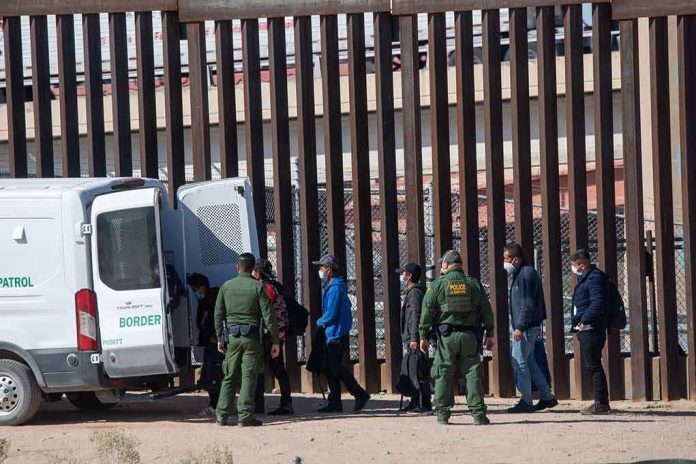
The essential truth of the Ceuta crisis is not that a border was briefly overwhelmed; it is that Spain’s response was built around rapid containment and rapid return, with the headline numbers changing depending on whether reporters were counting a single day, a two-day surge, or the broader aftermath. The evidence supports a genuine mass crossing, a military-backed Spanish response, and large-scale repatriations to Morocco — but it does not cleanly support the specific figure of 48,300 as a single, audited total.
Key Points
- Spain did mobilize troops and additional security forces to Ceuta after a sudden surge of crossings from Morocco.
- Multiple outlets reported that large numbers of migrants were returned to Morocco, often within days and sometimes on the same day.
- The available record supports return totals in the thousands and tens of thousands of crossings, but not a neatly verified 48,300 figure.
- The real analytical problem is counting: arrivals, returns, minors, voluntary departures, and cumulative totals are easily conflated in crisis reporting.
What Spain Actually Did at Ceuta
Spain’s immediate reaction was operational, not rhetorical. Reuters, BBC, NBC, and Euronews all described a reinforcement of Ceuta with military or additional security personnel after migrants crossed from Morocco by swimming, wading, or breaching border barriers. The Spanish government said it would deploy the Armed Forces to support the Civil Guard, while local and national authorities worked to restore security at the enclave’s southern approaches. That matters because the state response was designed to do two things at once: stabilize the perimeter and create the conditions for returns. In border crises, those are often inseparable.
The reporting also shows why the “storm border” framing catches on. The incidents were visually dramatic, politically charged, and large enough to strain local capacity. BBC reported 8,000 arrivals in two days in the 2021 Ceuta episode, with Spain saying around half had already been sent back to Morocco. Reuters described about 4,000 returns under a readmission deal in the same broader crisis. In the later 2026 episode, Euronews and Reuters reported an even larger surge and said Spain and Morocco agreed to speed up returns as quickly as possible. That is the core pattern: a sudden influx followed by a coordinated attempt to reverse it.
Why the Return Numbers Are Hard to Read
The strongest caution in the record is not that returns did not happen; it is that the available sources do not establish a single, defensible method for counting them. The supplied material mixes at least two Ceuta episodes — the May 2021 crisis and the July 2026 surge — and it also mixes different units of measurement: adults, minors, same-day returns, multi-day returns, and overall arrivals. That is exactly how a number like 48,300 can become unstable in public discussion. It may reflect a cumulative estimate, a shorthand for nearly half of a very large influx, or a misread figure that traveled faster than the underlying documentation.
What the public record does support is a broad range of large-scale return claims. BBC said more than 5,600 of 8,000 migrants had been sent back in the 2021 episode, and later BBC reporting said around two-thirds of migrants who reached Ceuta had been returned to Morocco. Reuters reported about 4,000 returned under a readmission deal, and in the 2026 coverage Euronews said nearly half of the roughly 60,000 who entered had returned by early afternoon the next day, with Spain’s Interior Ministry cited as the source. Those figures are substantial. They also underscore why a precise total requires an original ministry bulletin, not just secondary reporting.
The Counting Problem Is the Real Story
Border crises are administratively messy in ways that headline language often erases. “Returned,” for example, can mean formal removal, immediate pushback, voluntary return, readmission under bilateral coordination, or a cumulative total built over several days. It can also exclude minors, who are often treated under separate legal procedures; BBC explicitly noted in 2021 that Spain had sent back adults but not minors. Reuters later reported that Spain began returning Moroccan minors only after a subsequent agreement with Rabat. That distinction is not bureaucratic trivia. It determines whether a reported total describes a political gesture, an enforcement action, or a legally constrained process.
This is why the exact figure of 48,300 should be treated with care. The supplied sources do not include a primary Interior Ministry press release, a statistical bulletin, or a full methodology showing how that total was derived. The evidence does show mass movement and mass return. It does not show a clean audit trail for that exact number. In a crisis shaped by diplomacy, media compression, and rapid policy changes, the risk is not invention so much as aggregation drift: different numbers from different moments get fused into one seemingly authoritative total.
The idea that the current migrant surge in Ceuta is a geopolitical conspiracy orchestrated by Israel to punish Spain is completely false; the crisis stems directly from a Spanish legal loophole and subsequent exploitation by criminal networks. On July 8, 2026, the Spanish Supreme…
— Ayoub Kechchour (אִיּוֹב) (@KECHCHOURAyoub) July 31, 2026
Why Spain and Morocco Favored Fast Returns
The bilateral logic was straightforward. Spain needed to reassert control over Ceuta; Morocco needed to demonstrate cooperation while managing domestic and diplomatic pressure; both governments had an interest in presenting the situation as containable and reversible. Euronews reported that the two countries agreed to step up coordination and review procedures to speed returns. NBC likewise reported that both countries agreed to work together “for the return, as soon as possible, of all the people who entered Ceuta illegally.” That language is revealing. It frames the issue as an operational problem with an administrative fix, not a strategic rupture.
At the same time, the crisis exposed how quickly border governance can become a proxy for broader political conflict. Reuters and other outlets tied the surge to earlier diplomatic tensions and border-control disputes, and the reporting repeatedly emphasized military deployment, emergency response, and the restoration of order. That combination — human movement, security pressure, and bilateral bargaining — is exactly what makes Ceuta so combustible. The enclave is physically small, legally complex, and symbolically oversized. When crossings spike, every count becomes a political instrument.
What a Serious Reading of the Evidence Supports
A serious reading of the material supports three conclusions. First, Spain did mobilize troops and additional security forces in response to a major crossing into Ceuta. Second, Spain and Morocco did conduct, or at least publicly commit to, large-scale returns back across the border. Third, the specific figure of 48,300 is not established in the supplied record with the precision needed to treat it as a settled fact. The controversy is therefore less about whether returns occurred than about how many, when, and under what accounting rules.
That is the proper takeaway. Ceuta is not just a story about people reaching a border; it is a case study in how emergency migration reporting turns fluid administrative activity into fixed-looking numbers. The return operation can be real, even extensive, while the public arithmetic remains ambiguous. In this file, the state response is clear. The exact total is not.
Sources:
insiderpaper.com, nypost.com, pbs.org, youtube.com, bbc.com, facebook.com, aljazeera.com, amnesty.org, reddit.com, theguardian.com