

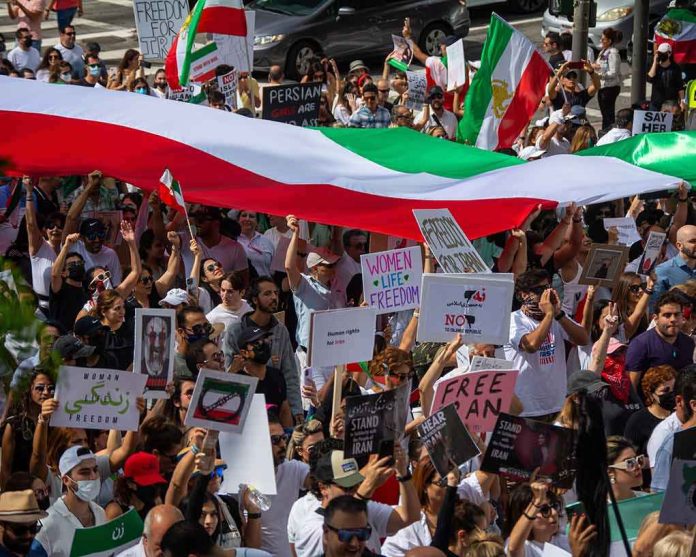
When a state uses capital punishment at speed and in secrecy, the core question is no longer whether some defendants may have committed violence; it is whether the machinery deciding life and death is credible enough to be trusted at all.
The Short Version
- Iran’s judiciary frames recent protest-linked executions as lawful responses to lethal violence and national-security crimes, citing charges like moharebeh and “corruption on earth.”
- Independent investigators from the United Nations and major rights groups describe a pattern of summary proceedings, torture-tainted confessions, and Revolutionary Court trials that do not meet fair-trial standards.
- Absent public judgments, forensic evidence, and transparent appellate records, Iran’s official narrative cannot be independently audited and therefore cannot command confidence.
- The durable way to judge these cases is procedural: if the process is defective, death sentences—even for serious allegations—are unsound in law, policy, and legitimacy.
What Iran says it is doing, and why it matters
Tehran’s public account is straightforward: some protesters crossed the line from dissent to violence—blocking roads, burning property, even causing the deaths of security personnel—and the state has prosecuted them under established offenses in Iranian law, including moharebeh (waging war against God), efsad-e fel-arz (corruption on earth), espionage, and baghi (armed rebellion). The judiciary has emphasized that in certain cases the Supreme Court affirmed death sentences, signaling that legal procedures ran their course. This narrative, if borne out by transparent records and individualized evidence, would present a classic law-and-order framing: severe punishment for severe crimes, not punishment for speech.
That framing carries weight only if the proceedings that established guilt are minimally reliable. Capital punishment is not just a sentence; it is the state’s most irreversible assertion of legitimacy. The decisive test is therefore procedural integrity—access to counsel of choice, exclusion of coerced confessions, public and reviewable reasoning, and evidence that ties a named defendant, not a crowd, to a specific homicide or violent act. In death cases, process is substance.
The countervailing record: what outside investigators found
The independent record assembled by the UN’s Fact-Finding Mission and leading NGOs is stark. Investigators documented executions following hasty or summary trials in Revolutionary Courts that relied on confessions allegedly extracted under torture; defendants were denied lawyers of their choosing during interrogations; and appellate review, where it occurred, was opaque. The UN mission described these as gross violations of due process with terrorizing effects on the wider protest movement, and Human Rights Watch reported dozens of politically linked executions after what it assessed as grossly unfair trials employing vague national-security charges. These are not generalized suspicions; they are specific institutional findings that map onto a consistent pattern across cases.
Scale amplifies concern. UN and NGO reporting places the number of protest-related or politically linked executions in the dozens over recent periods, with broader national execution figures among the world’s highest. In this environment, televised “confessions,” recurring allegations of torture, and the use of broadly worded offenses—moharebeh and corruption on earth foremost—create precisely the fog in which miscarriages of justice thrive. Even if some defendants engaged in serious violence, a system that shortcuts adversarial testing, medical documentation of abuse claims, and publication of judgments cannot credibly separate the culpable from the convenient.
The legal mechanism at issue: Revolutionary Courts and broad offenses
Revolutionary Courts were designed for speed and security-state cases; in practice, that design often narrows procedural safeguards. Trials are short, judges sit without juries, and defense access to full case files can be constrained. When those structural features combine with capacious crimes like moharebeh—whose elements hinge on spreading “insecurity” rather than on a closed list of violent acts—the risk of conflating protest conduct with insurrectionary crime rises. The UN mission and major rights organizations repeatedly highlighted this statutory breadth and its application to protest contexts, noting how it blurs the line between speech, association, and lethal criminality. The result is a legal funnel: from street unrest to the courtroom to the gallows, with insufficient individualized proof publicly shown along the way.
None of this forecloses prosecution for genuine violence. It insists that where the state seeks a life, it must meet a higher standard than assertion. That means adversarial testing of evidence in open court, excluding any confession that cannot be shown voluntary with contemporaneous custody records and counsel present, and reasoned judgments that link defendant conduct to specific victims with documented forensic chains.
Case-level transparency: the missing foundation
Consider recent executions tied to the January 2026 protests, including the pair whose convictions authorities said the Supreme Court upheld. Public reporting indicates the state has not released full judgments, evidence inventories, or forensic reports; nor has it enabled independent verification of the claimed appellate completeness. Without those materials, the outside world cannot see how judges weighed alleged CCTV, ballistics, or eyewitness accounts against innocence claims or torture allegations. In capital cases, “trust us, the courts reviewed it” is not a serious answer; it is an invitation to doubt.
What would change the picture? Publication of complete trial and Supreme Court decisions with case numbers; authenticated transcripts; exhibits such as autopsies, ballistic matches, and chain-of-custody logs; interrogation recordings demonstrating voluntariness; and docketed proof of appellate filings and rulings. Independent experts—UN rapporteurs, bar associations, and medical-legal specialists—should be able to examine the record. Absent that, the government’s narrative cannot overcome the documented pattern of coercion and procedural defect.
Iran: Five Protesters Executed on Charges of “Waging War Against God,” “Corruption on Earth” and Killing Security Personnel Amid Allegations of Forced Confessions Under Torture
Amnesty International condemned the Iranian authorities’ execution of five men between September 30… https://t.co/4bc386gpfi
— وصل للأخبار (@waslnew) October 15, 2026
How to judge competing claims without false balance
Two things can be true at once: protests can contain serious criminal violence, and a state can respond in ways that violate fundamental rights. The evidentiary burden for capital cases requires the latter concern to dominate our assessment. On the scale of credibility, publicly articulated accusations and references to completed appeals weigh far less than the UN’s documented findings of torture, denial of counsel, and summary proceedings—especially when individual case files remain sealed. In such conditions, the presumption must run against the reliability of death verdicts reached through these mechanisms.
For readers wary of external advocacy, the test is conservative: would the same standards persuade you if applied to a system you distrust? Transparent records, adversarial process, verifiable evidence. If those are missing, the sentence is unsound, regardless of the government’s characterization of the defendant or the political temperature of the street.
What it means going forward
Capital punishment can only deter if the public believes it follows from truth, not theater. Iran has a path to that standard—publish, open, and let independent scrutiny do its work—but every rapid execution after a closed and contested process hardens the opposite conclusion: that the gallows are a tool of governance. The remedy is procedural sunlight, not rhetorical escalation. Until then, the weight of credible evidence supports the view that protest-related executions are being imposed through a system too compromised to justify taking human life.
Sources:
amnesty.org, media.un.org, iranintl.com