

Seven butchered bodies on a mountain highway in Guerrero tell a bigger story than the headlines dare to spell out.
Story Snapshot
- At least seven dismembered corpses were dumped along the Tlapa–Olinalá road in Guerrero, Mexico, near a strategic junction. [1][3]
- Authorities have not released identities, motives, or suspects, leaving a vacuum quickly filled by speculation and recycled narratives. [1][3][4]
- The killings fit a grim pattern of serial violence in the municipality of Olinalá, where more mutilated bodies were later found in a pickup truck. [5]
- The case shows how modern mass killings become political theater, media commodity, and investigative black box all at once.
Seven bodies on the asphalt, and almost nothing else
Drivers on the Tlapa–Olinalá highway first spotted what looked like scattered debris near a turnoff toward the small community of Cualac; by the time they slowed down, they realized they were looking at human remains. Mexican outlets report that at least seven dismembered bodies lay beside the road, some of the remains abandoned in black boxes and spread onto the asphalt in the mountain region of Guerrero. [1][3][4] No identification tags, no names, just pieces of people dumped like trash.
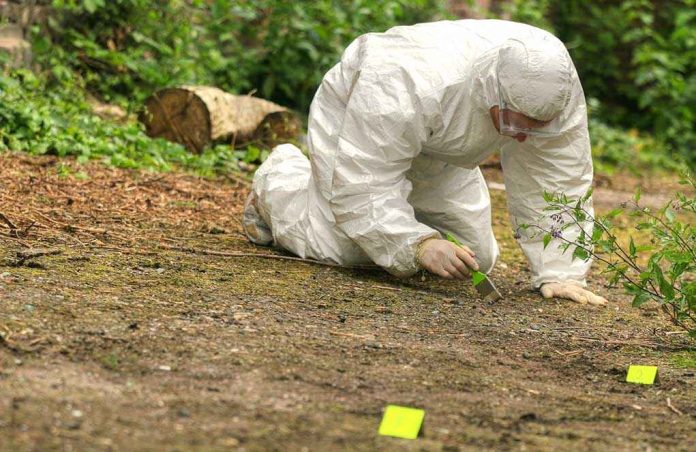
Security forces arrived, sealed off the scene, and moved the remains to the public prosecutor’s office in Tlapa de Comonfort for identification. [1] Reporters on the ground describe ministerial investigators marking off the area while residents watched from a distance, trying to guess whether the dead were local townspeople or outsiders. Authorities, for now, say almost nothing. The state prosecutor has not publicly confirmed who the victims were, why they were killed, or which group ordered the slaughter. [1][3]
A highway, a junction, and the logic of terror
Locals did not miss the geography. The bodies appeared on a route that links the remote mountain zone toward Puebla and the main highway known as the Autopista del Sol, a key artery toward central Mexico and the tourist city of Acapulco. [1] Whoever dumped those corpses chose a junction where regular people travel for work, trade, and family visits. That choice aligns with the ugly logic of organized crime: rule through spectacle, seize the roads, and turn every journey into a reminder of who really holds power.
Media accounts describe the remains as “tirados,” thrown or tossed along the road, some in black boxes, which suggests deliberate staging rather than hurried concealment. [1][3] Cartels and armed groups across Mexico have long used public displays of mutilated bodies as messaging tools, a kind of roadside press release written in blood. Yet responsible investigators and honest observers must admit what they cannot know from this alone: the specific cartel, the exact motive, and the identities of the men or women whose limbs ended up on that pavement remain undisclosed.
From seven bodies to a pattern of repeated killing
The story darkens when you step back from that single afternoon. Analysts tracking extremist and criminal incidents report that the highway dumping is not an isolated aberration; it is part of a series of violent acts across the municipality of Olinalá. Within weeks, authorities discovered six mutilated bodies in a pickup truck in the same municipality on May twenty-first, a separate case that underlines how killing in fragments has become a recurring tactic there. [5] The number of corpses changes from seven to six, but the grammar of terror remains identical.
This pattern matters because it demolishes the comforting idea of a one-off eruption. Repeated use of dismemberment, roadside disposal, and high-visibility locations means someone is treating the region as an open-air laboratory for coercion. From a conservative, law-and-order standpoint, that is exactly why secure borders, disciplined policing, and honest prosecution are not luxuries; they are the minimum shield between civilization and barbarism. When the state cedes rural highways to mutilated warning signs, ordinary citizens pay the price first.
What we truly know, and what we really do not
Much of the early chatter framed the seven bodies as possible townspeople kidnapped the day before, a hypothesis that sounds plausible but currently rests on air. The sources available so far concede that authorities have not disclosed identities; journalists explicitly state that “se desconoce” who the victims are and what the motive might be. [1][3][4] No autopsy summaries, no missing-person cross-matches, no named relatives appear in public documents to anchor that kidnapping story in evidence.
That gap between graphic detail and thin documentation is not unique to Guerrero. Coverage of a separate mass grave with twenty-four dismembered bodies in western Mexico described how investigators used drones, thermal cameras, ground-penetrating radar, and dog teams to locate and identify remains over time. [2] In other words, television images arrive quickly; serious forensic truth limps along slowly. This is why it is reckless when commentators jump from “dismembered bodies on the road” to sweeping, detailed narratives about motive, group identity, and victim backgrounds without transparent proof.
Media recycling and the illusion of certainty
Look closely at how the Guerrero killings travelled across the information bloodstream. One local report mentions seven bodies found along the Tlapa–Olinalá road near Cualac. [1][3] Another outlet copies the same count and basic description. [4] A third repeats the story with slightly different wording. On the surface, three or four stories look like robust corroboration. Underneath, each relies on the same slender core of facts: location, approximate time, number of bodies, dismemberment, no publicly known motive.
This recycling creates an illusion of certainty that ordinary readers can easily mistake for confirmation. When five outlets echo one sparse incident note, it feels like a consensus, even though no new evidence has entered the record. From a common-sense perspective, that is a warning label: treat early numbers and theories as provisional, demand named officials and accessible documents, and distrust narratives that lean more on repetition than on verifiable detail.
Why this distant road matters to you
Someone thousands of miles away might shrug and say, “That is Mexico’s problem.” That attitude misunderstands how violence, policy, and information now cross borders. Cartels that control territory with this kind of terror also drive fentanyl, methamphetamine, and human trafficking streams that head north. The same culture of impunity that lets seven bodies rot on a mountain highway also fuels the smuggling pipelines that flood American streets and hospitals.
A conservative view rooted in sovereignty and accountability draws a straight line: demand honest, transparent investigations from Mexican authorities; insist that American agencies treat cartel power as a strategic threat, not a distant nuisance; and as media consumers, refuse to let sensational fragments substitute for hard facts. Those seven dismembered bodies on the Tlapa–Olinalá road are more than another gruesome headline. They are a reminder that when truth is as mutilated as the victims, the public becomes the next casualty.
Sources:
[1] YouTube – Bodies found in boxes on Guerrero highway; this is what is known
[2] Web – Dismembered bodies of 24 people found in mass grave in Mexico
[3] Web – 7 dismembered bodies found dumped on road in southern Mexico
[4] Web – 7 dismembered bodies were found on the road – – Medianews.az
[5] Web – Authorities Find Six Mutilated Bodies in Pickup Truck in Olinalá