

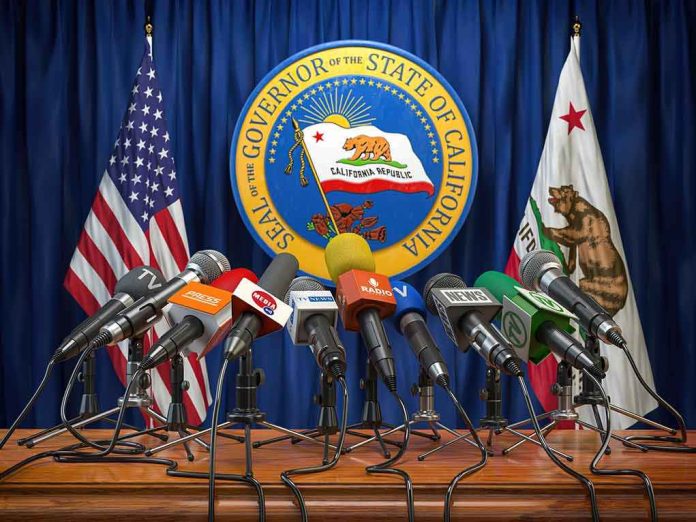
Every fight over a religious holiday on a government calendar turns on the same unresolved question: is the state simply making room for people to practice their faith, or is it choosing a faith to celebrate? California’s AB 2017 has forced that question into the open, and the honest answer is that the bill does both at once — which is precisely why it has become a flashpoint rather than a footnote.
Key Points
- AB 2017, authored by Assemblymember Matt Haney (D-San Francisco), would add Eid al-Fitr and Eid al-Adha to California’s official list of state holidays while explicitly excluding them from judicial holiday status.
- The bill authorizes — but does not mandate — K-12 schools and community colleges to close on the two Eid observances, contingent on agreement between local school boards and unions.
- Critics, led by the California Family Council, argue the bill abandons religious neutrality by naming specific Islamic holidays in statute and funding curriculum materials that “acknowledge and celebrate” them, rather than simply excusing absences.
- Supporters, including CAIR-California and bill sponsor Haney, frame AB 2017 as overdue parity for roughly one million Muslim Californians who currently must choose between faith observance and academic or professional penalty.
- California is not the first mover: Washington made Eid al-Fitr and Eid al-Adha unpaid state holidays in April 2025, with New Jersey and Illinois enacting similar recognitions, establishing a national pattern AB 2017 extends rather than originates.
What the Bill Actually Does
Strip away the rhetoric and AB 2017’s operative text is narrower than either side’s talking points suggest. The Assembly Governmental Organization Committee analysis states plainly that the bill “would add ‘Eid al-Fitr’ and ‘Eid al-Adha’ to the list of state holidays” while simultaneously excluding them from judicial holiday designation — meaning courts stay open. It authorizes, rather than requires, public schools and community colleges to close on those days, and that authorization is conditioned on local school boards and unions actually agreeing to it. State employees would be permitted to use existing holiday credits, not granted new paid leave outright. This is a modest administrative mechanism on its face: excused absences, optional closures, and a symbolic entry on the state calendar.
Where the bill exceeds pure accommodation is in its curriculum component. Fox News reported that AB 2017 also authorizes development of a model curriculum directing schools to “acknowledge and celebrate” the two observances in the classroom. That distinction — between excusing a student’s absence and directing teachers to lead recognition exercises — is the crux of the entire dispute, and it is worth taking seriously rather than dismissing as culture-war noise.
How California Fits a Larger Pattern
AB 2017 did not appear in isolation. Washington became the first state in the nation to recognize Eid al-Fitr and Eid al-Adha as unpaid state holidays when Governor Bob Ferguson signed Senate Bill 5106 in April 2025, and commentators noted at the time that Washington’s list of twenty-plus recognized holidays still omits Easter and Yom Kippur. New Jersey and Illinois have advanced comparable measures. California’s bill, then, is best understood as the third or fourth entry in an emerging legislative template — one built by advocacy coalitions, including CAIR chapters, that have refined the same basic pitch across statehouses: recognize the holiday, authorize optional school closures, and frame the change as parity rather than preference.
The Neutrality Objection, Weighed on Its Merits
The California Family Council’s opposition is not a dispute over what the bill says — it does not contest the bill’s text — but a values argument about what government neutrality on religion requires. Its lobbyist testified that “state law lets any student be excused for any religious holiday at a parent’s request,” arguing the accommodation AB 2017 seeks already exists and that singling out two holidays by name necessarily “creates winners and losers among religions”. A separate statement drew a sharper constitutional line: “The state is not simply accommodating the beliefs of Muslim or Hindu families; it is directing public school teachers to lead exercises that acknowledge and celebrate the religious meaning of these observances. That is the government taking sides on religion”. That distinction between accommodation and endorsement tracks a genuine, decades-old fault line in Establishment Clause jurisprudence, and it deserves to be evaluated on those terms rather than waved off as pretext.
Supporters counter that existing accommodation is inconsistently honored in practice — students and workers report real penalties for observing Eid absent formal recognition — and that formal statutory listing closes that gap. Haney has said plainly that “no student will have to choose between celebrating one of the holiest days of their faith and attending school,” and State Senator Aisha Wahab, California’s only Muslim state legislator, called the move “long overdue.” Both are sincere policy arguments, not factual claims in dispute; the disagreement is about which harm — inconsistent accommodation versus selective state endorsement — the legislature should weight more heavily.
California schools could soon close for two Islamic holidays under a bill moving closer to Gov. Gavin Newsom's desk.
The legislation formally recognizes Eid al-Fitr and Eid al-Adha, allows public schools and community colleges to close for both holidays and lets state employees… pic.twitter.com/VKQvof6exq
— Karen Hunt aka KH Mezek (@karenalainehunt) August 30, 2026
The Double-Standard Claim, and Where It Holds Up
The charge that Christmas, Easter, and Good Friday receive no comparable statutory treatment is factually accurate — none appears on California’s official holiday list either, a point critics on commentary sites have pressed hard as evidence of selective favor. But that comparison cuts both ways: California, like most states, has long treated Christian holidays as de facto accommodated through the ordinary school calendar (winter and spring breaks already track Christian liturgical dates) without ever codifying them by name, which is exactly the “neutral access” critics say they’d prefer for Eid too. The more inflammatory claims aired in some broadcast commentary — linking Ramadan to historical conquest narratives or invoking Sharia law — are opinion advocacy rather than evidence bearing on the bill’s actual legal text, and readers should weigh them as such: rhetorically loud, but not a rebuttal of what AB 2017 does or does not authorize.
What It Means Going Forward
AB 2017 passed the Assembly 64-1 and has moved through Senate committee, putting it on a plausible path to Governor Newsom’s desk. Whatever its fate, the underlying tension it exposes will outlast this particular bill: as America’s religious pluralism deepens, legislatures will keep confronting the impossibility of accommodating every faith’s calendar without appearing to favor some over others. The honest reckoning is that neutral accommodation and named statutory recognition are not the same policy, and conflating them — as both boosters and critics of AB 2017 sometimes do — obscures rather than resolves the actual choice before lawmakers.
Sources:
thegatewaypundit.com, ca.cair.com, trackbill.com, foxnews.com, calmatters.digitaldemocracy.org, harbingersdaily.com