

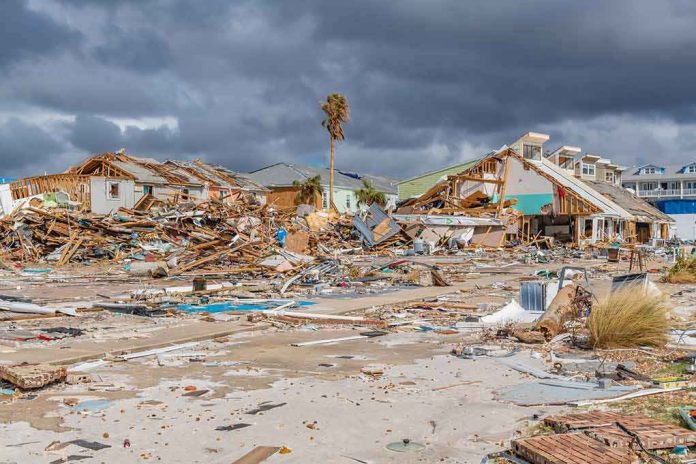
Storm death counts are not a scoreboard; they are a public-health instrument that mixes direct impact with “but for” consequences — and Governor Ron DeSantis’s announcement linking six Florida fatalities to Hurricane Isaias is a textbook example of how states classify and communicate disaster mortality to steer both response and prevention.
At a Glance
- Florida linked six deaths to Hurricane Isaias — a mix of direct and indirect fatalities, consistent with standard disaster-mortality practice.
- The state activated emergency authorities and mobilized agencies before the storm’s closest approach, aligning with established readiness doctrine.
- Public-health guidance supports counting generator-related carbon monoxide deaths and similar “but for” outcomes as storm-related.
- Death attribution and preparedness are different questions; conflating them obscures lessons that save lives in later storms.
What Florida Reported: Six Isaias-Linked Deaths, Explained
Florida officials tied six fatalities to Hurricane Isaias, as announced by Governor Ron DeSantis. Contemporary reporting identified two early cases that illustrate the range of storm-related mortality: a woman killed when a tree struck her residence — a direct impact — and a man who died of carbon monoxide poisoning from a generator running in his garage after the storm — an indirect, post-event death tied to conditions created by the cyclone’s disruption. Both belong in a responsible tally because both would not have occurred absent the storm’s hazard or its cascading effects.
This accounting choice is not creative bookkeeping; it is the norm in disaster epidemiology. Public-health frameworks define an indirect disaster death as one that would not have occurred “but for” the event’s conditions — power loss, infrastructure damage, or disrupted access to care — even when the mechanism is not wind or water. That is precisely why generator poisonings, fatal exacerbations of chronic illness during prolonged outages, and crashes during evacuation often appear in official counts linked to hurricanes.
How Florida Prepared: Legal Authorities and Operational Posture
Before Isaias neared Florida, the state invoked emergency authorities through Executive Order 20-181, which covered multiple East Coast counties and enabled resource staging, interagency coordination, and rapid contracting — the procedural backbone of storm readiness. The order aligned with National Hurricane Center advisories that placed the east coast under warnings and watches as the forecast cone tracked close to shore.
Operationally, Florida’s water and flood-control apparatus moved early. The South Florida Water Management District fully activated its Emergency Operations Center, signaling round-the-clock monitoring, gate and pump management, and coordination with county emergency managers — routine but essential steps to mitigate rainfall and surge risks in one of the nation’s most complex hydrologic systems. Local posture varied as the forecast evolved; some jurisdictions prepared sandbags while determining that evacuations and shelters were unnecessary given track and intensity changes, a judgment call consistent with risk-based emergency management.
Why Death Attribution Includes “Indirect” Losses
The inclusion of indirect deaths in storm tallies often surprises lay audiences who equate hurricane mortality with drowning or trauma. But hurricanes reshape the risk environment well beyond landfall. When power fails, carbon monoxide incidents spike as residents use portable generators improperly; when clinics close or refrigeration for insulin is lost, otherwise-manageable conditions turn life-threatening. The “but for” standard used by public-health authorities is designed to capture these realities so that warnings and resource priorities reflect the full hazard landscape, not just the eye-wall’s path.
Recent scholarship underscores why this matters. Analyses of U.S. tropical cyclones find that the immediate death toll understates the longer arc of harm; excess mortality can persist for weeks to months as communities navigate outages, damaged infrastructure, and interrupted care. Counting indirect deaths is therefore not only accurate — it is policy-relevant, because it directs investment toward generators for critical facilities, carbon monoxide education, and continuity-of-care planning that demonstrably reduce loss of life in future events.
Preparedness vs. Performance: Separate, Linked, and Often Conflated
Two questions frequently blur in public debate after a storm: how many people died because of the event, and how well did government perform. They are related but distinct. Mortality classification is an epidemiologic exercise aimed at understanding the storm’s total human cost; preparedness and response performance is an operational audit that asks whether the state and its partners anticipated needs, mobilized resources, and communicated risk effectively. DeSantis’s six-death announcement addresses the first. The activation of emergency orders, EOCs, and targeted local measures addresses the second.
Evaluating performance happens through after-action reviews, not press briefings. Those structured assessments look for gaps in planning assumptions, logistics, warning specificity, and cross-sector coordination, then drive improvements before the next season. Counting indirect deaths feeds those reviews with signal: a generator poisoning cluster points to messaging or distribution strategies; deaths tied to medical-device failure during outages implicate backup power requirements and patient registries.
The Signal for Future Seasons: What These Six Deaths Teach
The mix of fatalities linked to Isaias tells a familiar story with actionable lessons. First, wind kills — trees fail, debris flies — which validates pre-storm pruning programs, sheltering guidance, and damage-time curfews. Second, the quieter danger comes after the bands pass: portable generator safety must be treated as a life-safety priority, not a footnote, with repetitive, plain-language campaigns and distribution of carbon monoxide alarms alongside fuel and tarps. Both messages save lives when repeated across preparedness briefings and recovery guidance.
On the policy side, the state’s use of emergency authorities and regional water management activation were appropriate to the forecast risk envelope. Those decisions unlock staging and coordination that, when executed well, shorten outage durations and compress the window in which indirect deaths accumulate. Federal emergency declarations complement this posture by streamlining support and reimbursement, allowing state and local agencies to sustain higher operational tempos through recovery.
The weeks-long process to recovery from Hurricane Isaias is underway, and survivors are facing uncertainty in the days ahead.
Convoy of Hope will continue to be there, not only helping with essential needs in the aftermath, but providing long-term support across the Florida… pic.twitter.com/NbrSXqPG9j
— Convoy of Hope (@ConvoyofHope) October 13, 2026
Bottom Line
Florida’s six Isaias-linked deaths — spanning both immediate impact and post-storm consequences — reflect standard, defensible mortality practice. The state’s legal and operational readiness moves tracked the forecast and enabled coordinated response. Treating indirect deaths as integral to the toll is not semantics; it is the evidence base that dictates where life-saving effort should go before the next cone appears on the map.
Sources:
youtube.com, sfwmd.gov, floridadisaster.org, flgov.com, trumpwhitehouse.archives.gov, nhc.noaa.gov, news4jax.com, fox13news.com