

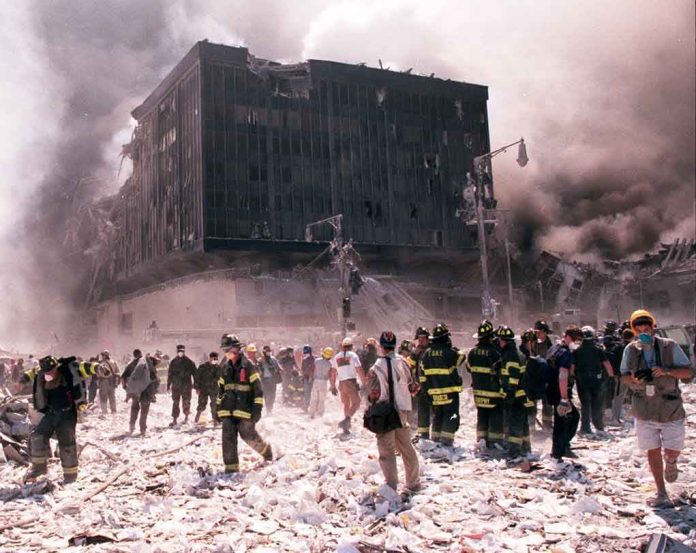
The enduring value of the Pentagon’s 9/11 photographs is not only what they show—impact, fire, rescue, and recovery—but how they were built into an evidentiary record: curated, time-ordered, and preserved by public institutions so that memory rests on documentation, not recollection alone.
The Short Version
- A Navy Archives gallery anchors a reliable visual chronology of the Pentagon attack and response drawn from official 9/11 collections.
- Military.com’s “25 photos” format is a curated window into a much larger archive, not a standalone source; the backbone is institutional records.
- Major repositories—Defense, the George W. Bush Presidential Library, and the Library of Congress—treated 9/11 imagery as both evidence and public history.
- Chronology and selection challenges are normal in archival work; authoritative collections disclose these limits while maintaining factual integrity.
What the photographs document—and why the institutional spine matters
When readers encounter a tight gallery of “intense” Pentagon images, the right question is not whether those frames are dramatic—they are—but whether they rest on an accountable archive. In this case, they do. The U.S. Navy’s archival program assembled a Pentagon 9/11 photo gallery from its holdings, explicitly describing it as a small portion of larger collections and organizing images chronologically from the minutes after impact—an editorial discipline that converts raw pictures into a time-based record. That structure is the difference between evocative imagery and usable history. It allows observers to follow a sequence: initial smoke and fire, the mobilization of responders, perimeter control, and methodical suppression and search.
Elsewhere in government, the same evidentiary approach holds. The George W. Bush Presidential Library curated a set of 60 photographs spanning September 11 through October 30, 2001, a scope that tracks not only the attack but the early policy and ceremonial responses—again, a record designed for public use and scrutiny. The Library of Congress, through its Prints and Photographs Division, mounted a focused collection effort in the year after the attacks explicitly to “factually document and creatively interpret” 9/11; that dual mandate acknowledges that photographs serve both as evidence and as cultural memory, and it makes the acquisition criteria transparent.
How authoritative 9/11 photo archives are built: selection, provenance, and time
Building an authoritative visual record requires curatorial choices. Archives accession materials with attention to provenance (who made it and how), authenticity (is it what it claims to be), and completeness, and then describe and arrange them so that others can verify and reuse the record. None of that undermines accuracy; it is how accuracy is achieved over time. The Navy Archives is forthright that its Pentagon gallery is a selection from larger holdings, with images drawn from different sources; the benefit is breadth, the cost is that metadata such as timestamps may vary in precision, and curators order the set as a best-fit chronology from the earliest moments forward. At national scale, the Library of Congress and Smithsonian documented similar appraisal and acquisition strategies around 9/11, specifying scope and selection to balance representativeness with preservation capacity.
Time alignment, in particular, is hard. The National Institute of Standards and Technology’s World Trade Center investigation underscored just how challenging it is to timestamp disparate photographs and videos in a crisis context; even with concentrated effort, only a share of images can be fixed to the second, and the remainder are placed by triangulation against known events and visual cues. While that study focused on New York, the methodological point generalizes: a precise chronology is a curatorial construction built from the best available data, disclosed as such, and refined when new metadata surfaces. That is exactly the posture reflected in federal photo repositories.
What curated “top N” galleries are—and are not
A compact editorial gallery—twenty-five images on a page—serves a different function than an archival finding aid. It provides an accessible on-ramp to the record, emphasizing narrative clarity and representative scenes. The evidentiary weight comes from the underlying institutional collections. In this case, the Pentagon imagery widely circulated by media outlets maps back to Navy, Defense Department, presidential library, and Library of Congress sources; those institutions state what their images are, how they were acquired, and how they are organized. The gallery is a guided tour, not the warehouse.
This distinction matters for readers who want to go deeper. The Navy’s 9/11 photo hub provides multiple Pentagon-focused sets, including employee evacuation scenes, exterior and aerial views, and responder operations; the Defense Department’s own multimedia archive includes credited frames of smoke, fire suppression, and damage assessment from named photographers with file identifiers—a chain of custody in miniature. When a single-page selection resonates, the larger databases are where one tests scope, compares angles, and situates a dramatic image within the hour-by-hour flow.
Why the images remain trustworthy across decades
Trust accumulates from three habits: institutional transparency, cross-repository corroboration, and public accessibility. First, transparency: repositories describe their holdings as selections, not exhaustions, and they flag limitations in metadata—especially timing—so users understand what is known and what is inferred. Second, corroboration: multiple official collections depict the same scenes from different vantage points, allowing readers to cross-check aircraft debris fields, façade damage, and responder posture as the day progressed. Third, accessibility: these photographs are available for public viewing and reuse, which invites scrutiny, contextualization, and—over time—correction when mislabeling surfaces. That openness is the hallmark of a durable public record.
The result is a layered truth-telling. You can stand inside a tightly curated gallery and feel the day’s urgency. You can step outward into the archival stacks and trace that urgency with timestamps, photographer credits, and adjacent frames. And you can step still further back into acquisition notes and curatorial essays that explain why these images—out of the many captured—were selected, preserved, and surfaced for future citizens to examine.
How to read the Pentagon photographs well
To get the most from these images, read them as part of a system. Start with the sequence: early images show the immediate aftermath; middle frames capture the expansion of incident command and suppression; later photographs document stabilization, investigation, and the start of recovery. Note photographer credits and identifiers in Defense Department listings and match those to corresponding scenes in Navy or presidential library sets; overlap is a feature, not a flaw, because it lets you triangulate time and place across collections. When a caption offers a precise time, treat it as a claim you can check against shadows, smoke conditions, and known event markers—a method NIST formalized for New York that applies conceptually to Arlington as well.
Sources:
military.com, history.navy.mil, history.defense.gov, bbc.com, mcicom.marines.mil