

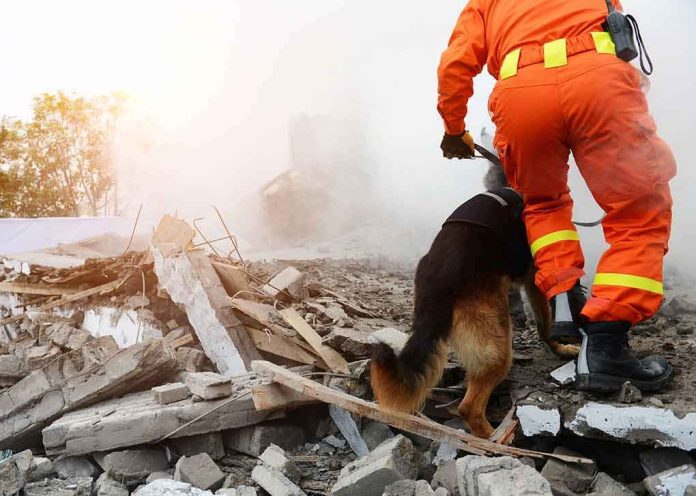
The decisive fact in Colombia’s earthquake response is not merely that the ground moved; it is that the rescue phase is still active, and that every hour of that phase is organized around one unforgiving priority: finding people alive before unstable debris, aftershocks, and exhaustion close the window further.
Key Points
- Colombia’s search-and-rescue operation remains underway after a magnitude 7.4 earthquake struck the west of the country.
- Official and international reporting agree that the immediate priority is to locate survivors trapped under collapsed structures.
- The response has drawn in specialized urban search-and-rescue teams, the army, and local reinforcements in the hardest-hit areas.
- The death toll has climbed quickly, but the operational focus has stayed on rescue rather than recovery.
The Earthquake Response Is Still in the Rescue Window
Colombia’s earthquake response is defined by speed, specialization, and uncertainty of a very practical kind: rescuers do not yet know how many people can still be reached, so they work as if every collapsed structure may still contain a survivor. The United Nations said Colombia’s search-and-rescue operations were continuing after the magnitude 7.4 quake, which had already killed at least 111 people, and that the government had asked for support where it would be most useful. That is the core of the event. The quake produced deaths, injuries, collapsed buildings, and trapped residents; the response has been a live, coordinated effort to pull people out before the situation hardens into recovery work.
That distinction matters because disaster operations do not begin and end with a headline casualty count. In the first hours, the decisive variables are access, structural stability, communications, and whether rescuers can identify the highest-probability sites fast enough to concentrate manpower. Reporting from the ground reflected exactly that logic: authorities said people were still trapped under rubble, and rescue efforts were under way to free them. The rescue phase is always time-sensitive; the later it runs, the more it becomes a race against damaged infrastructure, not just against injury.
How Colombia Built the Rescue Operation
The operational backbone described in the reporting is familiar to anyone who has studied major earthquake response: a layered system built around urban search and rescue teams, military logistics, and local command coordination. According to reporting on the response, the National Unit for Disaster Risk Management activated four specialized USAR teams from Bogotá, Envigado, Yopal, and Medellín, while the National Army placed five platoons of rescue soldiers on alert. Those teams bring the tools that matter most in rubble operations: technical gear, trained dogs, and the discipline to work around voids, fractures, and secondary collapse risks.
The geography of the response also tells the story. One major focal point was Cali, where Mayor Alejandro Eder said at least 25 structures were severely affected and that people were believed trapped beneath the debris. The city requested additional reinforcement, and Bogotá sent 100 rescuers to expand capacity. That is how modern disaster response actually functions: national authorities set priorities, municipalities identify the most damaged sites, and specialized teams move to where the chance of live extrication is still real. The best responders are not the ones who arrive with the largest footprint; they are the ones who can concentrate expertise where the rubble is most dangerous and the clock is most unforgiving.
The United Nations’ account adds an important institutional layer. It said its teams were already on the ground in some of the hardest-hit areas and that possible support could include food security, health, water and sanitation, and protection. That matters because once a quake has crushed buildings and displaced residents, rescue is only the first problem. Survivors need triage, shelter, clean water, and a functioning chain of referral for the injured. In a severe quake, the response begins with extraction and quickly expands into a broader humanitarian system.
What the Casualty Reports Tell Us About Scale
The casualty figures point to a large and still-evolving disaster. The United Nations and BBC reporting both placed the death toll at at least 111, while also noting injuries and ongoing rescue efforts. Those numbers are not the whole story, but they are large enough to show why the response shifted immediately into a wide-area operation rather than a narrow municipal one. Buildings collapsed across multiple cities, residents were left under rubble, and landslides and severe damage complicated access. A quake of this magnitude does not simply damage one district; it stresses transport, medical response, and local command structures at the same time.
Earthquake reporting often moves through a predictable sequence: the first numbers are rough, the locations are fragmentary, and the rescue picture changes by the hour. That is not a weakness in the reporting; it is how disaster scenes behave. The relevant fact is that the official and international accounts consistently described an active search-and-rescue posture, not a completed response. In practical terms, that means the situation remained fluid, with the possibility of additional extrications, further casualty revisions, and a gradual transition only later from rescue to recovery and assessment.
🔴 Powerful 7.4 Earthquake Devastates Western Colombia; At Least 111 Dead !
📍COLOMBIA | August 10, 2026 | HewadPress — A powerful magnitude-7.4 earthquake struck western Colombia on Monday, killing at least 111 people and causing widespread destruction as buildings collapsed… pic.twitter.com/sBw2KvAOwb
— HewadPress (@HewadPress) August 10, 2026
Why the Search Phase Matters More Than the Headline Toll
Earthquake aftermath is often misunderstood because the public tends to treat the death toll as the main measure of severity. In operational terms, the rescue phase is at least as important. A city can report a grim early count and still have survivors under debris who have not yet been reached; conversely, a modest early toll can rise quickly if access is poor or if crews cannot immediately get into collapsed structures. That is why the reporting emphasized canine teams, technical gear, reinforcements, and priority zones rather than only casualty totals. Those are the levers that determine whether an emergency becomes a mass-fatality event or a mass-rescue event.
Colombia’s response also shows the logic of redundancy. When a quake strikes hard enough to topple buildings in several cities, local crews are rarely enough. The structure described in the reporting combined national disaster management, military support, municipal coordination, and international assistance from the UN. Each layer serves a different purpose: local authorities identify the damage, specialized teams enter the rubble, military units provide manpower and movement, and humanitarian agencies prepare the follow-on relief. That division of labor is not bureaucratic ornament. It is the difference between a chaotic rush and an organized attempt to save lives in the narrow window when saving lives is still possible.
What Comes Next After the First Push Into the Rubble
As the search continues, the story will likely move in two directions. One is immediate: whether rescue teams can still find people alive in damaged buildings, especially in places like Cali where the collapse count was already significant. The other is structural: how quickly authorities can convert field damage assessments into shelter, medical care, and safe access to utilities for displaced residents. The UN’s offer of support suggests that the response is already expanding beyond extraction into relief coordination. That progression is normal, but it is also the point at which public attention often fades even as the work becomes harder.
For now, the essential fact remains unchanged: Colombia’s earthquake response is still in its rescue phase, and the central question is how many trapped people can be reached before time, instability, and exhaustion narrow the odds any further. In disaster work, that is the moment that matters most.
Sources:
youtube.com, news.un.org, democrata.es, bbc.com