

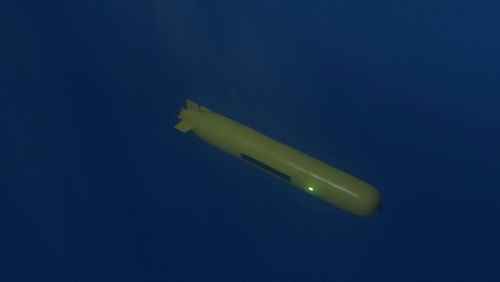
The U.S. Navy has now shown that a nuclear attack submarine can launch and recover an underwater drone through a torpedo tube while staying submerged.
Quick Take
- The USS Delaware completed Yellow Moray underwater drone operations in the United States European Command area.
- The mission included the first forward-deployed torpedo tube launch and recovery of a UUV to finish a tactical objective.
- The submarine ran three sorties, each lasting about six to ten hours, and reused the same vehicle.
- The result points to a wider Navy push to turn attack submarines into drone carriers.
How the Navy Reached This Point
The Navy did not reach this milestone on the first attempt. Earlier work focused on making a medium uncrewed underwater vehicle easier to launch and recover through submarine torpedo tubes, instead of relying on dry deck shelters or outside help. The Yellow Moray system, built around the REMUS 600, became the practical test case for that effort. The recent Delaware mission showed the Navy had moved from theory to a working undersea method.
Reporting says the Delaware operation took place in the European theater and used a standard torpedo tube while the submarine remained submerged. The key point is simple: the crew did not need divers to handle the vehicle. The submarine launched the drone, recovered it, and then repeated the process during three sorties. That matters because it gives commanders a way to extend reach, gather data, and prepare a battlespace without bringing the boat to the surface.
Why the Test Matters for Submarine Warfare
A nuclear attack submarine already brings stealth, speed, and endurance. Adding a recoverable drone gives it another layer of reach. Navy officials and defense reporting say the goal is to let submarines handle sensing, mapping, and other missions with unmanned systems, while the host boat stays hidden. That fits a larger shift in undersea warfare, where one submarine can act as both strike platform and drone mothership.
The result also shows why these programs draw so much attention. Military projects often move from early test to public claim faster than they move to broad fleet use. The Navy has a record of treating technical milestones as proof of a new operational era, even when future scaling still depends on money, reliability, and production. That pattern does not change what Delaware accomplished, but it does explain why one success does not end the procurement story.
What Comes Next for the Program
The Navy’s own public messaging says the demonstrated capability opens new uses for robotic and autonomous systems from submarines. Industry reporting also says the Delaware’s Yellow Moray work is tied to continued development of REMUS variants for torpedo tube launch and recovery. In plain terms, the service is trying to make this less of a one-off test and more of a repeatable wartime tool. That will depend on whether the system keeps working under real fleet conditions.
There is also a budget reality behind the headlines. The Navy has spent years dealing with delays, industrial limits, and canceled or reshaped programs across shipbuilding and unmanned systems. That is why the Delaware milestone matters beyond the technology itself. It gives the Navy a visible success story at a time when many Americans, on both the right and the left, doubt that big federal programs deliver on time or on budget. The hard part is turning a successful demo into a reliable fleet capability.
Sources:
19fortyfive.com, navalnews.com, mrcds.com, news.usni.org, twz.com, reddit.com, dtic.minsky.ai, facebook.com