

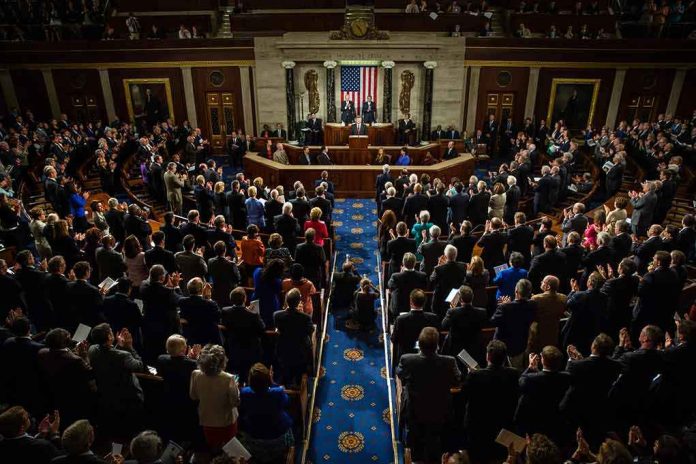
As the Iran war winds down without a single formal war vote, Congress is finally asking if it let your Constitution — and your sons and daughters in uniform — down.
Story Snapshot
- Congress never passed a formal authorization for the Iran war, yet allowed months of combat to roll on.
- Lawmakers used the War Powers Resolution to protest, but could not muster the votes to actually stop the fighting.
- Trump officials say key goals were met, while critics in both parties highlight lives lost, billions spent, and no early exit plan.
- The Iran debate exposes how Congress keeps dodging its duty to declare war, leaving presidents to shoulder both power and blame.
Congress Let War Happen Without Ever Declaring It
Members of Congress are now walking the halls asking each other a simple question: was the Iran war worth it. Congress never passed a formal authorization for the use of military force, even though the shooting lasted nearly four months and spread across the Middle East. Reporters note that lawmakers neither clearly backed the war nor clearly stopped it, leaving our troops in harm’s way under a legal gray cloud that the founders never intended.
Under the United States Constitution, Congress holds the power to declare war, while the president serves as commander in chief in carrying it out. Legal experts say this split was meant to slow down the rush to war and force public debate before Americans were sent into combat. Instead, presidents from both parties have treated war-making as a White House tool, and Congress often reacts afterward with speeches, hearings, and symbolic votes rather than binding decisions.
War Powers Fights Exposed A Weak Congress
During the Iran campaign, lawmakers tried to use the War Powers Resolution to rein Trump in. The House passed one resolution to force an end to the conflict after a few Republicans broke ranks, but the Senate voted nine times and never reached a majority willing to tie the president’s hands. Even when one Senate measure drew forty-seven votes, it failed under simple rules and would likely have been vetoed even if it had passed, underscoring how hard it is for Congress to check a determined president.
The War Powers law was written after Vietnam to pull power back from the executive branch and to require either authorization or withdrawal within a set number of days. In practice, scholars say, it has become a weak “legislative albatross” that presidents mostly work around while Congress hesitates to use its full leverage.[18] The Iran debate followed that pattern: tough questions in hearings, some bipartisan concern over casualties and mission creep, but no clear, enforceable decision on whether the United States should stay at war or stand down.
Costs, Confusion, And A Shifting Strategy
As the dust settles, even supportive Republicans admit Congress is wrestling with “lives lost, billions spent and national security fallout” from the Iran fight.[5] The Associated Press and other outlets describe a conflict that began as a sharp show of force and then turned into a wider campaign with no early exit plan. Lawmakers from both parties demanded clearer goals, warning that Americans were paying in blood and treasure while the public was kept in the dark about the endgame.
Critics in Congress and in the legal world argue that the administration’s justification for war changed over time, from deterring Iran, to rolling back missile threats, to locking in a later memorandum of understanding. This shifting story line made it harder for Congress to judge success or failure. One constitutional scholar wrote that the Iran war shows how far the country has drifted from real checks and balances, with no formal declaration of war and no firm approval vote even after months of combat.[20]
Did The Campaign Work — And Who Decides?
Trump officials answer yes. They point to claims that Iran’s missile and naval capabilities were weakened and that nuclear progress was set back, and some Republican leaders say the “original mission is virtually accomplished.” Supporters argue that firm military pressure forced Tehran to the table and produced a memorandum of understanding that, they say, will help lower oil prices and ease pressure on American families’ budgets.[4] For many conservatives, those outcomes matter when weighing the cost of action versus the cost of doing nothing.
Opponents counter that Congress has not seen the full text of the Iran deal, that lives and money cannot be recovered, and that America is now tied into new security tradeoffs in a volatile region.[2] They argue that if a war is important enough to fight, it is important enough for elected representatives to approve in daylight and to own. The deeper concern is not just this war, but the precedent: every time Congress lets a president wage major conflict without a formal vote, it trains future presidents — of either party — to bypass the people’s branch and treat war as a one-man decision.
Sources:
[2] Web – Congress Wonders as the Iran War Draws to a Close: Was It Worth It?
[4] Web – Congress wonders as the Iran war draws to a close: Was it worth it?
[5] Web – US-Iran war: Trump faces mounting Congressional …
[18] Web – War Powers and the Return of Major Power Conflict
[20] Web – [PDF] War Powers: Congress, the President, and the Courts