

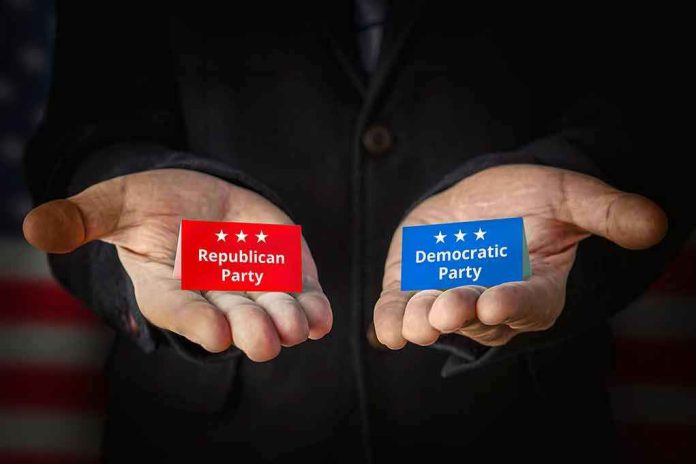
As political rhetoric continues to shape public perception, its increasingly aggressive nature threatens the integrity of democratic discourse.
Story Overview
- Political rhetoric significantly influences public opinion and policy perceptions.
- Campaigns often employ emotional and populist rhetoric, increasing the risk of backlash.
- Emotional manipulation in politics leads to voter fatigue and distrust.
- The need for specific details in political events highlights challenges in understanding rhetoric impacts.
The Influence of Political Rhetoric on Public Opinion
Political rhetoric has long been a tool for shaping public opinion by influencing beliefs about policy consequences. Research shows that predictive appeals, where political actors make contradictory predictions about a policy’s future impact, are effective in altering audience perceptions of outcomes. This technique can sway public support or dissent, depending on how the rhetoric aligns with personal beliefs and values, often leading to polarized viewpoints within the electorate.
The use of emotional manipulation through fear-based messaging and guilt-tripping has become a staple in political communication strategies. While this approach can generate immediate voter action, it often leads to long-term consequences such as voter fatigue and a decline in trust towards political figures. This erosion of trust can have profound effects on the democratic process, making it harder for legitimate dialogue and compromise to take place.
Dimensions of Campaign Rhetoric
Research identifies three key dimensions of electoral campaigns: negativity, emotionality, and populist rhetoric. Negative campaigns, particularly those involving character attacks targeting individuals rather than policies, are more memorable and effective than those focused on policy critiques. However, they carry the risk of significant backlash, potentially alienating voters who might otherwise support the candidate. This delicate balance highlights the challenges political strategists face in crafting effective messages.
Populist rhetoric, which often appeals to “us vs. them” sentiments, can unite a base but also deepen societal divisions. The effectiveness of this strategy depends greatly on the political context and public sentiment at the time, underscoring the importance of understanding the audience and tailoring messages accordingly.
The Need for Specific Context in Political Analysis
Understanding the impact of political rhetoric requires specific context, including details about the event or political situation in question. Without these details, analyses remain broad and risk missing critical nuances. This challenge underscores the need for comprehensive research that includes stakeholder identification, timeline, and impact assessments to fully grasp how rhetoric shapes political landscapes.
By examining the mechanisms and dimensions of political rhetoric, researchers and analysts can help illuminate the complexities and consequences of this influential tool. The data underscores the importance of fostering informed and engaged citizenry to navigate and counteract potential negative effects of manipulative rhetoric.
Sources:
Study on Predictive Appeals in Political Rhetoric
Rhetorical Alignment in Deliberations
Dimensions of Electoral Campaigns
Rhetorical Approach to Political Communication