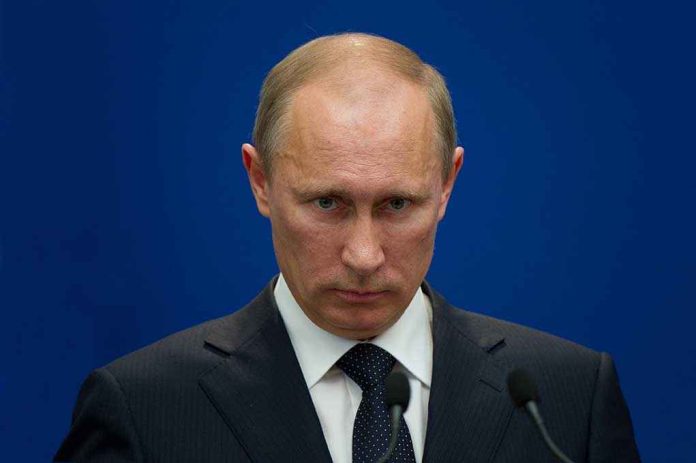
In 25 days, geopolitical dynamics could shift dramatically, spotlighting Trump and Putin in a narrative riddled with alarmist predictions of “Armageddon.”
Story Overview
- The “25 days” countdown is a speculative narrative without a verified event.
- Converging geopolitical developments involve Trump, Putin, and the Ukraine war.
- Speculation suggests potential changes in global security dynamics.
- Ongoing U.S.-Russia and nuclear risks are central to the narrative.
The Countdown Narrative: Fact or Fiction?
The phrase “In 25 Days Everything Changes for Putin and Trump… Are We Heading for Armageddon?” is not tied to any verified event. It’s an alarmist frame seen in opinion pieces and social media, bundling real developments about Putin, Trump, the Ukraine war, and nuclear risks into a dramatic story. No specific “Armageddon” event is scheduled within a 25-day timeframe; rather, the phrase serves as rhetorical language to heighten fear and urgency.
The narrative often points to potential milestones like summits or elections that could alter U.S.-Russia relations. However, these are separate events, not a singular looming disaster. The countdown is more about generating public anxiety than reflecting a scheduled catastrophe.
Trump and Putin: The Peacemaker or the Spoiler?
Donald Trump and Vladimir Putin have been central figures in this speculative narrative. Trump is often depicted as a potential peacemaker who could quickly end the war in Ukraine, while others view his involvement as a destabilizing factor. Trump and Putin’s past interactions, such as their meetings in Helsinki and Osaka, are highlighted to underscore this dynamic. Some narratives frame Trump as uniquely positioned to broker peace, while others suggest his return to power could embolden Russia.
Putin, meanwhile, is portrayed as running out of options, potentially turning to desperate measures if cornered. The narrative suggests he may escalate the conflict, including hybrid or nuclear threats, if pressured by battlefield losses or domestic instability. This portrayal feeds into fears of “Armageddon,” despite no concrete evidence of imminent nuclear escalation.
Ongoing Geopolitical Tensions
The Russo-Ukrainian War continues to be a focal point of global tensions. Despite numerous attempts at negotiation, peace remains elusive. Trump has attempted to broker a ceasefire, but talks have stalled, with Russia demanding significant concessions. The conflict has featured intense drone and missile warfare, impacting both Ukrainian and Russian territories. Meanwhile, Russia faces potential resource shortages by 2026-2027, which could lead to new forms of hybrid escalation to compensate for conventional military strains.
The narrative of impending disaster often overlooks the broader geopolitical context. U.S.-China tensions, ongoing conflicts in the Middle East, and a fractured global order complicate crisis management. In the U.S., deep polarization over support for Ukraine and relations with Russia shape political discourse. Russia’s internal pressures and authoritarian consolidation further contribute to the complex web of global politics.
Sources:
From Admiration to Alaska: Timeline of Trump and Putin’s High-Stakes Encounters
Timeline of the Russo-Ukrainian War (1 January 2025 – 31 May 2025)
Trump’s Foreign Policy Hangover 2026
Russia is Losing Time for Putin’s 2026 Hybrid Escalation