

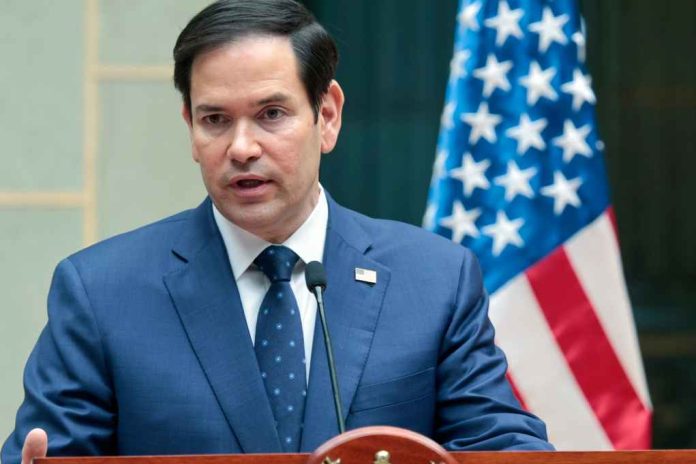
Marco Rubio used a Munich speech to cast communism as a civilizational threat, while critics say he offered more rhetoric than proof.
Quick Take
- Rubio described communist revolutions as “godless” in his Munich remarks and tied them to Western decline.
- He also called the Communist Party of China a dangerous near-peer adversary during his confirmation hearing.
- Critics said his claim that decolonization was a communist plot is historical revisionism and lacks primary-source support.
- The fight over Rubio’s message is also about how trade, migration, and national identity should shape U.S. policy.
Rubio’s Message in Munich
Rubio told the Munich Security Conference that Western empires declined as communist revolutions spread, and he linked that history to today’s policy fights. His speech fit a broader message from the Trump administration: national sovereignty, stronger borders, tougher trade rules, and more focus on domestic industry. Supporters see that as a needed break from elite globalism. Critics see it as a return to old ideological fights dressed up as statecraft.
Rubio also argued that open trade and weak industrial policy helped hollow out American manufacturing. That point connects his anti-communist message to a much wider economic argument about factories, jobs, and supply chains. In his telling, the problem is not only foreign rivals. It is also a Western habit of trusting global markets too much, while letting strategic industries move overseas and letting rivals gain leverage over the United States.
China, Labor, and the Hard Edge of the Argument
In his confirmation hearing, Rubio called the Communist Party of China the most potent and dangerous near-peer adversary the United States has faced. He also tied communist-aligned systems to slave labor and unfair trade practices that harm workers and create humanitarian abuse. Those are serious charges because they move the debate beyond ideology and into national security, labor standards, and economic competition. They also help explain why the issue still cuts across party lines.
For many Americans, especially voters who feel squeezed by inflation, job loss, and foreign dependence, Rubio’s language speaks to real frustration. It taps into concerns that government leaders have protected global systems more than local communities. At the same time, the speech gives his critics an easy target because it mixes policy claims with sweeping moral language. That blend makes it harder to separate what can be tested from what is mainly political framing.
Why the Pushback Is So Sharp
Critics pushed back hard on Rubio’s claim that decolonization was a “sinister communist plot.” Black Agenda Report called that framing historical revisionism and said Rubio offered no documentary trail for such a conspiracy. Common Dreams also attacked the speech as propaganda tied to support for U.S.-backed dictatorships. Those critiques do not fully disprove every part of Rubio’s argument, but they do show that his most dramatic historical claims remain contested and lightly supported in the public record.
WATCH: Secretary of State Marco Rubio lays out a sweeping rebuke of communism, calling it a system that strips away everything that makes people aspire to greatness:
"Communism does not sound good in theory… The world it envisions for all of us is small, flat, gray… without… pic.twitter.com/S1K0dIn6ch
— Fox News (@FoxNews) July 16, 2026
The bigger fight is over trust. Rubio’s allies argue he is naming the real causes of national decline: weak borders, globalist trade, and ideological confusion. His critics say he is recycling Cold War language to dress up a political agenda and avoid hard evidence. That divide reflects a larger mood in the country. Many Americans on both the right and the left no longer believe elite institutions explain hard truths honestly, especially when those truths touch war, trade, or class power.
Sources:
facebook.com, state.gov, youtube.com, blackagendareport.com, axios.com