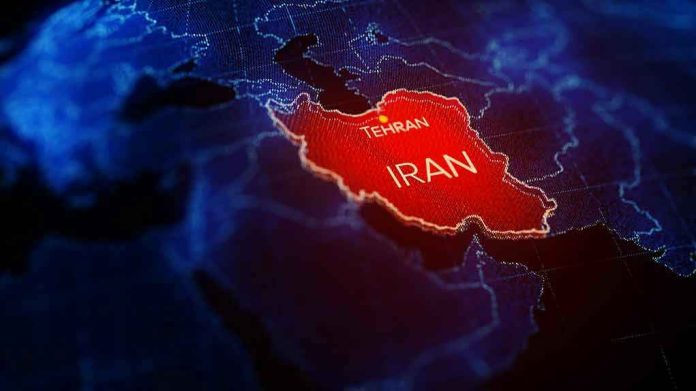
Iran’s state television is broadcasting coerced confessions, sparking global outrage over human rights violations.
Story Highlights
- 355 coerced confessions aired by Iranian state TV over a decade.
- Confessions are allegedly extracted through torture and threats.
- U.S. sanctions imposed on Iran’s state broadcaster for propaganda.
- Victims include activists and political prisoners, creating widespread fear.
Iran’s Systematic Use of Coerced Confessions
Between 2009 and 2019, the Islamic Republic of Iran Broadcasting (IRIB) aired at least 355 coerced confessions, according to a report by Justice for Iran and the International Federation for Human Rights (FIDH). The report highlights how state television is used as a tool to suppress dissent and intimidate activists. Victims report being tortured, beaten, and threatened with sexual violence or harm to their families to force them into reading scripted confessions on camera.
This practice underscores Iran’s strategy of using media as an extension of its security apparatus, effectively blurring the lines between journalism and state propaganda. The IRIB operates as a media hub, linking security, intelligence, military, and judicial organs to instill fear and justify repression, with confessions causing ongoing psychological trauma even if unaired.
Historical Context and Ongoing Practices
The use of televised coerced confessions in Iran dates back to the post-1979 Islamic Revolution era, under Ayatollah Khomeini. These confessions have been instrumental in deterring dissent. The 2020 report quantifies this practice over a decade, marking a systematic approach rather than isolated incidents. Despite international backlash, including U.S. sanctions on the IRIB, the practice continues with little accountability or change.
Iran bans private TV and radio, ensuring IRIB’s monopoly on broadcasting. This state control allows for the manipulation of narratives and suppression of dissenting voices. The IRIB collaborates with the Ministry of Intelligence and the IRGC intelligence to produce these confessions, which are often aired on national and provincial channels to maximize their impact.
Global Reactions and Human Rights Implications
International human rights groups have condemned these practices, labeling them as psychological torture and a violation of fair trial rights. The airing of these confessions not only traumatizes the individuals involved but also instills fear across the broader Iranian public. The EU Parliament has condemned the use of torture-extracted confessions, emphasizing their violation of the presumption of innocence.
The ongoing use of coerced confessions poses significant implications for Iran’s political landscape, legitimizing repression while countering international criticism. The economic impact is notable too, as U.S. sanctions limit the operations of IRIB, affecting the country’s media sector. The practice highlights the need for international intervention and advocacy to protect human rights in Iran.
Sources:
Report: Iran TV airs 355 coerced confessions over decade
Iran Human Rights (2024 executions)
Iran: New report demands end to the rampant use of forced confessions
Iran International (2025 Mousavi)