

When unmanned systems strike commercial ships inside a NATO member’s economic zone, the real story is not just who pulled the trigger; it is that the Black Sea has become a battlespace where attribution lags, insurance drives behavior as much as navies do, and the line between wartime coercion and peacetime commerce is being deliberately blurred.
At a Glance
- Two merchant vessels in Bulgaria’s Black Sea exclusive economic zone were hit in a coordinated air-and-sea drone attack; one sank and lives were lost.
- Bulgaria condemned the strike as a flagrant breach of maritime law but withheld attribution pending debris recovery and technical analysis.
- President Volodymyr Zelenskyy publicly blamed Russia, citing communication between Ukraine’s navy and Bulgarian counterparts and a pattern of prior strikes on Black Sea shipping.
- The episode fits a broader conflict trend: shipping is targeted to impose economic costs, yet forensic proof is often not disclosed quickly, creating an information contest that shapes perceptions before confirmation.
What happened and why it matters for maritime security
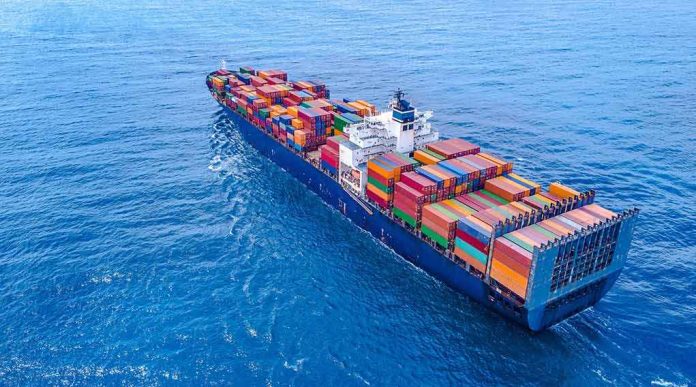
In the pre-dawn hours, multiple drones—both sea-borne and aerial—hit two merchant ships operating within Bulgaria’s exclusive economic zone (EEZ) in the Black Sea. One vessel sank with crew missing; the other was damaged, its crew rescued by a Bulgarian ferry conducting search-and-rescue under difficult conditions. Bulgaria’s prime minister condemned the attack as “absolutely unacceptable,” calling it a flagrant violation of maritime law and navigation rules, and convened an emergency response. The attack did not occur in a legal vacuum: an EEZ grants resource rights, not sovereignty, but it does not license armed attacks on civilian shipping. That is why the incident—beyond its human cost—matters to every shipowner, insurer, and coastal state connected to Black Sea trade routes.
The Bulgarian government’s first posture emphasized facts over narratives: the attack used mixed-domain drones; attribution was not established; and investigators would seek debris and sensor data to determine origin. In parallel, Ukraine’s president tied the strike to Russia, arguing it fit a pattern of Russian coercion of shipping in the theater and citing contact between Ukrainian and Bulgarian naval counterparts. The two statements are not mutually exclusive—one is a demand for evidentiary rigor; the other is a strategic assessment in wartime—yet they created a familiar split-screen: rapid political attribution on one side, procedural restraint on the other.
How drone attacks on shipping actually work
Black Sea attacks increasingly combine surface unmanned vehicles (USVs) with unmanned aerial vehicles (UAVs). USVs approach low and fast along sea clutter, challenging radar discrimination until late in the intercept window. UAVs, meanwhile, can distract defenses, provide targeting, or deliver additional strikes. Against unarmed or lightly protected merchantmen, this pairing is devastating: even modest warheads detonated at or near the waterline can induce catastrophic flooding; aerial hits can start topside fires, compromise power, and force abandon-ship decisions. The advantage for the attacker is asymmetric: a relatively cheap, expendable drone can disable a vessel worth tens of millions of dollars and disrupt a trade lane whose throughput underwrites entire regional economies.
Attribution, however, is technically hard in the near-term. Forensic work commonly requires recovering debris—warhead fragments, propulsion components, circuit boards—and correlating with radar tracks, AIS gaps, electronic warfare logs, and any intercepted command-and-control signals. Even then, states may withhold the most probative material to protect sources and methods. That is why serious coastal states avoid premature blame and why wartime actors, knowing the evidentiary lag, try to define the narrative in the interim. Bulgaria’s defense leadership made precisely that case: until wreckage is in hand and claims of responsibility surface, origin cannot be confirmed.
The record: condemnation without immediate attribution versus pattern-based blame
Bulgaria’s prime minister condemned the strike as unlawful, stressed the mix of sea and aerial drones, and explicitly said the origin was unknown—possibly Russian or Ukrainian—pending investigation. The BBC and Euronews accounts align with this careful stance: no public accusation of Russia from Sofia, focus on rescue, and a warning that the war’s risks are expanding geographically. Bulgaria’s position reflects standard crisis management for a coastal state inside an alliance: maximize credibility by hewing to what can be proved, preserve room to act once facts are established, and avoid becoming a conduit for another belligerent’s messaging, however plausible it may be.
Ukraine’s position, by contrast, anchors in pattern recognition. Zelenskyy argued that the strike mirrored a series of Russian actions aimed at constraining Ukraine’s maritime exports and signaling escalation capacity against third-party shipping. Some reporting found sources claiming the drones were Russian; others documented prior Russian attacks on commercial vessels in the broader Black Sea theater. That pattern case is intelligible to any maritime analyst—the Kremlin has used drones extensively around Ukrainian ports and sea lanes—but as a matter of public proof, it remains an assertion absent disclosed technical artifacts from this specific attack window.
Law, insurance, and the economics of risk at sea
Legally, attacking civilian ships in peacetime waters off a non-belligerent NATO coast is an aggravated breach with consequences that reach beyond flag states. Practically, the first-order effect runs through insurance and routing. After incidents like this, war-risk premiums rise; charterers demand deviation clauses; masters slow-roll transits or hug coastal traffic separation schemes to shorten exposure. One strike can torque a corridor’s economics: a grain cargo that penciled out at last week’s premium no longer clears at today’s, which is the point of coercive pressure campaigns that aim not to seize territory but to make commerce unreliable. Bulgaria’s warning about “complicating navigation” was not rhetoric—it was a balance-sheet forecast for shipowners and brokers watching their loss models update in real time.
NATO’s stake is equally concrete. An attack in a member’s EEZ tests alliance risk tolerance without triggering any automatic collective-defense clause. That grey zone invites further probes unless costs are imposed—through sanctions, interdictions on enabling materiel, or enhanced maritime domain awareness (MDA) that turns ambiguity into evidence. The alliance tool kit here is not carrier groups; it is sensors, data fusion, and classification discipline that can survive disclosure in court or international fora.
Where the disagreement is real—and how to resolve it credibly
The live dispute is not whether drones hit the ships; it is who launched them. Bulgaria’s standard for attribution is evidentiary and recoverability-based. Ukraine’s is inferential and pattern-based, backed by theater history. Both matter, but only one will close the case in a way that persuades courts, insurers, and cautious states. The path to credible resolution is technical: recover debris with documented chain of custody; share cross-border radar and electronic logs for the 02:00–04:00 local window; take sworn crew statements on approach azimuths, sounds, and visual profiles; and—where feasible—declassify enough MDA to anchor a public attribution without burning the crown jewels of collection.
Until that happens, responsible analysis should keep two propositions in view. First, the attack fits a well-documented pattern of Black Sea coercion involving drones against shipping tied, directly or indirectly, to Ukraine’s economy. Second, Bulgaria’s refusal to pre-assign blame is not softness; it is the only way to build a durable case that deters the next strike rather than merely denounces the last one. Both can be true at once—and in a contested maritime theater, they often are.
BREAKING X/OSINT — 6 Oct 2026, 20:01 EDT
BLACK SEA / BULGARIA EEZ — BBC / Reuters / PM Rumen Radev — Air and sea drones struck two merchant ships about 70 miles (112 km) off Byala at ~03:00 local (00:00 GMT). Togo-flagged, Turkish-owned general cargo ALFA WATAN sank; crew…
— Ping AI (@TextPingAI) October 7, 2026
What to watch next
Three developments will tell you whether the Black Sea is stabilizing or sliding further into risk pricing and retaliatory cycles. One: whether Bulgaria publishes even partial forensic findings attributing components to known supply chains or munition families. Two: whether NATO enhances and publicizes MDA along Bulgaria–Romania–Turkey waters sufficiently to compress the attribution gap from days to hours, changing the attacker’s calculus. Three: whether shippers vote with their keels—rerouting, demanding escorts, or accepting higher premiums—because commerce is the truest barometer of perceived security. If those needles move in the wrong direction, the next incident will not be an outlier; it will be the market confirming the Black Sea as a normalized unmanned conflict zone.
Sources:
afp.com, fakti.bg, bgnes.com, english.nv.ua, usnews.com, tass.com, kyivpost.com, euronews.com, ilfoglio.it