

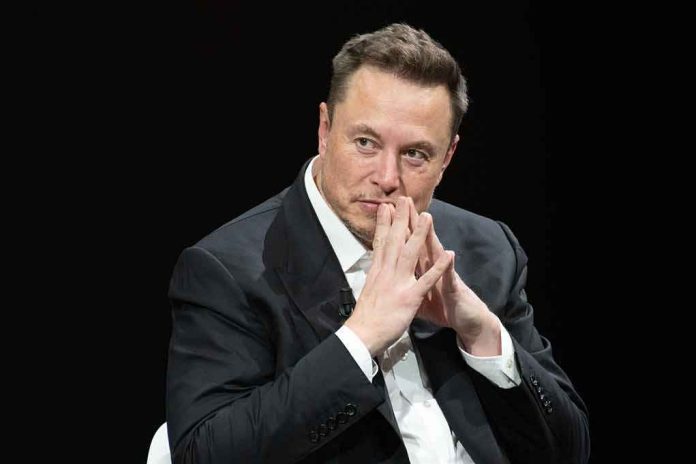
When people talk about artificial intelligence, they usually debate risks; Elon Musk has shifted the center of gravity to consequences, arguing that the most likely outcome of rapidly advancing AI and humanoid robots is an age of abundance in which work is optional and money matters far less than it does today.
The Short Version
- Musk’s core claim: AI and robots will replace most human labor and unlock an “age of abundance,” with jobs changing fundamentally rather than disappearing outright.
- He links this future to concrete constraints and levers: compute, data centers, and above all energy supply and cost.
- Forecasts vary on speed and scope, but credible analyses expect humanoids to take on a growing share of physical work over the next decade.
- The distribution question dominates: even if productivity soars, policy and market design will decide whether abundance feels equitable.
What Musk Actually Said, And Why It Matters
Musk has been unusually categorical: “by far the most likely outcome is an age of abundance,” accompanied by the claim that jobs “are going to change,” not define human life as centrally as they have since the Industrial Revolution. In some venues he pairs this with the idea of “universal high income,” a stronger formulation than basic income, meant to match machine-enabled production that could swamp today’s consumption capacity. He has also compressed the timeline for capability, suggesting AI could exceed the sum of human intelligence within roughly five years and that humanoid robots could scale to extraordinary volumes—claims intended less as science fiction than as a strategic map for power, compute, and capital investment.
The emphasis on energy is not rhetorical garnish. Training and operating frontier models, then animating fleets of physical robots with embodied intelligence, is energy-intensive; Musk has framed “scaling energy” as the long-term gating factor for the United States to remain competitive in AI, with downstream implications for grids, generation mix, and siting of data and robotics facilities.
The Mechanism: From Models To Machines To Markets
To understand the abundance thesis, separate three layers. First, intelligence as a service: foundation models turn cognitive tasks—reasoning, drafting, coding, planning—into software that can scale at near-zero marginal cost. Second, intelligence in motion: humanoid and task-specific robots apply that cognition to the physical world, performing manipulation, mobility, inspection, and care tasks. Third, production functions: when both layers are cheap and abundant, the binding constraints move from labor availability to inputs such as energy, materials, and capital equipment utilization. In that regime, output per human worker can jump because the “worker” is increasingly a fleet of machines coordinated by software; the question becomes how quickly those fleets can be trained, built, powered, financed, and integrated on real factory floors and in service workflows.
Serious analysts converge on near-term milestones: dexterity and autonomy are improving, costs are falling, and pilot deployments are broadening beyond labs. Executive guidance has turned pragmatic—humanoids likely won’t replace entire job categories overnight, but they will take over task bundles as their reliability, safety cases, and unit economics cross thresholds in logistics, manufacturing, and certain service roles over the next three to five years.
The Timeline And Its Frictions
Grand narratives often gloss over the adoption curve. Hardware maturity, safety certification, liability frameworks, integration with legacy systems, labor contracts, and capital budgeting cycles slow diffusion. Even so, credible market work pegs meaningful penetration within the next decade. For example, one bank forecast estimates as many as eight million working humanoid robots in the U.S. by 2040, implying a non-trivial wage impact and a reconfiguration of how physical tasks get done, especially where chronic labor shortages exist. Strategy firms tell clients to plan for substantive task substitution on a three-to-five-year horizon, while warning that site-specific economics will drive sequencing: high-throughput, repeatable tasks in controlled environments will lead; messy, low-volume contexts will lag.
Musk’s framing compresses this into a single arc from today’s pilots to a post-scarcity endpoint. The compression is rhetorical, but the direction of travel—software eating cognitive tasks and robots eating repetitive physical ones—matches what engineering roadmaps and executive playbooks already assume, even if they attach wider error bars to timing.
Jobs Will Change: Historical Pattern, Present Signal
“Jobs are going to change” is less prophecy than pattern recognition. Automation waves rarely delete labor in aggregate overnight; they recompose it. The distinctive feature of this wave is breadth: large-language models attack white-collar cognitive work while mechatronics and computer vision expand into skilled manual tasks. Early economics on industrial robots found measurable pressure on wages and employment in affected regions, even as productivity rose; distributional effects arrived before macro aggregates moved decisively. That is a warning and a guide. It suggests policy, retraining pipelines, and firm-level adoption choices will mediate outcomes long before any endpoint like “optional work” or “money doesn’t matter.”
Still, the supply-side logic behind the abundance claim is coherent. If you expand the effective labor force with millions of general-purpose machines, and if their operating cost per task undercuts human wages across wide domains, then the price of many goods and services falls. The more elastic the supply of care work, construction, and logistics becomes, the more consumer surplus shifts upward—provided bottlenecks such as permitting, grid capacity, and materials processing do not simply replace labor as the new constraint.
From Abundance To Distribution: Income Models In Play
Musk’s twist is not only that work becomes optional; it is that incomes detach from labor, possibly rising via what he and others have described as “universal high income.” In his telling, if machine labor floods the economy with output, a higher baseline income floor becomes both affordable and stabilizing. Variants of this idea circulate across the techno-optimist spectrum—from universal basic income to more muscular formulations funded by productivity windfalls. Even boosters concede the mechanism matters: Who captures the rents created by capital-deepened production, and by what instrument do they flow to households? That is a political economy question, not an engineering one.
Here, mainstream market analysis offers a tempered path. Expect substantial productivity gains and sectoral displacement in the medium term; expect policy experimentation—tax, dividend, or ownership models—as the capital share rises; and expect unevenness as institutions, not algorithms, decide how abundance feels on the ground.
Energy Is The Constraint That Decides The Curve
Across all versions of the future, energy is the metronome. Scaling frontier training, inference, and fleets of embodied robots to the levels implied by abundance narratives multiplies demand for reliable, low-cost electricity. Musk has been blunt that energy supply is the long-run challenge for national competitiveness in AI. If grids cannot expand and decarbonize quickly, compute and robotics hit a cost wall; if they can, learning curves in both semiconductors and hardware integration accelerate adoption and compress costs further, reinforcing the abundance flywheel.
How To Read The Abundance Claim As A Decision-Maker
Take the directional bet seriously, the timetable cautiously, and the distributional question as central. Leaders who wait for certainty will watch rivals lock in cost advantages as robots take on repeatable tasks; leaders who buy the hype uncritically will strand capital in contexts where safety, reliability, or workflow fit are not yet there. The prudent posture is staged adoption: map your task inventory, pilot where the unit economics already clear, invest in data and energy strategy, and build workforce pathways that elevate humans into orchestration, exception handling, and high-trust service roles as machines scale into the base of operations.
Musk’s contention that abundance is the most likely outcome is not a prediction to admire or dismiss; it is an operating thesis. If he is directionally right, the winners will be those who solve for integration and equity as engineering unlocks capacity. If he is early on timing, the path does not change—only the cadence does. Either way, jobs will change. The work now is to decide how prosperity changes with them.
Sources:
youtube.com, jpost.com, pjfp.com, news18.com, usatoday.com, en.sedaily.com, techtarget.com, finance.yahoo.com