

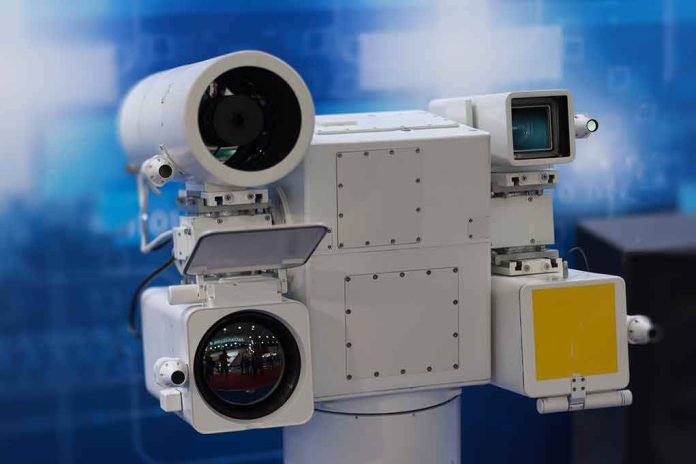
The hard question with cameras is no longer whether an image can be taken in public; it is what happens after capture—how it is stored, searched, shared, and folded into AI systems that outlive the moment and expand a single glance into a durable dossier.
The Short Version
- Modern camera systems turn fleeting observations into searchable, persistent records; the privacy risk sits in aggregation and retention, not the lens itself.
- Two fronts define today’s debate: consumer wearables that may route bystanders’ images into AI workflows, and networked license-plate readers that create nationwide vehicle histories.
- Vendors emphasize guardrails—short retention, audit trails, no facial recognition—while litigation and public records show how data can spread across agencies and become administratively public.
- Law remains permissive for “plain view” observation, yet courts and policymakers are beginning to recognize that scale and duration can transform legality and social impact.
From seeing to searching: how ubiquity changes the privacy calculus
A camera on a street corner looks like a familiar problem; a database behind it is not. The technical shift is straightforward and profound: automated capture at scale, low-cost cloud storage, and API-accessible search turn episodic observation into infrastructure. That infrastructure enables pattern queries—where a car traveled for months, who frequented a clinic, which faces appeared in a bar—that were once infeasible. Civil-liberties groups call this the database problem: not the moment of capture, but the persistent, machine-readable trail that can be repurposed far from the original context. Police-focused automated license plate reader (ALPR) networks illustrate the point vividly; Flock and similar vendors photograph every passing vehicle, log time and location, and allow cross-jurisdictional search, creating de facto travel histories even when no one is a suspect.
That architectural reality is why local procurement choices ripple nationally. What begins as “eyes on a corridor” becomes “queries over a region,” then “federated search across agencies.” Reporting has documented how ALPR sharing extends well beyond a single town, permitting investigators elsewhere to reconstruct movement with a few keystrokes. Some municipalities are now canceling ALPR contracts over concerns that locally collected data can feed federal immigration enforcement or broader dragnets—an acknowledgment that governance questions grow with inter-agency pipelines, not just with camera counts.
What the record shows: litigation, public records, and vendor claims
Two active fronts anchor today’s evidence base. First, consumer camera wearables: plaintiffs in a Meta smart-glasses lawsuit allege the devices captured intimate images and routed them—without meaningful consent—into AI workflows, including overseas human review and labeling. The amended complaint extends the injury theory beyond purchasers to bystanders, arguing that people standing near users had no opportunity to consent to capture or downstream processing within AI systems. These are litigation claims, not adjudicated findings; they matter because they focus the legal question on bystanders and the opacity of AI training pipelines, not just user settings.
Second, ALPR networks: the American Civil Liberties Union describes Flock’s footprint as more than 120,000 cameras, photographing every vehicle that passes and logging the data in a vast, queryable repository—mass surveillance by design, not accident. Investigative reporting has surfaced instances where officers allegedly queried data to stalk romantic interests, reinforcing critics’ warnings that audit trails alone do not prevent abuse; they detect it after the fact, if reviewed at all. Meanwhile, a Washington state trial court ruled that Flock-generated images are public records—underscoring that once government holds surveillance data, transparency laws can make it discoverable and, in part, shareable beyond its original enforcement use.
The vendors’ response: guardrails, limits, and the scope of protections
Flock and its peers do not contest that they capture widely; they argue that design choices mitigate risk. Flock emphasizes that it does not use facial recognition, that local agencies control access, and that every search is tied to a specific user and logged—an audit trail intended to deter or punish misuse. The company has shortened default retention recommendations to seven days, added “Evidence Mode” to preserve only investigation-relevant clips, and rolled out stronger account security and independent security assessments—measures meant to align collection with necessity and reduce exposure windows.
These disclosures complicate blanket claims of unbounded surveillance. A system that limits retention, logs queries, and forgoes facial recognition differs materially from one that performs identity resolution at scale. Yet the core civil-liberties concern persists: pervasive collection plus cross-agency sharing can still enable powerful inferences about travel and association. Vendor policies reduce risk; they do not erase it. And the fact that public-records law can convert ALPR images into documents subject to disclosure shows how data, once collected, acquires lives of its own in administrative systems.
Law’s lag: why “public” observation doctrine only gets you halfway
American search-and-seizure doctrine has long treated observations in public as outside the Fourth Amendment’s warrant requirement; a license plate is in plain view. Courts have generally upheld discrete ALPR reads under this logic, finding that taking pictures of plates visible on public roads is not, by itself, a search. But modern jurisprudence is slowly absorbing the lesson of scale. In Carpenter, the Supreme Court recognized that long-term, automated location tracking can invade reasonable expectations of privacy even if each individual observation looked public in isolation. State courts have begun to echo that reasoning in the ALPR context: with enough cameras in enough places, aggregated historical travel data can trigger constitutional protections.
The gap between permissive “plain-view” precedents and aggregation-aware rulings leaves policymakers to set interim rules. Where legislators and city councils move, the pattern is consistent: shorter retention by default, documented purpose codes for queries, independent audits, and explicit prohibitions on sharing outside defined purposes. In the absence of uniform federal standards, those choices function as the real law on the ground.
What to do now: a practical agenda that respects safety and privacy
Start with scope, not slogans. Require agencies and vendors to publish deployment maps, retention schedules, sharing partners, and query-logging schemas in plain language. Set a default retention short enough to meaningfully reduce risk—seven days is becoming a reference point—paired with case-based preservation that is time-limited and reviewable. Demand independent audits: not just penetration tests, but statistical reviews of query justifications, cross-agency access, and anomaly detection to flag pretext or pattern-of-abuse behavior. Where federal access is a concern, codify bright-line purpose restrictions and publish all memoranda of understanding and query logs responsive to FOIA-equivalent requests.
For consumer and workplace cameras, shift the consent model from implied to explicit for non-users. That means visible indicators when recording is active, posted notices where camera glasses are allowed, and policy carve-outs—restrooms, clinics, schools—where wearables are barred outright. The open questions raised in the Meta litigation should be answered with documentation: end-to-end data flow diagrams for AI modes, names of overseas processors if any, retention periods for human-labeled clips, and the provenance controls that keep bystander images out of model training absent consent.
Where the real disagreement lies—and what it means long term
No one disputes that cameras can help solve crimes; the disagreement is over proportionality and control. Vendors argue that audit trails, short retention, and the absence of facial recognition keep ALPRs from becoming generalized identity surveillance. Critics counter that capturing everyone by default and enabling cross-jurisdiction searches builds an infrastructure whose capabilities inevitably expand, especially under crisis or political pressure. The evidence to date supports both halves: tangible guardrails exist, and so do documented examples of overreach and pathways for wider use. The policy task is therefore not to choose belief but to design systems that make misuse rare, detectable, and sanctionable—and that keep default collection narrow enough that mistakes do not become life-logging by accident.
Sources:
theatlantic.com, theguardian.com, thehill.com, npr.org, flocksafety.com, fortune.com, abcnews.com, yahoo.com, pbs.org, tec-tel.com