

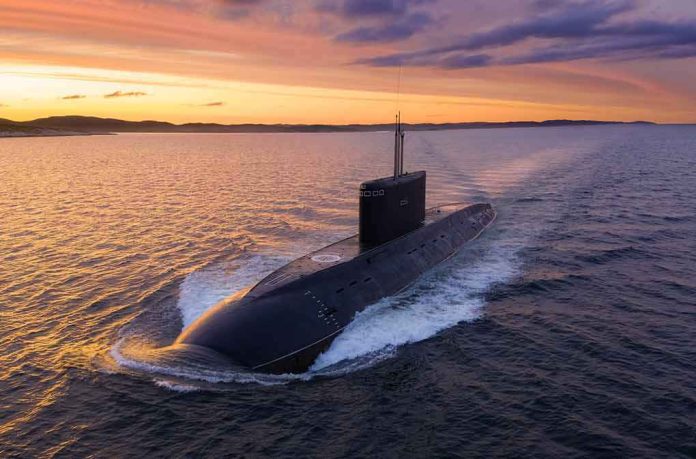
A ten-hour blaze that began with a bag of rags on a bunk didn’t just gut a submarine; it exposed how a trivial act, in the wrong place, can cascade into a strategic loss measured in years of combat power and hundreds of millions of dollars.
The Short Version
- A civilian sandblaster, Casey James Fury, pleaded guilty to arson for the May 2012 USS Miami fire and a second fire weeks later.
- Prosecutors said Fury set the blaze to leave work early; a federal judge later imposed a 17-year sentence.
- Damage estimates rose into the hundreds of millions, and the Navy ultimately decommissioned and scrapped the submarine rather than repair it.
- Fury later claimed his confession was coerced, but the plea and sentence stand; the public record supports arson as the cause and scrapping as the outcome.
What actually happened aboard USS Miami
On May 23, 2012, while USS Miami (SSN‑755) was in overhaul at Portsmouth Naval Shipyard, a fire ignited inside the boat and burned for roughly ten hours as yard teams and local departments fought to control it within the tight confines and complex geometry of a Los Angeles–class attack submarine. Investigators and prosecutors later said a civilian painter-sandblaster, Casey James Fury, started the fire so he could go home early; Fury pleaded guilty in federal court that November to two counts of arson—one for the Miami blaze and another for a smaller fire several weeks later outside the sub—and he received a 17-year sentence in March 2013. The court’s custody decision prior to trial underscored the gravity: a magistrate judge ordered him held without bail, flagging the second fire as especially concerning after the devastation of the first.
The consequences were material, not symbolic. The Navy assessed damage in the hundreds of millions; figures in contemporaneous coverage range from roughly $450 million to more than $700 million, depending on whether one counts initial repair estimates, later scope growth, or broader program and schedule impacts. Whatever the exact accounting line, the Navy ultimately concluded that repair no longer made economic or operational sense. Miami was decommissioned in 2014 and later towed for dismantlement, closing the book on a combatant that entered service in 1990 and still had useful life left under normal circumstances.
Mechanics: why a “small” ignition became a billion-dollar problem
Arson on a submarine in overhaul is a force multiplier for damage because maintenance periods invert normal risk controls. Compartments are open, industrial debris and rags are present, temporary services snake through passageways, and parts of the hull are scaffolded. Fire detection and suppression are in atypical configurations; watchstanding and access control are shared between ship’s force and yard personnel. A smoldering start in a soft-goods space can transition rapidly to compartment-to-compartment spread via cableways and ventilation trunks, with heat and smoke driven to spaces that are otherwise difficult to reach. That is what Miami’s ten-hour fight represented in practice: a geometry problem, a materials problem, and a manpower problem that together overwhelmed what would have been a localized incident in a clean, closed, underway configuration.
The Navy’s own retrospective on major fires has been blunt. In its Major Fires Review, the Department identified Miami as an arson event—distinct from accidental industrial causes—and grouped it with other shipboard blazes to draw out systemic vulnerabilities across maintenance and modernization settings. That conclusion doesn’t minimize the criminal trigger; it clarifies that even a deliberate ignition exploits the same layered weaknesses—housekeeping, temporary services, and watchbill rigor—that allow flames to gain purchase in these environments.
From fire to forfeiture: how a nuclear attack submarine ends up scrapped
Boats are not usually written off because of soot and scorched paint. They are retired when heat compromises structure, warps alignment, delaminates insulation and coatings, and cooks electronics and miles of cabling whose certification costs more to verify than to replace. The first repair figures on Miami were large but not unprecedented; then scope expanded as inspections reached farther from the seat of the fire, and budget constraints tightened. By 2014, Navy leadership faced an unattractive trade: tie up scarce shipyard capacity and dollars on a bespoke, high-risk restoration, or redeploy that money and labor to other attack submarines and surface combatants with clearer returns. They chose the latter—decommissioning the boat and moving to scrap. Public reporting fixed the decision to cost growth and fiscal pressure after arson drove the initial loss.
That choice was not a referendum on the class or the value of the submarine—Miami was a proven Los Angeles–class hull—but on marginal utility. When cost-to-restore approaches or exceeds the cost of buying back readiness elsewhere in the fleet, the calculus shifts. In that sense, the fire destroyed more than steel: it erased future patrol days, training opportunities, and warfighting options that would otherwise have flowed from that hull.
Accountability and sentence: how the justice system read the facts
Arson on federal property that endangers life and destroys a national security asset draws a severe response. After his guilty plea, Fury received a 17-year sentence—an outcome consistent with prosecutors’ argument that the act was deliberate and catastrophically harmful. Media accounts at sentencing repeated the government’s characterization of motive—that he wanted to leave work early—and the court set restitution in the hundreds of millions, even if collection is largely symbolic given the sums involved. These are not the penalties of an equivocal case; they reflect a court persuaded of intent and consequence.
There is some variance in publicly reported damage figures—$450 million, $700 million—because reporters, Navy spokespeople, and later retrospectives were describing different ledgers: immediate repair estimates, revised engineering scope, programmatic impacts, or restitution proxies. The core, uncontested reality is that the fire yielded costs in the high hundreds of millions and tipped the decision to decommission; by June 2015, Miami had left the shipyard for scrapping.
The later challenge: a claimed false confession
Years after sentencing, Fury told a reporter he did not remember setting the fire and said his confession was coerced under threat of a potential life sentence; he also sought to revisit his sentence on claims of ineffective counsel. Those statements exist in the record and deserve mention. They have not, however, displaced the legal foundation of the case: a knowing and voluntary guilty plea entered in federal court, followed by a substantial sentence and the Navy’s subsequent operational decisions premised on arson as the cause. Absent a vacated plea, new forensic findings, or appellate relief, the weight of evidence for the historical record remains with the plea and the Navy’s classification of the incident.
What the Miami case teaches about shipyard risk
The simplest lesson is also the hardest to operationalize: low-energy ignitions in maintenance settings can be existential. That means three imperatives. First, housekeeping and hot-work discipline must treat rags, plastics, and dust as fuel, not background clutter. Second, access control and watchstanding in yard periods must anchor responsibility in named humans with escalation paths and logs that are actually read. Third, industrial partners and uniformed crews need shared mental models about temporary services, detection outages, and the difference between a five-minute smolder and a five-hour catastrophe. The Navy’s reviews since Miami have pressed in those directions; the fleet is safer when small acts—malicious or negligent—cannot find the oxygen, material, or time to become history-making losses.
The cost of a shortcut
Miami’s destruction is often reduced to a motive line—he wanted to go home early—because it captures the absurdity that a trivial desire could delete a warship. That shorthand risks obscuring the larger point. The submarine did not die because one man had a bad idea; it died because that idea met a permissive environment for flame spread, a complex maintenance posture, and an unforgiving budget. Criminal intent lit the match. Systems and incentives determined the bill.
Bottom line
The historical case is clear: arson caused the USS Miami fire; the costs climbed into the hundreds of millions; the Navy decommissioned and scrapped the boat; and the arsonist is serving a 17-year federal sentence. Later self-exculpatory statements exist but have not altered that record. For those charged with guarding the fleet’s readiness, Miami is not only a story of a crime punished—it is a standing order to harden the maintenance environment so that the next spark, from any source, never finds a way to grow.
Sources:
warhistoryonline.com, news.usni.org, navytimes.com, militarytimes.com, cbsnews.com