

When a second attendee is found dead at the same Burning Man, the question is not whether the event is unsafe by design; it is how a temporary city in a hostile desert manages predictable medical emergencies, rare outliers, and the information vacuum that follows every fatality.
At a Glance
- Festival organizers confirmed two deaths during the event: one after a reported on-site medical emergency and another discovered at a camp the following afternoon.
- Local law enforcement said foul play was not suspected in at least one of the cases while investigations proceeded.
- Causes of death were not immediately released; identification for the second attendee was reported by some outlets but not universally confirmed by authorities at the time.
- Within the longer history of large-scale festivals, most fatalities cluster around medical episodes, poisoning/overdose, trauma, or crowd dynamics; Burning Man’s figures typically remain in the low single digits annually.
What Happened: Two Deaths in Black Rock City
Burning Man organizers reported that a man in his mid-50s suffered a medical emergency late Thursday, received immediate lifesaving intervention, and was pronounced dead at the event’s on-site emergency facility. The festival’s statement emphasized the sequence of care—recognition of distress, first response, transport to the medical center, and attempted resuscitation. The next afternoon, a second participant was found dead at his camp by campmates around 3 p.m.; organizers confirmed the second fatality on the festival’s website. Law enforcement briefings indicated no suspected foul play in at least the first case while investigations remained open. Public identification of the second decedent, including age and circumstances of discovery, appeared in multiple outlets citing the festival’s communication channels. The causes of death for both attendees were pending medical examiner determination at the time initial reports ran.
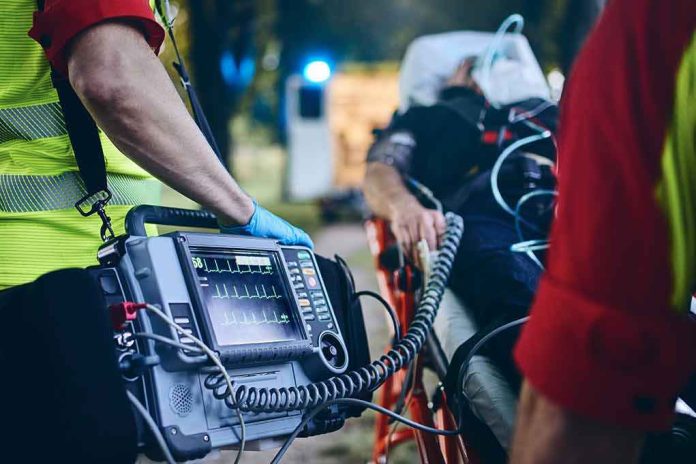
These statements—short, factual, and bereft of speculation—fit the operational cadence of a temporary city that handles thousands of routine medical encounters across a week. The medical tent at Burning Man functions as an urgent-care and stabilization hub; its mission is to triage quickly, intervene when minutes matter, and escalate to higher care when warranted. When a participant dies despite those measures, the handoff to law enforcement and coroner procedures is immediate, and public updates stay deliberately narrow until autopsies, toxicology, and witness interviews conclude.
How Burning Man’s Emergency Response Actually Works
Black Rock City’s medical infrastructure is built around austere-medicine principles—capable stabilization in a resource-scarce environment, then rapid coordination with ground or air transport to regional hospitals as needed. Staffed by contracted medical providers, volunteers with specific credentials, and integrated radio and dispatch protocols, the system manages heat-related illness, dehydration, lacerations, fractures, intoxication, and the whole spectrum of festival medicine. The “golden hour” ethos applies: identify deterioration early, deploy advanced life support when indicated, and move decisively. In fatal cases, even robust systems lose to physiology—sudden cardiac events, intracranial catastrophes, or severe toxic exposures can outpace even textbook care.
Importantly, organizers and deputies use language like “foul play not suspected” to flag early impression, not final verdict; it reflects scene assessment—no signs of assault, no witness accounts of violence, no obvious trauma—while they await the medical examiner’s work. In a separate, sobering chapter the year prior, law enforcement did investigate a stabbing death as a homicide; the contrast underscores the difference between an apparent medical fatality and a criminal investigation’s triggers. The current two cases, by comparison, came with no immediate signals of violence according to early reports from the sheriff and organizers.
Context and Base Rates: Tragedy Against the Scale of a Temporary City
Burning Man brings roughly tens of thousands of people into a high-heat, high-dust environment for nine days, layered with sleep disruption, strenuous cycling, and occasional substance use. Across the live-events sector, the modal causes of death are consistent: natural medical crises, overdose/poisoning, traumatic injury, and, more rarely, crowd disasters. Academic reviews of festival mortality have tracked these categories repeatedly; while headline clusters draw attention, the base rate for any given event remains low, and most festivals finish without a fatality. Burning Man’s recent history typically falls into the low single digits per year—tragic for families and camp communities, but not out of pattern for a temporary city of comparable scale. That pattern is visible in both media syntheses and the peer-reviewed literature on festival fatalities.
This is not a safety absolution. It is a calibration exercise: with ~60,000 residents, a weeklong city will experience baseline medical emergencies even under ideal conditions. The relevant question is whether the event’s systems mitigate preventable deaths. On that score, organized hydration campaigns, on-playa medical access, and strong radio dispatch culture have steadily professionalized response. The outliers—like the prior year’s homicide—are statistical anomalies against decades of operation, yet instructive for investigative preparedness and evidence-handling in a dust-blown, transient setting.
Where Uncertainty Rightly Lives: Autopsies, Toxicology, and Timelines
Immediate cause-of-death declarations are uncommon at festivals because the determinants so often require laboratory confirmation. Cardiac ischemia versus lethal arrhythmia; heat stroke versus exertional hyponatremia; accidental poisoning versus combined-substance toxicity—these are distinctions you do not guess at from a tent-side assessment. Toxicology panels, histology, and scene reconstruction take time. That delay frustrates the news cycle but protects accuracy. In the current pair of deaths, early facts support that one attendee suffered an acute medical emergency with resuscitative efforts, and another was later discovered deceased at camp; both are under routine postmortem review, with no initial signs of foul play in at least one case, according to the sheriff.
The corollary is that the public should expect sparse official comment until those determinations land. Experienced festival teams know that moving fast on logistics and moving slow on conclusions is not reticence but rigor. A familiar arc follows: confirm death and basic circumstances; notify next of kin; defer mechanism and manner to the medical examiner; update law enforcement if cause signals criminality. That arc is precisely what has unfolded here so far.
Second Attendee Dies at Burning Man 2026 Just Days Before Festival’s End
Burning Man officials said in a statement that campmates found Craigh Mann, 60, deceased at his camp on Saturday, September 5, at approximately 3 p.m. The organization did not disclose a cause of death or… pic.twitter.com/FCDzZqlQlv
— BeezLoop News 📰🗞️ (@BeezLoop) September 7, 2026
Implications for Participants, Camps, and Organizers
Participants control far more of their risk profile than most realize. The decisive levers are mundane: acclimatize and pace exertion; front-load electrolytes, not just water; plan sleep; designate a sober lead in camp each night; and approach any psychoactive use with caution, dose discipline, and a sitter. Camps should rehearse medical check-ins, maintain a basic kit with a pulse oximeter and cooling tools, and keep a posted map to medical services. Organizers, for their part, can continue to tighten the last-mile links—rapid wayfinding to care, plain-language safety signage, staging of mobile teams during heat spikes, and post-incident education that translates cases into practical prevention.
What This Year’s Losses Mean in the Long View
Two deaths in a single year are a gut punch for a community that treats Black Rock City as both art project and civic experiment. They are also, measured against the scale and environment, consistent with what a high-tempo temporary city confronts. The appropriate standard is not zero tragedy—a fantasy no permanent city achieves—but relentless reduction of preventable harm. On the public record to date: one attendee appears to have died following a medical emergency with on-site care; a second was found deceased in camp; law enforcement flagged no suspected foul play in at least the first case while investigations and medical determinations proceed. The work now shifts to coroners’ findings and to the practical steps that make next year’s event marginally safer without diluting the very conditions—collective effort, endurance, radical participation—that define it.
Sources:
feedpress.me, abcnews.com, rgj.com, nypost.com, 2news.com, nbcnews.com