

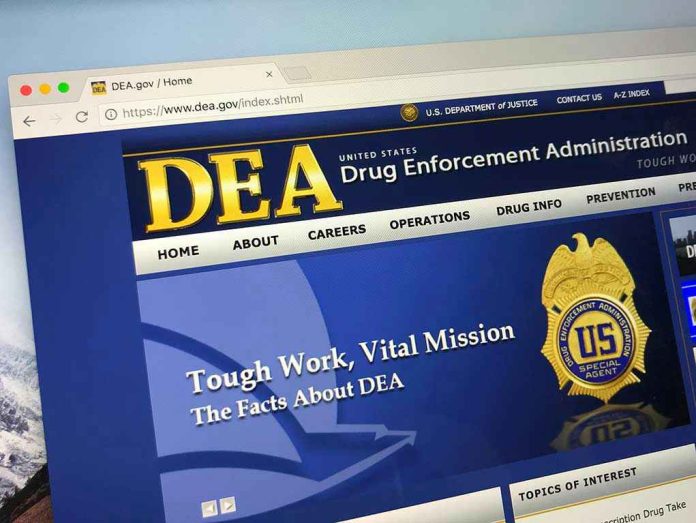
Washington has moved the Western Hemisphere back to the center of U.S. strategy and is operationalizing that choice with tools that reach from visas to defense forums; whatever label one prefers—Monroe Doctrine revival, Trump Corollary, or hemispheric defense—policy is being aligned to deny extra-hemispheric leverage, suppress cartel power, and reassert American primacy.
At a Glance
- The 2025 National Security Strategy elevates the Western Hemisphere and commits to restoring U.S. preeminence in the region.
- Senior officials publicly frame policy as keeping adversaries and traffickers from using the hemisphere as a base.
- A new visa restriction authority targets actors in the Americas who materially support activities “adversarial to” U.S. interests.
- Defense leaders invoke the Monroe Doctrine’s “best tradition” in regional ministerials to rally partners.
What has actually changed: a strategy-to-tools shift around a hemispheric priority
The administration’s 2025 National Security Strategy (NSS) names the Western Hemisphere as a priority theater and speaks of “restoring American preeminence” after a period of drift. These are not throwaway lines; they anchor a throughline that connects border management, counter-cartel campaigns, infrastructure and technology security, and diplomatic coalition-building into a singular geographic frame. Public-facing language from the White House underscores the intent. Secretary of State Marco Rubio distilled it bluntly in January 2026: “This is the Western Hemisphere. This is where we live — and we’re not going to allow the Western Hemisphere to be a base of operation for adversaries, competitors, and rivals of the United States”. That statement functions as policy guidance in a sentence: a negative guarantee against extra-hemispheric footholds and a mandate to act with partners to prevent them.
The State Department followed with an instrument that bites at the operational edge: expanded visa ineligibilities tailored to actors in the Americas who “knowingly direct, authorize, fund, or provide significant support to, or carry out activities that are adversarial to and undermine America’s interests in our hemisphere.” This is not a symbolic demarche; it is a scalpel that can be applied to facilitators, financiers, political operatives, and proxy networks whose activities fall short of criminal indictment but still erode U.S. position. In parallel, the administration’s counterterrorism update elevated cartel eradication to the “foremost objective,” aligning threat prioritization with the geographic focus and signaling that the U.S.–Mexico border and its feeder networks across Central and South America are not a peripheral policing issue but a primary national security mission.
Invoking Monroe without importing its worst baggage
Hemispheric policy language has reached back to the Monroe Doctrine for framing, but the emphasis from defense principals has been to reclaim the doctrine’s deterrent core rather than its interventionist caricature. At the Conference of Defense Ministers of the Americas, a senior Pentagon official argued for “the best tradition of the Monroe Doctrine” as empowering regional partners to secure their own space—an important rhetorical pivot from paternalism to enablement, even as it affirms U.S. interests plainly. Analysts and aligned commentary have called this posture the “Trump Corollary”: a restatement that the hemisphere is not open terrain for non-hemispheric competitors to establish strategic beachheads—whether through basing, dual-use ports, intelligence platforms, or critical infrastructure capture.
There is a reason the language resonates now. The hemisphere’s strategic surface area has changed: undersea cables landing points, lithium supply chains, satellites and ground stations, space launch corridors, and Chinese-financed port concessions have created leverage points that are less visible than warships and more durable than a single election. In that environment, visa denials, financing alternatives, targeted security assistance, and intelligence-sharing are the modern equivalents of cordon and quarantine. You do not need a treaty named “Monroe” to execute them; you do need a coherent theater concept to sequence them. The administration has supplied that concept in the NSS and carried it into policy tools.
Mechanism: how the new toolkit is meant to work
The approach coalesces around three lines of effort. First, deny extra-hemispheric power projection and malign access. This means scrutinizing port concessions, telecom backbones, surveillance platforms, and military or intelligence footprints tied to adversaries. Visa authorities and financial measures pressure the enablers; security cooperation offers a lawful, higher-standard alternative. Second, dismantle cartel sovereignty and its enabling ecosystems—finance, corruption, and territorial control—because those networks both destabilize partners and provide gateways for adversarial leverage. Making cartel eradication a top-tier counterterrorism priority moves authorities, resourcing, and interagency coordination accordingly. Third, stabilize human mobility and border flows, both to cut cartel revenue and to restore political maneuver space for partners who face domestic backlash when migration spikes. Congress sees this as its issue set too; the Congressional Research Service’s digest of the NSS flags migration control, drug interdiction, and regional stability as core deliverables, not appendices.
All three lines reinforce each other. You cannot credibly tell a government to reject a subsidized, strategically conditioned port lease if you cannot help it backfill financing. You cannot secure a frontier if the local mayor is on a cartel stipend. And you cannot expect enduring alignment if policies are experienced as extraterritorial diktats rather than co-designed projects. Hence the emphasis at regional ministerials on empowerment language and the preference for tools—visas, targeted assistance, joint task forces—that work through partner demand signals as much as U.S. directives.
History and the sovereignty dilemma: learning from a checkered legacy
Every revival of Monroe language must answer the history: a doctrine born as a shield against European recolonization later acquired a Roosevelt Corollary that rationalized U.S. interventions. Latin American jurists built a parallel anti-imperial legal tradition in response, and that argument still shapes diplomatic reflexes today. The administration’s framing leans on the deterrent reading—keep non-hemispheric militaries and intelligence services from establishing coercive leverage—while wrapping operational choices in partnership vocabulary. Neutral observers have noted the tension: the same phrase can be heard as either defense of shared space or reassertion of unilateral primacy. That is why specificity matters. When officials cite concrete threat vectors—cartel-terror finance, dual-use ports, espionage nodes—the case for action is easier to accept than when rhetoric drifts to open-ended talk of “competitors”.
The policy posture today does not rest on a single, binding “New Monroe Doctrine” legal instrument. Instead, it is a layered practice: a strategy that elevates the theater, overt messaging that sets expectations, and a growing set of authorities—from visa denials to security assistance prioritization—applied case by case. In diplomatic terms, this is closer to a standing principle plus a menu of tools than to a treaty regime. That design offers agility; it also places a premium on discipline so the practice does not slide into the excesses that earlier generations remember.
The Monroe Doctrine kept empires out. The Monroe Doctrine builds partnerships. But doctrines are policy — they shift with each administration. Venezuela as State 51 makes hemispheric unity constitutional, not rhetorical. The ultimate Monroe move isn't a doctrine. It's a star on👇 https://t.co/6ebBMwo3p4
— Fraternidad Estados Unidos de Venezuela 🇻🇪 🇺🇸 (@FraternidadVz) August 31, 2026
What to watch next: implementation metrics, not slogans
Grand language will matter less than whether the instruments produce measurable effects without gratuitous friction. Four indicators deserve attention. One, quality and transparency of partner deals that replace suspect port, telecom, or surveillance arrangements—are there bankable, higher-standard alternatives on the table. Two, cartel attrition rates tied to finance, leadership, and territory, matched to reductions in cross-border violence and fentanyl flow; the administration’s prioritization invites scrutiny on outcomes, not simply raids. Three, the pattern of visa ineligibilities: do they target facilitators across the political spectrum, or cluster suspiciously around dissenters and business rivals, which would erode legitimacy. Four, the balance of rhetoric and respect—how often empowerment language is matched by co-designed programs and how rarely partners learn of U.S. red lines from a podium before a phone call.
If the United States sustains that discipline, a doctrine by any name will read less like a throwback and more like a practical architecture for securing the neighborhood we actually live in—one in which migration is managed lawfully, cartels are treated as national-security adversaries with commensurate tools, and extra-hemispheric militaries and intelligence services find the Americas a hard place to plant a flag. The strategy is now on paper, the authorities are sharpening, and the partners are in the room. The verdict will rest on results.
Sources:
pjmedia.com, state.gov, everycrsreport.com, npr.org, wsws.org, jiia.or.jp, congress.gov, kas.de