

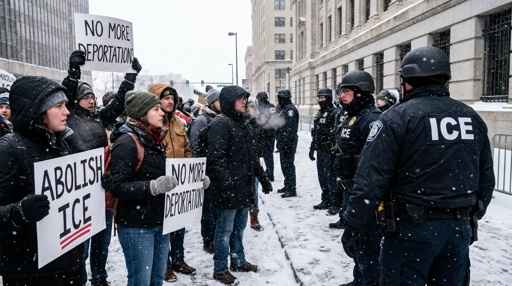
Federal prosecutors say a militant antifa network tried to cripple immigration enforcement in Minnesota, and now 15 alleged members are facing serious federal charges.
Story Snapshot
- Fifteen alleged antifa-linked activists are charged with a conspiracy to impede or injure federal immigration officers in Minnesota.
- Prosecutors say the group used blockades, surveillance, and online threats to disrupt Immigration and Customs Enforcement operations.[2]
- Officials stress a bright line between peaceful protest and violent interference with law enforcement.[2]
- Defense lawyers and left-wing activists claim the case is “political,” testing free speech and public safety at the same time.[1]
What Federal Prosecutors Say Happened
Federal prosecutors in Minnesota say a grand jury has indicted 15 people for a coordinated plan to interfere with immigration enforcement operations in the Twin Cities.[2] The United States Attorney Daniel Rosen said the group conspired “not to interfere by their voice, but to do it by force,” marking a clear break from lawful protest.[2] According to the indictment summary, all are tied to Direct Action Minnesota, described as a Minneapolis-based antifa network committed to militant “community self-defense” and revolution.[3]
Authorities say the case centers on operations at the Whipple Federal Building, where immigration officials process detainees and run key enforcement activity.[3] The indictment highlights two major dates, January 23 and March 1, 2026, when activists allegedly deployed “hard and soft blockades” to shut down the facility’s work.[2] These tactics reportedly included homemade shields, barricades, and human walls meant to block vehicles and agents from moving in and out during an ongoing immigration surge.[2]
Alleged Tactics: From Surveillance to Physical Confrontation
Prosecutors and Homeland Security investigators say the Direct Action Minnesota network acted more like an operation than a loose crowd of marchers.[3] They allege the group used encrypted messaging apps to organize roles, share intelligence on agents, and plan how to block or surround officers during enforcement days.[2] In one example, officials say a member tracked an immigration officer from Minnesota into Wisconsin, extending the pressure beyond one protest site.[17]
Along with surveillance, several defendants face added charges for threats, stalking, and violence. The government points to a social media post from defendant Kyle Wagner that said they were “not talking about peaceful protests anymore” and told followers to “get your guns and stop these people,” which prosecutors frame as a call for armed resistance.[1] Others are accused of throwing chunks of ice, ramming or sideswiping an officer with a vehicle, and damaging federal property during clashes around the Whipple building.[4]
Peaceful Protest Versus Criminal Interference
At the press conference, Rosen stressed that peaceful protest and even harsh criticism of immigration policy remain protected by the First Amendment.[2] He drew a firm line when demonstrations move into blocking government operations, stalking officers at home or across state lines, or using force and threats. According to Rosen, the 15 defendants are being charged “not for what they said, but for what they did,” including an alleged agreement to obstruct immigration enforcement by force.[2]
This case fits a wider pattern around Immigration and Customs Enforcement protests, where federal agents have repeatedly used obstruction and interference laws to push back on direct-action tactics.[5] Advocacy groups say these same laws often sweep in people who are only recording or watching raids, but prosecutors argue that organized blockades and aggressive tactics put officers and bystanders at risk, and undermine the rule of law at the border and in local communities.[5]
How the Left Is Responding: Claims of Political Prosecution
Defense lawyers and left-leaning activists are already working to flip the story, casting the 15 defendants as political targets rather than violent actors.[1] Civil rights attorney Jordan Kushner has called the case a “fascist prosecution” and insists his clients saw themselves as engaged in lawful political dissent against what they view as cruel immigration raids.[13] He notes that many have no prior criminal record, which he says undercuts the idea that they are hardened conspirators.[13]
“The Point Is to Spread Fear”: DOJ Charges 15 with Conspiracy for Anti-ICE Protests in Minnesota https://t.co/40VbiZFnSo via @democracynow
— James McGee (@jamesericmcgee) June 17, 2026
Outside the courthouse, protesters claimed that “observing is not a crime” and warned that treating surveillance of Immigration and Customs Enforcement as stalking will chill basic oversight of government power.[1] Activist city officials and national advocacy groups argue this is part of a broader trend of using the justice system to scare people away from challenging federal immigration policy.[18] They say the charges send a message that if you get too close to exposing heavy-handed tactics, you could end up in handcuffs yourself.
Why This Case Matters for Conservatives
For many conservatives, this indictment highlights why strong backing for law enforcement and border security is so important. Federal officers on the ground are already dealing with cartel crime, human smuggling, and a constant flow of unlawful crossings. Now they are also facing organized, ideological networks at home that openly say they “violently oppose” immigration law and try to shut down operations through pressure and force.[1] That raises serious questions about public safety and national sovereignty.
At the same time, the case shows how far activist circles will go to rebrand aggressive tactics as “care” for the community. When blockades, surveillance of officers, and online calls to “get your guns” are framed as simple “observation,” it blurs the line between watchdog work and mob pressure.[1] That confusion benefits extremists who want to delegitimize immigration law altogether, while putting everyday families and officers at risk if streets around federal buildings turn into lawless zones during every enforcement surge.
What to Watch Next
Going forward, the key test will be evidence. The indictment is long, and prosecutors say they have video, chat logs, and eyewitness statements that map out who did what at each protest date.[4] Defense teams so far have attacked the case in broad political terms but have not publicly offered detailed forensic rebuttals to claims like thrown ice, vehicle contact with an officer, or the tracking trip to Wisconsin.[1] Those facts, once tested in court, will determine if the conspiracy case holds.
For readers who support secure borders and limited government, this trial will show whether federal authorities can draw a firm, fair line: protecting peaceful speech while refusing to let militant groups turn anti-Immigration and Customs Enforcement activism into a cover for stalking and street-level force. If courts uphold these charges on strong evidence, it will send a clear message nationwide that you can chant, pray, and hold signs—but you do not get to physically shut down federal law or put officers in danger and call it “protest.”
Sources:
[1] Web – DOJ Charges Fifteen with Anti-ICE Crimes in Minnesota
[2] Web – Feds Charge 15 Minnesotans With Conspiracy for Anti-ICE …
[3] YouTube – US Attorney for Minnesota announces charges against anti-ICE …
[4] YouTube – DOJ charges 15 in Minnesota on anti-ICE conspiracy charges
[5] Web – US Attorney for Minnesota charges 15 anti-ICE protesters, alleging …
[13] Web – Minneapolis prosecutors charge few anti-ICE protesters amid mass …
[17] Web – United States Immigration and Customs Enforcement – Wikipedia
[18] Web – How ICE Went Rogue: Analysis of the Legal Authorities Governing ICE