

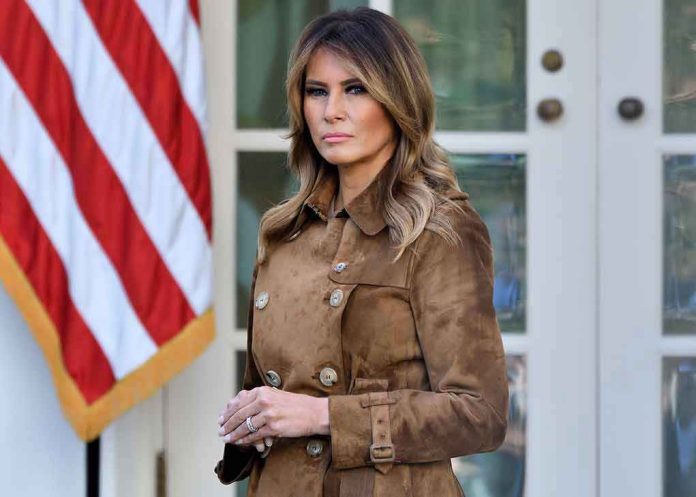
Hollywood’s new Melania Trump documentary is exposing a bigger fight than box office numbers: whether billion-dollar media platforms can buy political access while Americans are told it’s “just entertainment.”
Story Snapshot
- Amazon MGM licensed Melania for a reported $40 million, a record-sized documentary deal tied to a theatrical release and Prime Video streaming plans.
- The film follows roughly 20 days leading up to President Trump’s January 20, 2025 inauguration, offering rare access to a famously private First Lady.
- Melania Trump served as an executive producer and retained editorial control, fueling debate about whether the project functions more like an “infomercial” than a documentary.
- Opening weekend box office was reported around $7 million—strong for a documentary, but still far short of turning a profit on reported total costs.
Amazon’s Record Deal Raises “Access” Questions
Amazon MGM’s licensing deal for Melania became a headline because of its sheer scale: about $40 million for rights, with reporting that overall costs could be far higher. The film’s rollout—premiere in Washington followed by a wide theatrical launch and eventual Prime Video streaming—put a corporate stamp on a political moment. Critics cited the price and timing as creating “bribe” optics, while supporters saw it as a straightforward business bet.
Those “optics” claims matter because they are difficult to prove and easy to weaponize. The available reporting shows a bidding war that Amazon won over rivals, including a much smaller bid figure attributed to Disney. What remains clear from the sourced details is this: Amazon paid a premium for a film centered on a sitting First Lady and produced for release after Trump’s return to office, and that combination guarantees partisan interpretations regardless of intent.
What the Film Actually Covers—A Tight Window Before Inauguration Day
The documentary’s premise is unusually narrow and intimate. It tracks the period from roughly late December 2024 through January 20, 2025, moving between Florida, Trump Tower in New York, and the White House as Melania Trump prepares to reenter public life. The reporting emphasizes logistics and routine—family care, scheduling, business and philanthropic obligations, planning outfits, and decisions about White House décor—alongside personal reflections, including grief over her mother’s death.
That limited timeframe is also why some viewers will find the film unsatisfying if they expect “bombshells.” Reports describe it as offering access without sensational revelations, including a surprise cameo via video call with France’s First Lady, Brigitte Macron. President Trump attended the premiere and publicly praised the project. For audiences tired of media caricatures, the draw is seeing a guarded public figure speak for herself. For skeptics, the tight curation is exactly the point.
Editorial Control and the Definition of “Documentary”
Melania Trump’s role as executive producer—and reported editorial control—sits at the center of credibility concerns. Documentary filmmakers and critics quoted in coverage argue that heavy subject control can turn nonfiction into branding. That does not automatically make the film “false,” but it does change what viewers are purchasing: not a neutral investigation, but a guided narrative. Americans who’ve watched legacy media edit conservatives into villains will recognize how editorial choices shape reality.
Conservatives should also notice the double standard embedded in the backlash. The entertainment industry routinely celebrates sympathetic political storytelling when it flatters progressive causes. Here, the same industry vocabulary—“integrity,” “propaganda,” “disgrace”—is being applied to a high-profile project about a Republican First Lady, while the main undisputed facts remain business and process details: who financed it, who controls it, and how it was marketed. Viewers can judge the final product without pretending the entire genre is free of agenda.
Box Office Numbers Show a Red-State/Blue-State Cultural Split
Early results suggest the film became a political Rorschach test. Reporting put opening weekend sales around $7 million, described as strong for a documentary even as it fell well short of profitability given the size of the deal and related costs. Accounts also pointed to a red-state/blue-state divide in ticket sales, which mirrors the broader pattern of Americans sorting themselves not just by party, but by what culture they will financially support.
Outside the U.S., the reaction included real-world friction. Coverage described a defaced promotional billboard in Los Angeles and noted the film being withdrawn in South Africa amid heightened tensions tied to Trump-related claims. Winter storms were also reported as affecting attendance in some places, a practical reminder that opening-weekend “narratives” often mix politics with mundane factors like weather and theater availability. The bottom line is that the movie’s performance is being framed as symbolism, not just receipts.
Sources:
After lavish debut, Melania Trump’s atypical, divisive documentary opens in theaters
Amazon touts ‘Melania’ box office success though film well short of turning a profit