

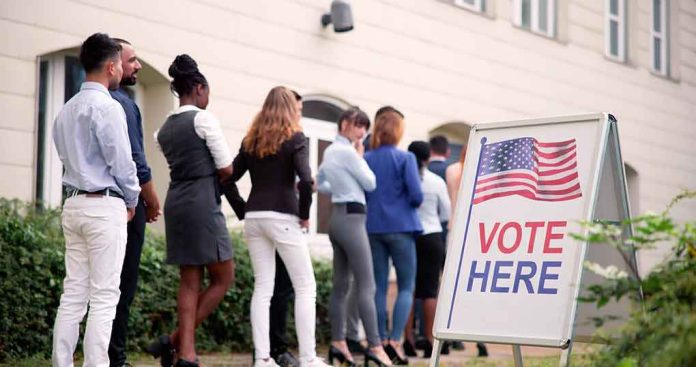
Noncitizens cannot legally vote, yet Ro Khanna’s war on Immigration and Customs Enforcement tells a deeper story about fear, power, and who feels safe enough to walk into a polling place.
Story Snapshot
- Ro Khanna is driving a hard-line campaign to defund and dismantle Immigration and Customs Enforcement.
- He ties Immigration and Customs Enforcement abuses to constitutional violations and voter suppression fears.
- Critics answer with a simple slogan: “Noncitizens can’t vote, so why worry about Immigration and Customs Enforcement?”
- The real fight is over how visible armed government agents should be anywhere near our elections.
Ro Khanna’s crusade against Immigration and Customs Enforcement power
Representative Ro Khanna has made Immigration and Customs Enforcement his main example of government power run off the rails. He has said he wants no more money for the agency and wants to repeal a $75 billion funding boost set for the next four years. He calls the agency “rogue” and says it is “killing American citizens” and trampling the Constitution. His message is simple: you do not reward an agency you believe is breaking the law.
Khanna’s plan is not tweak and reform. He talks about tearing down Immigration and Customs Enforcement and building a new agency with real oversight instead. In one interview he listed demands: end qualified immunity so agents can be sued, roll back the big funding increase, and put tighter rules on arrests and detentions. He has said agents who wrongly detain American citizens should be fired automatically and face criminal prosecution. That is a level of pressure few members of Congress call for.
From detention cells to constitutional rights and voter fears
Khanna’s distrust did not appear out of thin air. After visiting a detention center, he described conditions as “lawlessness.” He said immigrants were treated like dangerous prisoners and held in civil detention with poor medical care and little dignity. Reports of deaths in custody and harsh rules fed his view that Immigration and Customs Enforcement was not just tough on illegal immigration but carelessly harming people under government control. That experience is part of why he now links Immigration and Customs Enforcement to broader civil rights worries.
On national television, Khanna argued that Immigration and Customs Enforcement is violating the First, Second, and Fourth Amendments. He did not focus only on migrants. He said the agency is “monitoring not just immigrants, but also American citizens.” In his view, this is no longer just an immigration argument; it is about a federal agency using armed power in ways that chill speech, privacy, and self-defense rights. When lawmakers start talking about multiple amendments at once, they are signaling a much bigger concern than one bad policy.
Why an immigration agency near the polls sets off alarms
So how does all this connect to voting? Once you see Immigration and Customs Enforcement as an unchecked, armed force that can show up in everyday life, you start to see its presence as a form of pressure. Khanna has appeared on a podcast that connects Immigration and Customs Enforcement abuses to voter suppression, calling them part of a “culture of impunity” where powerful people act without fear of consequences. From that angle, an officer does not need to block a door to scare people away from the ballot box.
Many conservatives answer, “Noncitizens cannot vote, so why worry?” On paper, that is true. Only citizens can legally cast ballots in federal elections. But real life is messier. Families often mix legal immigrants, naturalized citizens, and people still waiting for status. A lawful voter who lives with someone at risk of deportation might think twice about walking past visible Immigration and Customs Enforcement gear. Fear spreads by association, not legal fine print. The law may say “you’re safe,” but the person may not feel safe enough to show up.
Laws and proposals to keep armed agents away from the ballot box
American law already shows strong discomfort with troops and armed men at the polls. A federal statute makes it a crime to deploy them to polling places, except to stop armed enemies of the country. That rule reflects a deep, older belief: armed government presence near the ballot box can look like intimidation, even if nobody says a word. When people feel watched by guns and badges while they vote, they may worry more about trouble than about choosing leaders.
Recent fights over Immigration and Customs Enforcement have pushed this old issue into new territory. Washington’s former governor Jay Inslee demanded that Congress block Immigration and Customs Enforcement agents from gathering near polls on Election Day and called for a ban on immigration enforcement within 40 feet of voting sites. A bill from Representative Nikema Williams would bar immigration agents from polling places to “prevent intimidation” of communities seen as targets for enforcement. Khanna’s broader campaign makes that kind of proposal more likely, even if he has not authored the exact bill.
Common sense questions for voters who want both security and freedom
Conservatives rightly ask for strong borders and real enforcement. They do not want open-door policies or special treatment for criminals who cross illegally. At the same time, American conservative values also care about limited government, individual rights, and free, fair elections. That raises a serious question: do we want any armed federal enforcement agency, not just Immigration and Customs Enforcement, lingering near the doors of our polling places?
Khanna’s critics say he is anti–Immigration and Customs Enforcement first and is only using voting as another way to attack the agency. Given his record of protests, press releases, and “tear it down” language, there is truth in that. But their slogan, “Noncitizens can’t vote,” dodges the real worry about naturalized citizens and mixed-status households. The test should be simple: does the average lawful voter feel more free, or less free, walking past armed immigration agents to cast a ballot? That answer matters more than any talking point.
Sources:
youtube.com, pbs.org, jns.org, ktvu.com, nikemawilliams.house.gov, en.wikipedia.org