

The Democratic Socialists of America has put in writing a blueprint to erase prisons, the Senate, the presidency, and the Supreme Court as we know them—and they are proud of it.
Story Snapshot
- DSA’s official program calls for abolishing the Senate and overhauling the entire political system
- The platform embraces police and prison abolition as a long-term goal, not just “reform”
- Leaders openly defend replacing the presidency and Supreme Court with bodies controlled by Congress
- These ideas clash sharply with America’s founding design of checks, balances, and equal protection
What The DSA Platform Actually Proposes
The Democratic Socialists of America’s current program spells out a plan to reshape core American institutions from the ground up. The document calls for replacing the two-party system with a multi‑party democracy, expanding the House of Representatives, using ranked choice voting, and “abolishing the Senate” outright. A detailed draft platform from 2021 went even further, urging constitutional amendments to erase the Senate, abolish the Electoral College, and rewrite rules that limit campaign finance. These are not stray slogans; they are formal, written demands.
Commentators who reviewed the new “Workers Deserve More” manifesto noted that DSA leaders added amendments aimed at “real democracy” and at police and prison abolition. One major amendment calls for “replac[ing] the President and Supreme Court with an executive and judiciary chosen by and subordinate to Congress,” stripping today’s presidency and high court of their independent standing. That change would hand near total control of the federal government to a single legislative body, directly undoing the separation of powers that has anchored American freedom since the Founding.
The Push To Abolish The Carceral State
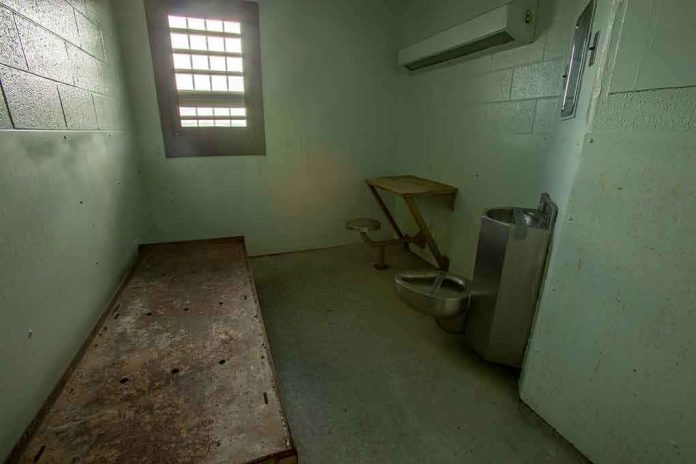
Alongside its institutional agenda, the DSA platform embraces what it calls abolition of the “carceral state.” The group’s political platform describes “freedom for all incarcerated people,” an end to funding prison expansion, closing local jails, ending pre‑trial detention and imprisonment for parole violations, and rejecting many so‑called alternatives to incarceration. It frames incarceration, detention, and policing as tools of “class war” that enforce racial and economic hierarchy. In that worldview, prison abolition is not a fringe idea; it is the “horizon” the movement says it is committed to.
A 2021 platform draft moves from near‑term decarceration steps to a long‑term demand to “free all people from involuntary confinement in jails, prisons, detention centers and coercive care facilities,” starting with vulnerable groups. Outside analysts have underscored that the document contains no carve‑outs for violent offenders or predators. From a common‑sense, conservative perspective that values order and equal justice, this is not just aggressive reform; it risks leaving innocent citizens unprotected from those who choose to harm others.
DSA Leaders Are Not Backing Away From These Goals
These positions are not buried in fine print. National co‑chairs and local leaders have confirmed them on camera and in interviews. One DSA co‑chair told a television host that abolishing the Senate was “true” and defended replacing the presidency and Supreme Court, abolishing Immigration and Customs Enforcement, loosening borders, defunding the Pentagon, and phasing out prisons as part of the group’s long‑term vision. Another national co‑chair defended calls to abolish prisons, national borders, and the U.S. Senate as needed to address inequality, and did not retreat when pressed. This is open, intentional radicalism, not a misunderstanding.
Outside critics looking at the abolition working group and platform have pointed out that its first listed demand is to defund police budgets toward zero and that it explicitly seeks “freedom for all incarcerated people”. Conservative and libertarian writers warn that such a program would gut basic public safety, undercut the rule of law, and create a power vacuum likely filled by informal private force—exactly the opposite of equal protection under law. When a political movement says it wants no prisons, no police, and no meaningful judicial check, the risk is not hard to see.
Why This Platform Collides With America’s Constitutional Design
Supporters inside the DSA frame these ideas as democracy‑deepening—ending what they call “minority rule” and structural racism by rewriting the Constitution and tearing down institutions they see as undemocratic. They argue that the Senate overrepresents smaller states, that the Electoral College thwarts popular majorities, and that courts and police protect wealth rather than people. In their telling, a single, dominant legislature, backed by social movements and freed from checks, would deliver justice more fairly than the current system.
Common Denominator is CUBA.
Her politics shifted further left after church trips to Cuba and frustration with local party responses to the 2016 election.Who is dsa co chair :The national co-chairs of the Democratic Socialists of America (DSA) are Megan Romer and Ashik Siddique.…
— HB1961 (@hakkibolukoglu) July 27, 2026
American conservative values point in the opposite direction. The Founders split power between branches and levels of government to keep any one faction from ruling unchecked. The Senate was designed to protect smaller states and slow sudden swings in national mood. Independent courts exist to shield individual rights from political storms. Prisons and police, while imperfect and in need of real oversight, are there to protect the innocent from the guilty. A platform that abolishes the Senate, presidency, Supreme Court, police, and prisons does not “finish” the American project; it replaces it wholesale with something very different, and far less protective of ordered liberty.
Sources:
zerohedge.com, washingtontimes.com, youtube.com, city-journal.org, convention2021.dsausa.org, program.dsausa.org, precariousstate.com, facebook.com, reddit.com