

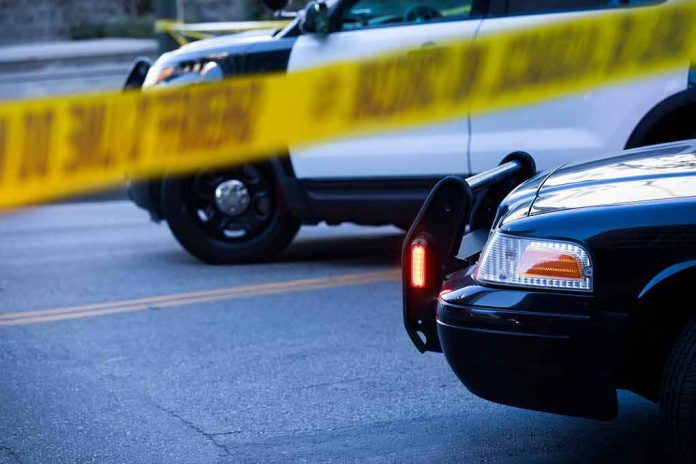
When a car lurches toward a reporter working on public property, the stakes extend far beyond one near-miss; it tests the practical boundary between a community’s right to know and the willingness of individuals to use intimidation—up to and including a two-ton vehicle—to silence newsgathering.
The Short Version
- A Maine Wire reporter filming outside Bangor Comprehensive Treatment Center was confronted by a driver who, according to the outlet and its video, attempted to strike him with a vehicle.
- The outlet’s editor-in-chief framed the act as deliberate interference with reporting and characterized it as attempted killing.
- Bangor police responded and opened an investigation; the reporter captured the vehicle’s license plate on video.
- The episode sits within a broader, documented pattern of threats and intimidation directed at journalists, though vehicle attacks are comparatively rare.
What Happened Outside the Bangor Treatment Center
The Maine Wire reports that staff journalist Joe Sokol was conducting routine newsgathering from public property near the Bangor Comprehensive Treatment Center—also known as Discovery House BR Inc., at 689 Odlin Road—when a driver confronted him and, moments later, steered a vehicle toward him. The outlet says its video captures the approach and describes the movement as an attempt to strike the reporter. Immediately after the encounter, Sokol filmed the plate, identified as Maine registration 841-LZD, preserving a concrete lead for investigators. Bangor police responded to the scene and are investigating, according to the outlet’s account.
In public comments, editor-in-chief Steve Robinson asserted that the individual recognized Sokol as a journalist and acted to stop him from reporting, calling the conduct “attempted killing.” That framing makes two claims: first, that the driver’s behavior was purposeful interference with newsgathering; second, that the manner of interference—using a vehicle—crossed the line into lethal force by other means. While those are characterizations, they are anchored by the outlet’s released footage and the police response that followed.
How This Fits a Larger Pattern of Risks to Journalists
Threats and interference are unfortunately familiar to many working reporters, particularly those covering politically charged local issues, public health, crime, or government accountability. Surveys by journalism safety organizations consistently find that a significant share of reporters experience threats or physical intimidation in the course of their work—an occupational hazard that rarely commands headlines until a camera, or a car, forces the issue into view. In one recent U.S.-focused survey from the International Women’s Media Foundation, 36% of respondents reported being threatened with or experiencing physical violence while working as journalists, underscoring that the problem is routine enough to quantify, even if the most extreme episodes remain relatively uncommon.
Vehicle-based assaults on media workers are not the modal risk—verbal harassment, online threats, and jostling at contentious scenes are far more common—but the logic is the same: use intimidation to chill coverage. That is why newsroom safety training increasingly addresses situational awareness around curbs, driveways, and parking lots, where a few feet of inattention can erase the protective moat that public space usually provides. Episodes like the one reported in Bangor therefore serve as case studies in both risk and response: what a reporter can do in the moment to document an assailant, and what institutions do afterward to deter copycats.
Mechanics of Evidence: Why Video and Plates Matter
In any vehicular intimidation case, three evidentiary pillars help police and prosecutors determine what happened: motion evidence, identification, and context. Motion evidence—speed, trajectory, braking, and steering input—speaks to reckless endangerment versus deliberate targeting; video, even from a handheld phone, can capture vectors sufficiently for investigators to assess lines of travel frame by frame. Identification is often the weak link, which is why documenting a license plate in real time can be decisive; it anchors follow-up interviews, potential eyewitness canvasses, and, if warranted, search warrants for the car and telematics. Context—what was said, where the reporter stood, whether the driver issued threats—rounds out intent. In the Bangor episode, the outlet’s immediate capture of the plate and the police response put two of those pillars in place quickly.
Because many confrontations occur just off busy roadways, investigators also look for corroboration beyond a reporter’s phone: nearby CCTV, traffic cameras, and business surveillance often provide stable angles that sharpen the reconstruction. That mix—on-scene footage, fixed-camera video, and the driver’s own statements—typically determines whether an incident is charged as reckless driving, assault with a dangerous weapon (a vehicle qualifies), or something less severe. The combination also shapes the deterrent message a community receives from its justice system.
Press Freedom on Public Property: The Legal and Civic Frame
Newsgathering in publicly accessible space is core conduct protected by the First Amendment; there is no press carve-out that immunizes criminal behavior, but there is also no heckler’s veto that entitles a passerby to curtail reporting by threat. The reason is practical as much as constitutional. A civic culture that tolerates ad hoc intimidation against journalists—whether by shouting down, shoulder-checking, or edging a bumper within inches—does not arrive at neutrality; it selects, silently, for fewer firsthand accounts and more rumor. That selection effect is particularly corrosive around sensitive beats like addiction treatment, where facts on the ground are essential to disentangling policy from stigma.
Law enforcement’s role here is not to referee editorial choices but to enforce ordinary laws against menacing, assault, and dangerous driving when those are used as tools to obstruct lawful activity. A prompt investigative response, clear charging decisions where warranted, and communication with affected newsrooms are the basic mechanics of keeping the sidewalk safe for everyone—journalists, patients, and bystanders alike.
Joe Sokol, a reporter from the Maine Wire, was filming a story on a local methadone clinic, the Bangor Comprehensive Treatment Center, that has received the following amounts of taxpayer dollars from Medicaid ⬇️ when someone tried to kill him via a vehicle ramming attack this… https://t.co/z7eNmZYrvT
— Mrgunsngear (@Mrgunsngear) October 1, 2026
Practical Implications for Newsrooms and Communities
Three habits help reduce risk without sacrificing reporting: plan the approach to sites with active vehicle traffic; keep a second set of eyes when filming curbside; and document, in the moment, anything that will matter ten minutes later—plate, make and model, driver description, and any threats articulated. The Bangor incident underscores how quickly a routine shoot can pivot to a safety event, and how the simple act of capturing a plate can convert a fleeting danger into a solvable case.
Sources:
thegatewaypundit.com, themainewire.com