

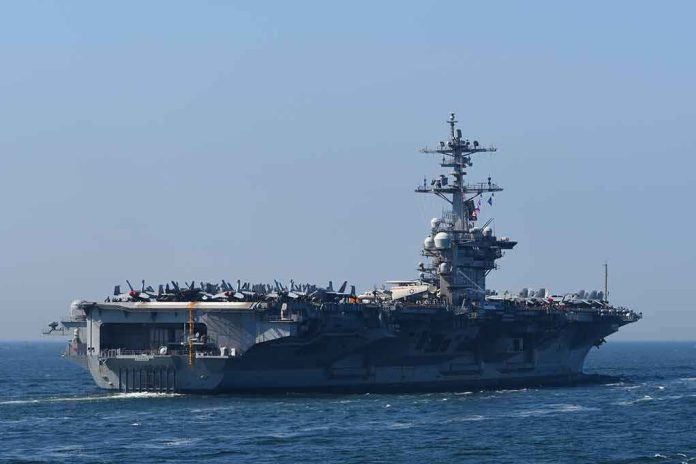
U.S. forces are moving fast toward the Middle East, and the scale of the buildup suggests Washington wants options now, not later.
Quick Take
- The United States is sending thousands more Marines and sailors to the Middle East.
- The Pentagon has also told a second aircraft carrier strike group to prepare for possible deployment.
- Officials say the buildup is meant to strengthen U.S. options as regional tensions rise.
- Current reporting places the number of U.S. service members in the region at more than 50,000.
Forces Are Being Added Fast
Reuters reported that the U.S. military is sending thousands more Marines and sailors to the Middle East, citing three U.S. officials. The report said the deployment will add to an already large U.S. presence in the region. Other reporting this year has described a major military buildup involving carriers, fighter jets, and air defense systems as tensions with Iran and nearby conflict zones have grown.
That kind of movement matters because it gives commanders more room to respond if the situation worsens. It can support deterrence, protect U.S. personnel, or prepare for strikes. The public record does not show a single clear mission behind every move. Instead, the deployments point to a deliberate effort to keep pressure on while preserving flexibility.
Carrier Power Is Part of the Message
The Wall Street Journal reported that the Pentagon told a second aircraft carrier strike group to get ready for deployment to the Middle East. The report said that move came as the U.S. prepared for possible military action against Iran. A carrier strike group brings aircraft, missiles, and escort ships, which makes it one of the most visible tools of U.S. power overseas.
Earlier reporting also showed this was not a one-off decision. In February and March, news outlets described an expanding buildup of carriers, Marines, fighter jets, and other assets across the region. Reuters said the new troop deployment would supplement about 50,000 U.S. forces already in the Middle East, while Central Command said more than 50,000 service members were deployed there in mid-July.
What the Buildup Signals
The basic facts are clear: U.S. forces are being reinforced, and the Pentagon is preparing more air and sea power for the region. What remains less clear is how far Washington intends to go. In this kind of crisis, force movements often serve more than one purpose at once. They can warn adversaries, reassure allies, and give the White House more choices if talks fail or fighting spreads.
That ambiguity helps explain why these deployments draw so much attention. Supporters see a needed show of strength after repeated regional shocks. Critics see a government that keeps pouring money and troops into a tense foreign theater while Americans at home still face inflation, border pressure, and public distrust. Whatever the political angle, the deployment trend shows a federal security posture that is growing more active, not less.
Sources:
iz.ru, nytimes.com, stripes.com, reuters.com, fox5dc.com, theguardian.com