

The Kennedy Center’s $25,000 July Fourth fireworks package is less interesting as a price tag than as a signal of how cultural institutions under financial and political pressure learn to monetize scarcity: they sell access, but they also sell symbolism.
Intro Header
- The package is built around premium access, not ordinary admission; the headline price covers a terrace viewing experience and a large tax-deductible donation component.
- The Kennedy Center’s leadership is using a classic arts-fundraising playbook: a small number of very expensive seats to subsidize an institution that says it is under strain.
- The criticism is real because the optics are brutal. A patriotic public holiday, a luxury package, and an institution already entangled in leadership and naming disputes is a combustible combination.
- The core factual dispute is narrower than the rhetoric suggests: the price is undisputed, but the necessity and prudence of that pricing are not publicly documented in a way that settles the debate.
Why This Package Exists at All
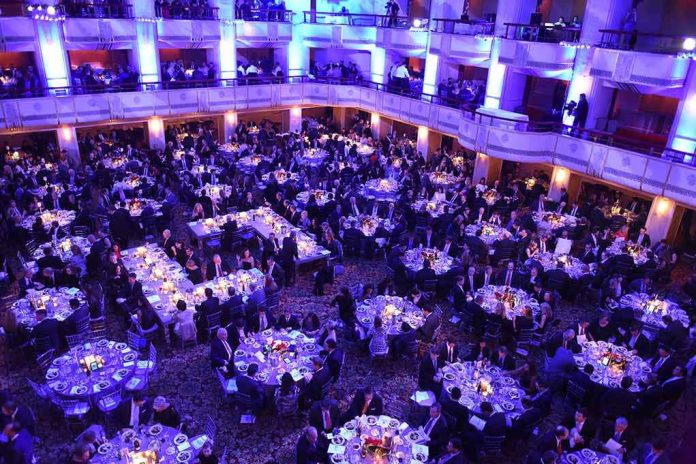
The easiest mistake is to treat the $25,000 package as a novelty. In practice, it belongs to a long-standing fundraising logic in the performing arts: when institutions cannot count on broad public demand alone, they create tiered access for patrons willing to pay for exclusivity, status, and convenience. The Kennedy Center’s “Presidential” package, according to the reporting, includes 36 seats at three tables on the terrace and a tax-deductible charitable donation of $18,912 embedded in the price. That structure matters. It means this is not merely an expensive ticket; it is a hybrid of event access and philanthropy, designed to convert an entertainment occasion into a donation vehicle.
The same logic appears in the lower “Vice Presidential” tier, priced at $15,000 with a $10,941 donation component. The tiering tells you the institution is not improvising a one-off stunt. It is building a fundraising ladder, where the viewing experience is the lure and the charitable deduction is the mechanism. Arts organizations have long used galas, benefit dinners, donor circles, and premium boxes to underwrite operations that ordinary ticket sales cannot fully support. The Kennedy Center’s fireworks package is simply the most visible and controversial version of that model because it is wrapped around a national holiday rather than a black-tie gala.
The Financial Pressure Behind the Optics
The center’s defenders point to financial strain tied to the political fight over removing Trump’s name from the building. Reporting cited by the Washington Examiner says the Center warned that the name removal could jeopardize “hundreds of millions” in pledged charitable contributions, and that multiple performances had already been canceled after artists backed out. Those claims are central because they explain why the institution might reach for aggressive high-dollar fundraising in the first place. If donor confidence weakens and programming revenue slips, premium packages become a bridge, not a luxury.
That said, the public record described here does not include an audited budget shortfall, a line-item projection showing exactly how much the fireworks packages are expected to raise, or a sworn statement proving that $25,000 tiers are indispensable rather than optional. That absence matters. Institutions often justify elite fundraising in general terms because it is easier to defend a strategy than to disclose a precise cash gap. The result is a familiar ambiguity: the fundraising logic is plausible, but the specific necessity of this price point remains unproven in the available material.
Why the Backlash Is So Predictable
The criticism is not merely that the package is expensive. It is that the package feels tonally wrong for July Fourth, a holiday already loaded with civic symbolism and public expectations of shared access. Public fireworks in Washington are usually understood as a civic spectacle: the National Mall show is free, and the city’s best-known viewing points are publicly accessible, though crowded. Against that backdrop, a $25,000 rooftop-style package reads as the privatization of a common civic ritual. That is why the reaction quickly shifts from pricing to morality, even among people who understand how fundraising works.
Social coverage sharpened that reaction. Critics described the offering as “ultra-exclusive,” “luxury,” and “whopping,” language that does real rhetorical work because it turns a financial product into a class marker. The Washington Examiner’s own social framing also emphasized the exclusivity of the event. This is where public perception hardens: once a patriotic celebration is narrated as a luxury good, the institution has to defend not just the economics but the ethics of segmentation. That is a harder argument, and the Kennedy Center has not publicly supplied the kind of detailed defense that would make it easier.
What the Evidence Actually Shows About the Center’s Condition
The strongest evidence that the Kennedy Center is under real pressure comes not from the fireworks package itself, but from broader reporting on its recent ticket performance. By late 2025, the Washington Post reported that sales for the center’s three largest performance venues had fallen to pandemic-era lows, with attendance weakening sharply after the leadership overhaul. Other reporting cited in the research package said roughly 43 percent of tickets were unsold in a late-season window, with about $1 million in revenue potentially lost in just 45 days. Those are not trivial indicators; they describe an institution that is trying to refill seats while fighting reputational drag.
That broader decline makes the existence of luxury fundraising packages easier to understand, even if not easier to admire. When ordinary demand softens, institutions often intensify premium fundraising because the marginal dollar is most available at the top end. A donor who will pay thousands for a special table can cross-subsidize the institution far more efficiently than dozens of standard admissions. The trade-off is obvious: the more visible the exclusivity, the easier it is for critics to say the institution has lost the plot. Both can be true at once. Financial distress does not make a luxury package elegant; it makes it comprehensible.
Kennedy Center selling $25,000 ticket package to watch D.C. July 4th fireworks https://t.co/c0CFkcS8P2
— Tracy Solomon (@stakresnt) July 2, 2026
The Real Argument Is About Institutional Judgment
The real dispute is not whether elite fundraising exists; it plainly does. The dispute is whether the Kennedy Center’s use of it, at this moment and for this event, reflects disciplined stewardship or a willingness to turn public embarrassment into a revenue stream. On the evidence provided, the institution can credibly say that it is using a familiar philanthropic tool and that it faces genuine revenue stress. Critics can equally credibly say that a $25,000 fireworks package is a self-inflicted public-relations problem that deepens mistrust and makes the center look captive to exclusivity.
What is missing is the one thing that would settle the argument: transparent financial disclosure tying this package to a defined funding need. Without that, every interpretation remains partly inferential. Supporters read it as necessity. Critics read it as tone-deaf extravagance. The package itself, however, is not mysterious. It is a premium donor product built for a moment when the Kennedy Center appears to need cash, cachet, and calm all at once. That is a difficult combination to sell, and the public reaction shows exactly why.
Sources:
cbsnews.com, washingtonexaminer.com, instagram.com, x.com, facebook.com, simpletix.com, sfchronicle.com, thehill.com