

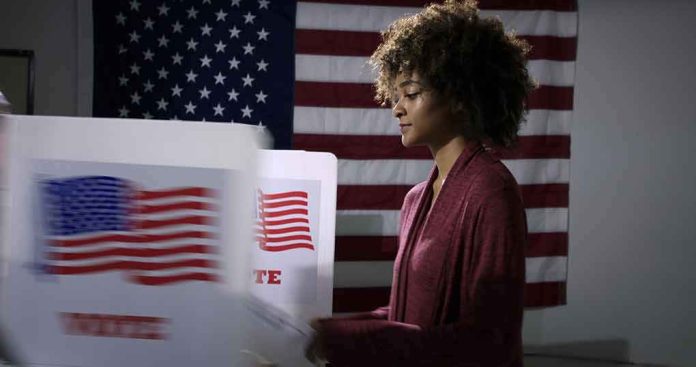
Individual election crimes are real and prosecutable—recent federal cases prove it—yet the best empirical record still shows those incidents occur at a vanishingly low rate relative to the hundreds of millions of ballots cast. Understanding both truths at once is how you keep perspective: targeted prosecutions can deter misconduct without redefining the integrity of American elections as broadly compromised.
At a Glance
- Federal prosecutors have brought coordinated election-fraud cases across multiple states, alleging illegal voting, forged registrations, and identity fraud.
- These cases document specific criminal conduct; they do not by themselves demonstrate widespread outcome-altering fraud.
- Long-running empirical reviews of U.S. elections find incident rates that are extremely small compared with total ballots cast.
- Healthy election governance means holding offenders accountable while resisting claims that isolated crimes reflect systemic collapse.
What the latest prosecutions actually show
Federal filings and U.S. Attorney announcements over the past cycles describe a familiar mix of election crimes: noncitizens allegedly registering and voting, double voting, fraudulent registration, and identity fraud. In coordinated announcements, the Justice Department detailed charges in Pennsylvania, New Jersey, and Wisconsin tied to illegal voting and fraudulent registration in the 2022 and 2024 elections. A parallel release outlined six defendants in California, Kansas, and Louisiana for illegally voting, fraudulent registration, and identity fraud. Separate district cases add specificity: an indictment in Western Pennsylvania for casting multiple votes in the 2024 presidential election; an Eastern District of Pennsylvania complaint alleging fraudulent voting in the 2024 federal election; and a guilty plea by a Philadelphia resident for voting more than once. This is not theory or rumor; these are charging documents, pleas, and convictions in federal court.
Other matters show the same pattern: a Massachusetts indictment of a noncitizen accused of using another person’s identity to register and cast a 2024 ballot, and a conviction of a Colombian national in Boston involving identity theft alongside a voter-fraud count. In Louisiana, a federal grand jury returned an indictment alleging a false voter registration scheme and alien voting. In the Northern District of Texas, prosecutors announced a sweep charging seven noncitizens with illegal voting offenses as part of a broader election integrity operation. Each instance is its own record; collectively, they demonstrate that prosecutors are detecting and pursuing discrete criminal conduct tied to elections.
The empirical baseline: rare is not never
Documented cases exist, but their existence does not settle the larger question most voters care about: whether fraud is frequent or large enough to alter outcomes at scale. The best long-horizon analyses point in the same direction: proven fraud is rare in modern U.S. elections. The Brennan Center’s review of meticulously studied elections found incident rates between roughly 0.0003% and 0.0025%—orders of magnitude below what would be needed to “rig” statewide outcomes. A separate amici survey to the Supreme Court summarized broad scholarly consensus that voter fraud is exceedingly rare and cataloged the Department of Justice’s own case counts over years of enforcement, again underscoring the scale mismatch between rhetoric and adjudicated facts. Even organizations that actively catalog fraud cases, like the Heritage Foundation’s database, produce totals that remain tiny compared with billions of ballots cast—useful as a deterrence record, not as evidence of systemic failure.
This is the crucial distinction: a system can be both largely sound and still require routine enforcement. In fact, steady prosecution is a sign of a functioning guardrail, not a crisis signal. The public conversation goes off the rails when it treats each announced indictment as proof of a hidden, vast conspiracy, or—on the other side—when it pretends provable crimes are purely imaginary.
Mechanisms and failure modes: how these crimes happen
The mechanics in the case files are not exotic. They fall into a few recurring categories that election administrators and investigators know well. First, eligibility violations: a noncitizen or otherwise ineligible person registers and attempts to vote, sometimes misunderstanding eligibility rules, sometimes acting willfully. Second, multiple voting: casting more than one ballot in the same election, occasionally exploiting mail, sometimes exploiting confusion about provisional ballots. Third, identity and document fraud: using another person’s identity to register or cast a ballot; this often overlaps with broader identity-theft conduct, which is why you see voter-fraud counts packaged with unrelated benefit or document-fraud charges. Federal charging manuals have long treated these cases as straightforward to present when records are clear, and conviction rates historically are strong.
Administrative processes matter here. Voter registration databases are not static; they sync with motor vehicle agencies, naturalization updates, and death records on lagging timetables. Provisional ballots, by design, are a failsafe: cast now, validate later. That means some alleged attempts never become counted votes—yet the attempt can still be criminal. Well-run systems catch and reject ineligible ballots; prosecutors then decide whether the underlying attempt warrants charges. The presence of rejections or database clean-ups is not evidence of chaos; it is evidence the circuit breaker tripped as designed.
Where the real disagreement lies
The genuine policy dispute is not whether any fraud exists; it does, as the dockets confirm. The fight is over inference—whether a visible stream of prosecutions implies a submerged iceberg that routinely flips outcomes. On that question, the weight of methodical, cross-jurisdictional research says no. Incident counts remain too small to scale into outcome-shifting events, especially when caught at the provisional-ballot stage or flagged through post-election canvass and audit routines. Skeptics sometimes answer that the known cases are only what we have found; methodologists respond that you can estimate dark figures from detection processes, and those estimates have repeatedly failed to produce large hidden quantities consistent with the canvass and recount records we do have.
Media commentary sometimes frames the recent federal posture as either performative overreach or overdue rigor. That binary misses what the record supports: targeted enforcement can and should proceed on evidence—named defendants, specific conduct, document trails—while sweeping claims about endemic fraud require proof on the same evidentiary standard. The current docket provides the former; the best longitudinal research has not supplied the latter.
Implications for election governance and citizen confidence
Two imperatives follow. First, sustain the deterrent. When prosecutors bring coherent cases, you reinforce the line between eligibility errors addressed administratively and criminal conduct punished in court. Publicizing clear outcomes—indictments when warranted, acquittals or declinations when not—helps deter willful violations without chilling lawful participation. Second, keep the scale in view. Most American voters will never encounter fraud, and most elections are decided by margins far larger than the handful of adjudicated illegal votes in a jurisdiction. Overstating prevalence can be as corrosive as understating risk; it invites remedies that burden lawful voters while adding little to integrity.
Good administration is the quiet hero here: accurate voter rolls maintained through regular list hygiene; robust identity and eligibility verification at registration; transparent canvass and audit procedures; and public reporting that separates counted illegal votes from rejected attempts. When those components perform, prosecutions become the exception handling—visible, necessary, but not a referendum on the system’s baseline health.
160 YEARS AGO THE FIRST LARGE-SCALE ABSENTEE VOTE CAME WITH A FRAUD SCANDAL
It happened almost as soon as America expanded voting beyond the traditional polling place.
History matters. During the Civil War, America faced a new election challenge: How do you allow soldiers…
— Unite4Freedom (@Unite4Freedom) September 16, 2026
How to read the next headline
When the next election-fraud case crosses your feed, ask three questions. What, precisely, is alleged—illegal registration, double voting, identity fraud—and what records back it up? Did the ballot in question actually count, or was it intercepted by canvass processes or provisional-ballot review? And finally, how does the number of proven illegal votes compare with the contest margin and with long-run incident rates documented in rigorous studies? The answers usually restore proportion. Enforcement matters. Scale matters more.
Sources:
foxnews.com, justice.gov, en.wikipedia.org, wltreport.com