

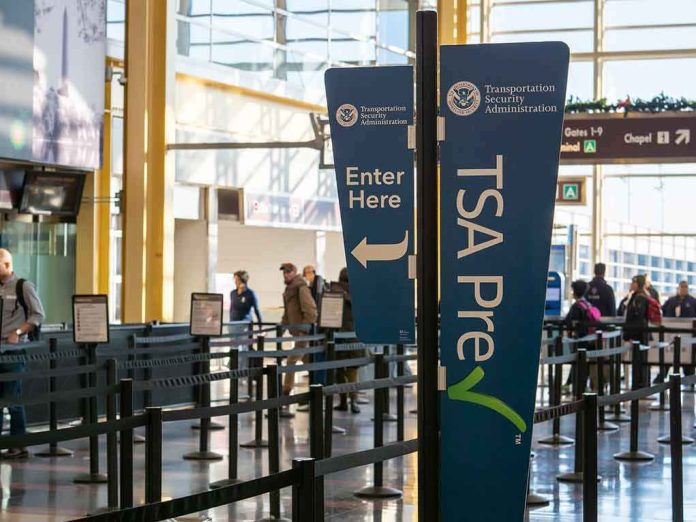
America is quietly testing whether your airport security should answer to Washington or to a private company’s bottom line.
Story Snapshot
- TSA Gold+ lets airports swap federal screeners for private security firms under federal rules.
- The TSA union warns this shift threatens public safety and accountability, not just paychecks.
- Supporters say privatization boosts technology, cuts delays, and keeps airports running during shutdowns.
- The real fight is over who you trust more with post-9/11 security: government or contractors.
How TSA Gold+ Changes Who Guards the Checkpoint
The Transportation Security Administration’s Gold+ program gives airports a new option: hire private companies to run security checkpoints instead of using federal Transportation Security Officers, while TSA keeps control of the rules and oversight. Under the old Screening Partnership Program, TSA owned the machines and contractors mainly supplied people to staff them. Gold+ goes further by letting private firms manage both the workforce and the technology, including buying, maintaining, and upgrading the screening systems. Supporters inside TSA pitch this as a way to create flexible, high-tech checkpoints that are not stuck waiting on slow federal budget cycles.
https://www.youtube.com/watch?v=AkrCGI48-b8
Airports that opt in are promised customized screening setups, tailored to their space and traffic, with staffing, technology, and maintenance provided “at no additional cost” to the airport itself. Tampa, Charleston, and Des Moines are among the first to sign up, making them test cases for how this new public-private model works in the real world. The basic screening rules stay the same—ID checks, bag scans, liquid limits—but the people and companies running the lane can change. For most travelers, the uniform and logo may change before they notice who signs the paycheck.
Why The Union Calls Gold+ A Public Safety Risk
The American Federation of Government Employees, which speaks for about 47,000 Transportation Security Officers, is not treating Gold+ as a harmless management tweak. In a statement shared with CBS News, the union warned that Gold+ “would jeopardize public safety by removing TSA workers from the screening process,” directly tying privatization to higher risk for travelers. Union head Everett Kelley argues that contracted screeners may lack the uniform training and accountability that federal officers have had since the agency was created after 9/11, when Americans demanded security that answered to the public, not corporate profit margins.
The union points to the administration’s budget, which plans to cut thousands of TSA jobs and replace many with private contractors, as proof this is about shrinking the federal workforce, not simply “modernizing” security. From a common-sense conservative view, their core concern is straightforward: when government hands a critical safety role to a profit-driven firm, incentives shift. A contractor that misses hiring targets or skimps on training can still get paid, while the consequences fall on travelers and first responders, not shareholders. That does not prove Gold+ will fail, but it makes blind trust in contractors look naïve.
Supporters Promise Modern Tech and Less Chaos
TSA officials and airport leaders frame Gold+ as the “next evolution” of the existing privatization model, not a leap into the unknown. Private screening companies already run security at about 20 airports today under TSA rules, and the sky has not fallen. With Gold+, TSA says airports can lock in long-term partnerships with “leading industry operators” who can refresh gear faster, add new lanes, and redesign checkpoints without waiting years for Congress to fund new machines. They also claim this model keeps airports running during federal government shutdowns, since screening operations no longer depend fully on federal budget cycles.
Tampa International Airport will transition to private security screeners under the TSA Gold Plus program next May, making it one of the first major airports in the country to adopt the expanded program.🔽https://t.co/G6oxjzyPyn pic.twitter.com/2ViwdsHsf4
— ABC7 Sarasota (@mysuncoast) July 21, 2026
For travelers, the sales pitch is simple: shorter lines, smoother flow, and fewer horror stories about missed flights due to TSA delays. Airports get a chance to upgrade without blowing up their own budgets, because industry partners absorb the direct technology and staffing costs. From a conservative, limited-government lens, this sounds appealing: leverage private innovation, reduce federal payroll, and keep critical services from shutting down every time Washington has a funding fight. The catch is that most of these benefits are still promises, not proven results backed by independent audits or performance data.
The Real Question: Who Should Own Post‑9/11 Accountability?
The Gold+ fight is really about who carries final responsibility when something goes wrong at the checkpoint. TSA insists it will continue to set federal security standards, conduct inspections, and hold contractors to the same screening rules used at fully federal airports. That means if a weapon or bomb slips through, the agency cannot blame a vendor and walk away. Yet the record available today does not spell out in detail how TSA will enforce discipline or respond if a contractor cuts corners on training or staffing.
Opponents argue that once Washington hands day-to-day control of people and machines to private firms, practical accountability gets fuzzy. A contractor answers first to its contract and its profits, not to voters. If Congress has not seen a full program brief, if inspectors general have not published performance comparisons between Gold+ airports and traditional TSA sites, then asking Americans to trade direct federal control for “innovation” is a big ask. A prudent, security-first conservative approach would demand hard data: detection rates, error rates, incident reports, and cost audits before expanding the model to hundreds of airports.
Sources:
reason.com, timesnownews.com, npr.org, fox9.com, cbsnews.com, nytimes.com, youtube.com, federalnewsnetwork.com, aviationweek.com, people.com, mogazmasr.com