

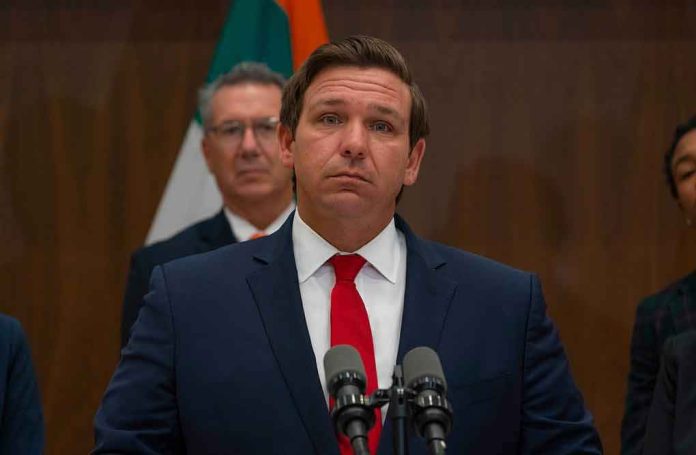
Jay Clayton’s advance through the Senate Intelligence Committee mattered less as a personnel milestone than as a test of what the Senate still demands from a national-security chief: candor, procedural legitimacy, and enough institutional trust to make the job usable.
Key Points
- The Senate Intelligence Committee formally advanced Clayton’s nomination to be Director of National Intelligence, moving the pick to the full Senate after hearing and debate.
- The hearing was dominated by Clayton’s refusal to directly say that Joe Biden won the 2020 election, even though he did say Biden was certified and that he was not an election denier.
- Clayton entered the fight with a Senate-confirmed record from his earlier confirmation as SEC chair, which gave supporters a ready-made argument that he was already vetted by the chamber.
- The episode fits a larger pattern in intelligence nominations: the Senate often treats questions of truth-telling, independence, and loyalty as proxies for deeper doubts about a nominee’s fitness.
A Procedural Advance with Real Political Weight
The Senate Intelligence Committee advanced Jay Clayton’s nomination to lead the nation’s intelligence agencies after a contentious hearing in which he was pressed repeatedly on the 2020 election and on the independence expected of a Director of National Intelligence. The committee’s Republican chair, Tom Cotton, had opened the confirmation hearing and welcomed Clayton as the nominee, and later reporting said the panel approved him on a 9-8 vote along party lines. That is the core procedural fact: Clayton moved forward. But in a post-Capitol Hill environment where intelligence leadership is inseparable from questions of civic truth, the significance of the vote lay in what the committee was willing to tolerate, not merely what it endorsed.
Clayton is President Donald Trump’s pick to head the intelligence community, and the hearing placed him at the center of a familiar modern confirmation test. He was not being judged only on résumé and management experience; he was being judged on whether senators believed he could tell the president uncomfortable truths, resist political distortion, and preserve the analytic integrity of the intelligence enterprise. That is why the hearing’s most memorable exchanges were not about intelligence collection architecture or analytic tradecraft, but about whether Clayton would plainly acknowledge the election result that underpins the legitimacy of the constitutional order he would serve.
Why the 2020 Election Question Became the Whole Hearing
Clayton did give the committee an answer, but not the one his critics wanted. He said Joe Biden was certified as president and added, “I’m not an election denier,” while also indicating that Biden had the most electoral votes. In an ordinary nomination hearing, that would have ended the matter. In this one, it did not, because the Senate’s concern was not merely whether Clayton recognized the certified result; it was whether he would say plainly, under oath, that the election was won fairly and avoid the evasive habits associated with political loyalty tests. That distinction matters. In intelligence work, precision is not an ornament; it is the medium of trust.
Media coverage and the hearing transcript both show why Democrats treated the exchange as disqualifying in spirit, if not in immediate procedure. Senator Jon Ossoff pressed Clayton on whether he would answer who won the election; Clayton declined to directly answer in several exchanges, and coverage described Democrats as dissatisfied with his candor. The resulting controversy swamped everything else. That happened because the DNI is not a conventional executive-branch manager. The office sits at the junction of secrecy and democratic accountability, and a nominee who appears reluctant to state an obvious fact invites suspicion that the same instinct would govern dealings with the White House, the intelligence agencies, and Congress.
Clayton’s Confirmability Was Not Built from Scratch
Supporters had a second argument ready: Clayton is already Senate-confirmed. Congress’s record shows that he was confirmed in 2017 to serve as chair of the Securities and Exchange Commission by a 61-37 vote. That earlier confirmation does not prove fitness for DNI, a different job with different demands; but it does matter institutionally. It shows that Clayton has previously survived Senate scrutiny, completed the paper trail of public vetting, and been deemed confirmable for a high-profile role. In confirmation politics, precedent is never destiny, yet it gives senators a familiar shorthand for competence and manageability.
Clayton also arrived with a background that the White House and Republican defenders could cast as relevant to intelligence leadership. CBS reported that he cited his tenure as U.S. attorney for the Southern District of New York as giving him significant national-security experience, including work involving foreign terrorist organizations, counter-espionage, money laundering, bribery, and abuse of communications platforms. That is not the same as running the intelligence community, and no serious reading of the record would pretend otherwise. But it does supply a governing theory: that Clayton’s service in federal law enforcement gave him enough exposure to national-security problems to justify a move into the ODNI, especially if the administration prized legal discipline and managerial reliability over deep intelligence pedigree.
What the Committee Record Does and Does Not Show
The public record supports one firm conclusion and one important limitation. The firm conclusion is that the nomination advanced. The limitation is that the materials available here do not include the committee’s markup transcript, a roll-call breakdown beyond the final vote, or any committee report explaining the rationale in detail. That means observers can say with confidence that Clayton cleared committee, but they cannot, from the record supplied, reconstruct the internal coalition behind the vote or determine whether the support was deeply bipartisan or simply the product of party discipline. In confirmation politics, that difference is not cosmetic; it tells you whether the committee was persuaded or merely mobilized.
That same limitation applies to the substantive case for Clayton’s intelligence leadership. The hearing coverage is rich on conflict and relatively thin on affirmative intelligence-policy vetting. There is no record here of broad intelligence-community endorsements, no trove of written commitments on ODNI independence, and no detailed public defense from former intelligence officials. The practical effect is that the nomination’s advance rested more on institutional confidence in the Senate process than on a publicly visible consensus that Clayton was an unusually strong intelligence pick. That is a manageable position for a committee, but it is not the same thing as a settled endorsement.
Why This Nomination Reads Like a Larger Institutional Story
Clayton’s hearing fits a broader pattern in national-security confirmations: the symbolic question often becomes the real one. Senators and the public do not only ask whether a nominee can do the job; they ask whether the nominee will resist pressure, state facts plainly, and avoid laundering presidential preference into official truth. Clayton’s refusal to give the bluntest possible answer on the 2020 election became a proxy for all of that. If he would not say it there, critics reasoned, why trust him in a classified setting where the cost of equivocation could be far greater?
At the same time, the committee’s action shows how the Senate still works when a majority decides a nominee can be moved forward despite serious political objections. It does not require unanimity, and it rarely rewards purity. It rewards enough votes, enough procedural regularity, and enough confidence that a floor fight can be won later. Clayton’s advance therefore tells a plain story: the nomination was controversial, the election issue dominated the hearing, yet the Senate Intelligence Committee still judged that the matter belonged with the full chamber. That is how confirmation power operates when the stakes are high and the politics are harder than the résumé.
🚨 Senate Intelligence Committee Advances Jay Clayton’s DNI Nomination
The Senate Intelligence Committee voted to advance President Trump’s nominee for Director of National Intelligence, Jay Clayton, to the full Senate. Clayton, the U.S. Attorney for the Southern District of New… pic.twitter.com/ojOgK0wGKw
— Morse Report (@MorseReport) July 21, 2026
Sources:
military.com, cotton.senate.gov, thirteen.org, pbs.org, youtube.com, cbsnews.com