

A Harrison County man has pleaded guilty to threats against President Donald Trump and Immigration and Customs Enforcement agents, putting a stark federal case in the open.
Quick Take
- Cody Lee Smith pleaded guilty to threats tied to President Donald Trump and Immigration and Customs Enforcement agents.
- Court records say he posted violent messages on Instagram and sent a direct message to Donald Trump Jr.
- The complaint also says he threatened to kill Immigration and Customs Enforcement agents in Clarksburg, West Virginia.
- The case adds to a wider rise in threats against public officials and law enforcement.
What the Guilty Plea Covers
West Virginia media reported that Cody Lee Smith pleaded guilty after being accused of threatening to kill President Donald Trump and harm Immigration and Customs Enforcement agents. Court records cited in the report say Smith posted threats on social media and sent a direct Instagram message to Donald Trump Jr. that included a sexually violent threat against the president. The indictment text also says he threatened to kill Trump and to murder immigration agents.
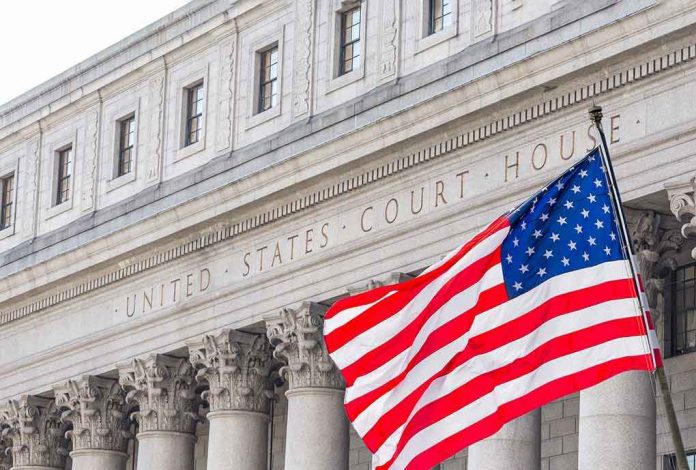
The reporting describes the plea as part of a federal case brought in Harrison County and the Northern District of West Virginia. The court filing says Smith made the threats on January 17 and January 18, 2026, through Instagram and an ICE tip line call. The same reporting says federal, state, and county investigators reviewed the posts and helped build the case. That mix of agencies shows how seriously threats against public officials can move from online talk to criminal charges.
Why the Case Drew Attention
The case stands out because it combines threats against a sitting president, threats against immigration officers, and violent language spread on social media. The indictment says Smith wrote that he would kill Donald Trump Jr.’s father and later said he would rape President Trump and cut his jugular. Those details are disturbing on their own. They also show how online threats can quickly become real federal cases, especially when officials think the target could be acted on.
Cases like this also feed a broader public worry that government cannot keep basic order. Supporters of Trump see threats against him and ICE as proof that political rage has gone too far. Critics of the system point to the same case as another sign that law enforcement and public safety are being forced to clean up a deeper breakdown in civic trust. Both sides can agree on one point: violent threats are not debate, and they carry real costs.
Broader Pattern of Political Threats
The Cody Lee Smith case fits a larger rise in threats against public officials, which researchers say has grown sharply in recent years. The Center on Terrorism at the United States Military Academy at West Point says federal charges for threats to public officials have risen over the past decade, and the Institute for Strategic Dialogue reports a more than threefold increase in violent online rhetoric aimed at leading United States officials between 2021 and 2025. The case is local, but the pattern is national.
DHS announces the arrest of West Virginia resident Cody Lee Smith for calling the ICE tip line and threatening to kill the operator, their family, and ICE agents in Clarksburg, along with threats against President Trump.
• The post features Smith’s mugshot and stresses that…— Johnsmith (@simswholly) July 7, 2026
That broader trend matters because threats do not stay online in isolation. They can scare families, tie up investigators, and push agencies into higher-alert responses that cost time and money. The report from West Virginia says Smith faced charges tied to threats against Trump and immigration agents, and it notes that the investigation involved the Harrison County Sheriff’s Office, West Virginia State Police, Homeland Security Investigations, the United States Secret Service, and the Federal Bureau of Investigation. In a country already split over immigration, policing, and political anger, cases like this deepen the sense that public life has grown more unstable.
One Important Caveat
The search results clearly support the existence of the guilty plea report and the underlying indictment, but they do not include the plea filing itself. That means the court paper confirming the plea date, exact count, and any sentencing terms is not visible in the research packet. The reporting still provides a clear account of the threats described by prosecutors, and it places the case in a federal court setting where those threats carried serious penalties.
Sources:
iowacourts.gov, gnvinfo.com, documentcloud.org, isdglobal.org