

The Trump administration has finally ended the federal government’s decades-long discrimination against faith-based addiction recovery programs, opening the door to millions in federal funding for organizations that have been helping Americans beat addiction all along.
Story Highlights
- President Trump signed Executive Order 14379 on January 29, 2026, launching the Great American Recovery Initiative that recognizes addiction’s spiritual dimension and authorizes federal grants to faith-based organizations
- HHS Secretary RFK Jr. announced $100 million for the STREETS program targeting homelessness and addiction in eight major cities, plus $10 million for court-ordered treatment programs
- The policy shift reverses prior exclusion of faith groups under Housing First mandates, addressing a crisis affecting 148.4 million Americans with substance use disorders
- Faith-based organizations can now access federal funding while maintaining their religious convictions, ending bureaucratic hostility toward proven recovery methods
Trump Administration Breaks Decades of Faith-Based Exclusion
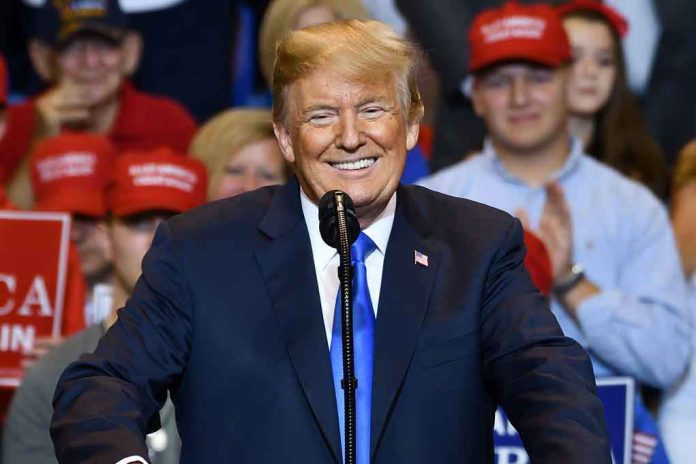
President Trump signed Executive Order 14379 on January 29, 2026, establishing the Great American Recovery Initiative and formally recognizing addiction as a chronic disease requiring treatment of physical, mental, emotional, and spiritual dimensions. The order explicitly authorizes faith-based organizations to receive federal grants for addiction recovery services, reversing years of bureaucratic exclusion. HHS Secretary Robert F. Kennedy Jr. announced the policy shift at SAMHSA’s Prevention Day on February 2, 2026, emphasizing that faith communities have long provided effective recovery support through sober homes and spiritual programs but were systematically denied federal funding under previous administrations.
Massive Federal Investment Targets Urban Addiction Crisis
Secretary Kennedy unveiled a $100 million STREETS program targeting homelessness and addiction in eight major American cities, alongside $10 million in Assisted Outpatient Treatment grants for court-ordered care. The initiative expands Medicaid and Medicare coverage for critical addiction medications including buprenorphine, methadone, and naltrexone, using child protection funds to preserve families. Dr. Yngvild Olsen, former SAMHSA official, confirmed the medication expansion has the potential to save lives by preventing foster care placements and providing continuous treatment access. The coordinated approach integrates law enforcement, housing services, and healthcare providers to build pathways from streets to self-sufficiency and employment.
Faith Organizations Navigate New Funding Opportunities
Tom De Vries, president of Citygate Network representing 330 Christian rescue missions, acknowledged the federal government is inviting faith groups more than ever before, though organizations are carefully processing how funding might affect their ministries. Faith-based providers historically relied solely on philanthropy after Housing First policies excluded them from federal grants, a situation Rev. Andy Bales of Union Rescue Mission described as brutal for organizations serving vulnerable populations. The new policy requires faith groups to meet evidence-based standards while allowing them to maintain religious hiring practices and spiritual components in recovery programs, addressing constitutional concerns about government overreach into religious freedom.
Policy Addresses Staggering Untreated Addiction Epidemic
The United States faces a national crisis with 148.4 million Americans suffering from substance use disorders, with a staggering 295.6 percent of untreated adults actively denying they need help. Previous federal approaches created fragmented systems cycling addicted individuals through emergency rooms, jails, and shelters without addressing root spiritual and community disconnection issues. Secretary Kennedy, who maintains 14 years of recovery from heroin addiction through 12-step programs, criticized the government’s refusal to acknowledge addiction’s spiritual reality. The initiative shifts federal culture to celebrate recovery and reduce stigma, moving beyond failed secular-only approaches that ignored what works in actual communities across America.
The Federal Government Finally Acknowledges the Role of Faith in Recoveryhttps://t.co/TftQtiYqJN
— PJ Media (@PJMedia_com) February 5, 2026
The Trump administration’s recognition of faith-based recovery represents common-sense policy correcting years of ideological exclusion that denied effective help to struggling Americans. By acknowledging spiritual disease alongside physical addiction, the federal government finally aligns with proven recovery methods that have helped millions reclaim their lives through faith communities. This initiative protects religious freedom while expanding treatment options, demonstrating how limited government can empower civil society rather than replacing it with bureaucratic mandates that consistently fail vulnerable populations.
Sources:
RFK Jr. Expands Faith-Based Addiction Care as Drug Use and Homelessness Rise – EMPR
Great American Recovery Initiative – Amity Behavioral Health
Faith-based organizations can now get funding for addiction – The Christian Post
RFK Jr. Expands Faith-Based Addiction Care as Drug Use and Homelessness Rise – Powers Health
Fact Sheet: President Donald J. Trump Launches the Great American Recovery Initiative – White House
Secretary Kennedy Announces $100 Million Investment in Great American Recovery – HHS
Addressing Addiction Through the Great American Recovery Initiative – Federal Register